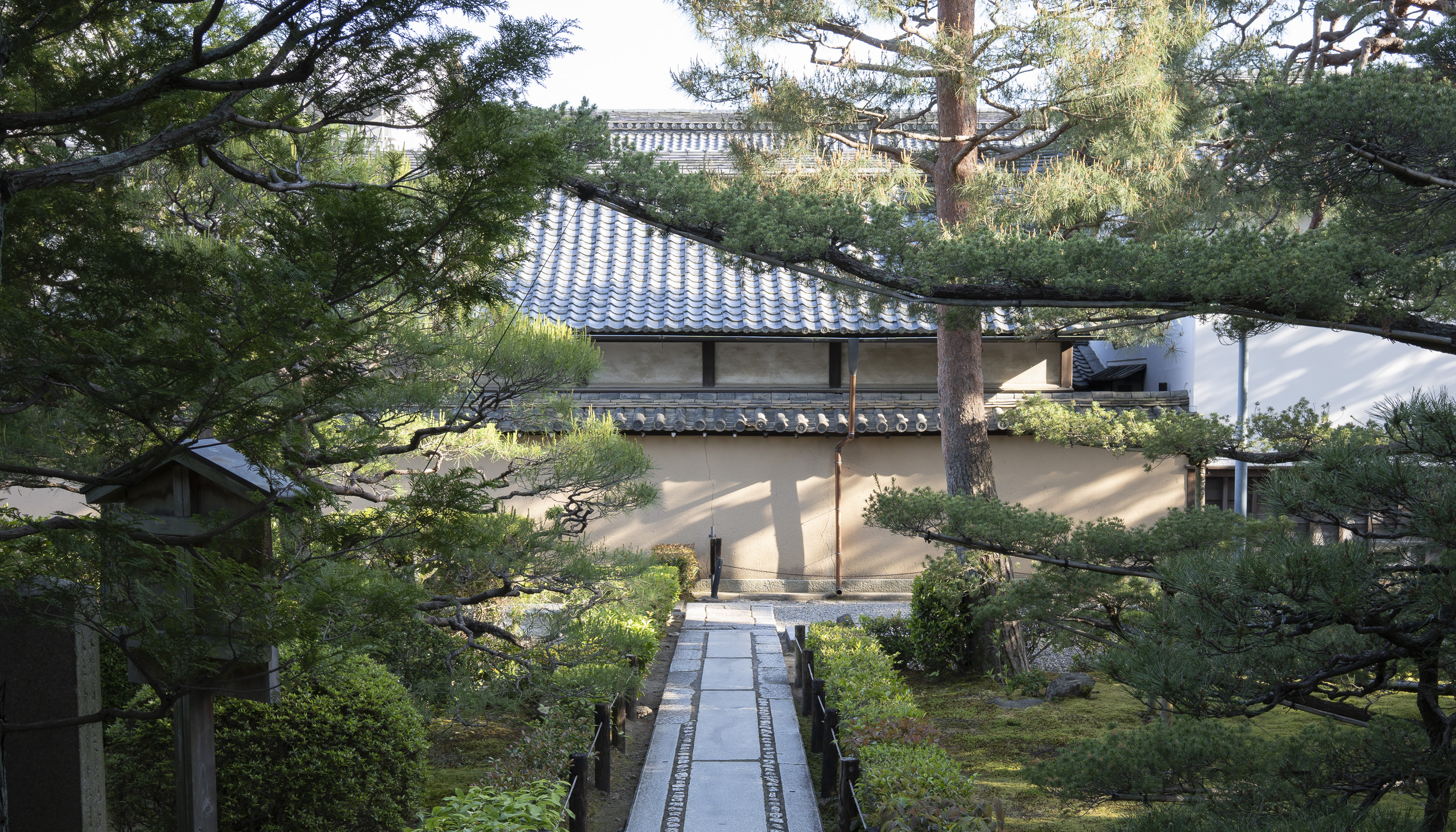
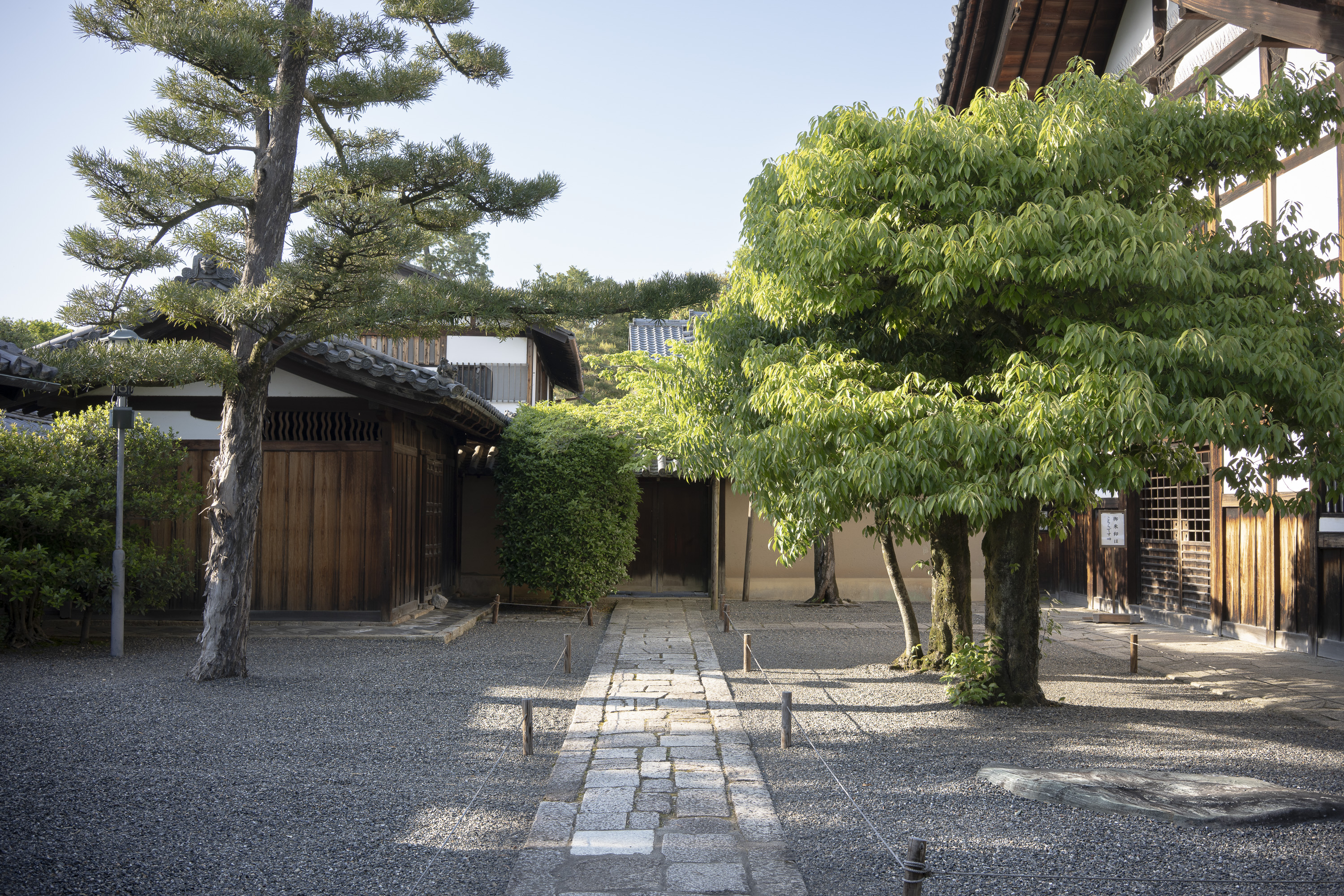
In my last post I shared photos of a variety of scenes from around Kyoto, a former capital of Japan that is known for its cultural heritage sites. In this post I’m sharing photos from visits to a number of Kyoto’s classical gardens. Most of the gardens represented here are within Zen Buddhist temple compounds and were intended as spaces for meditation and reflection.
Zen Buddhism arrived in Japan in the 12th century CE, during a time when political power was shifting from the imperial court to military shogunates. Zen philosophy emphasized meditation, simplicity, and training, and its focus on discipline and austerity appealed to the samurai class.
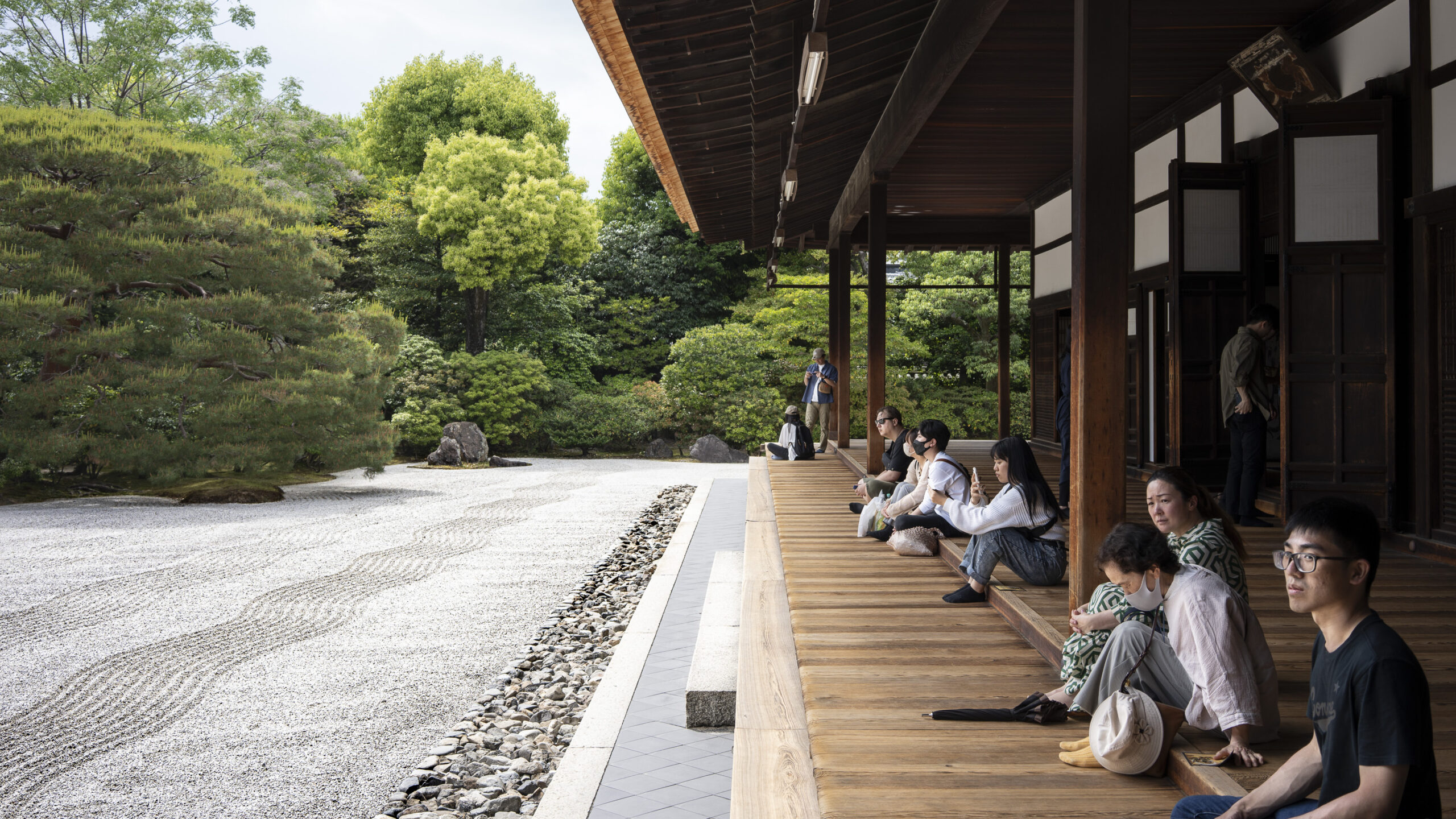
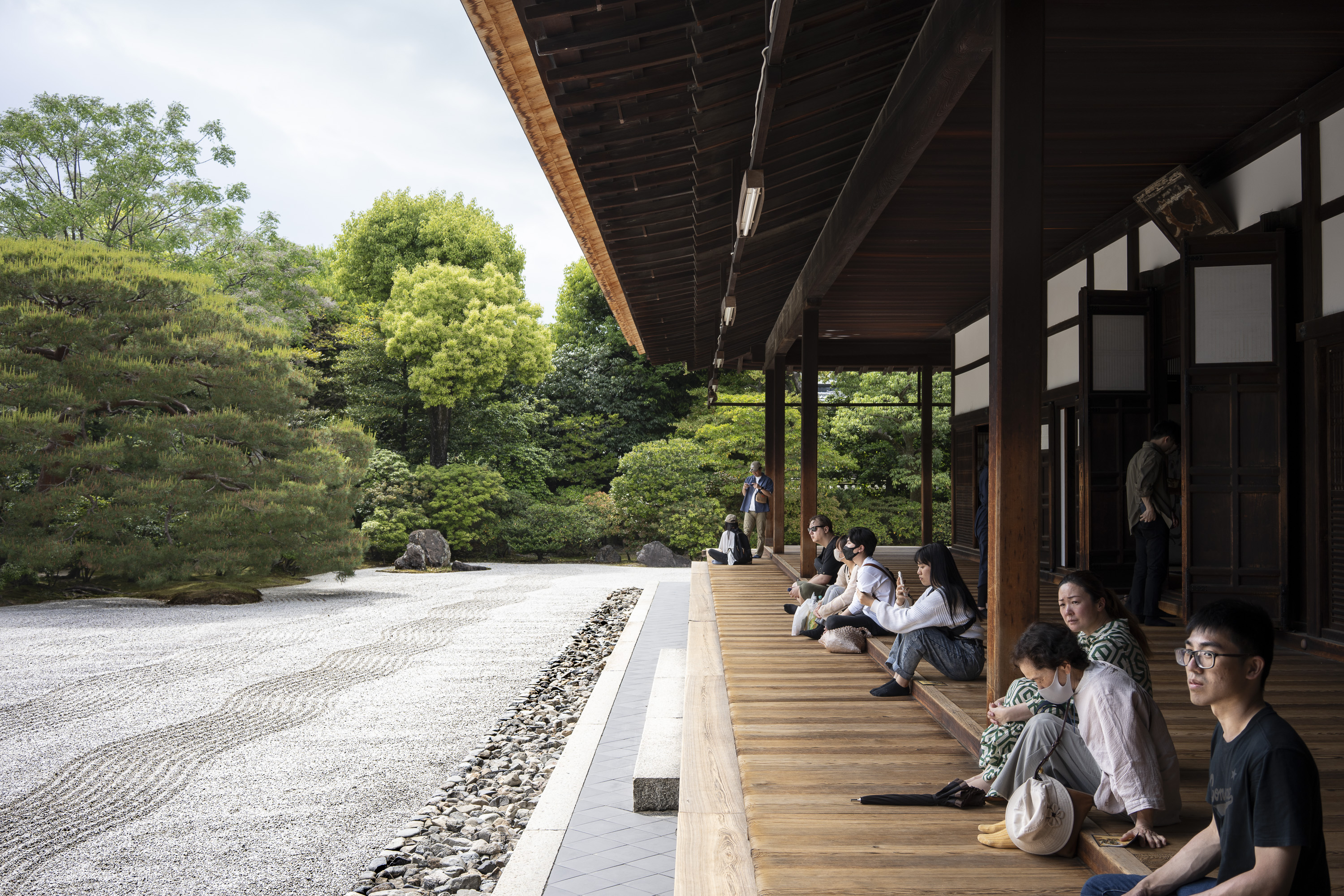
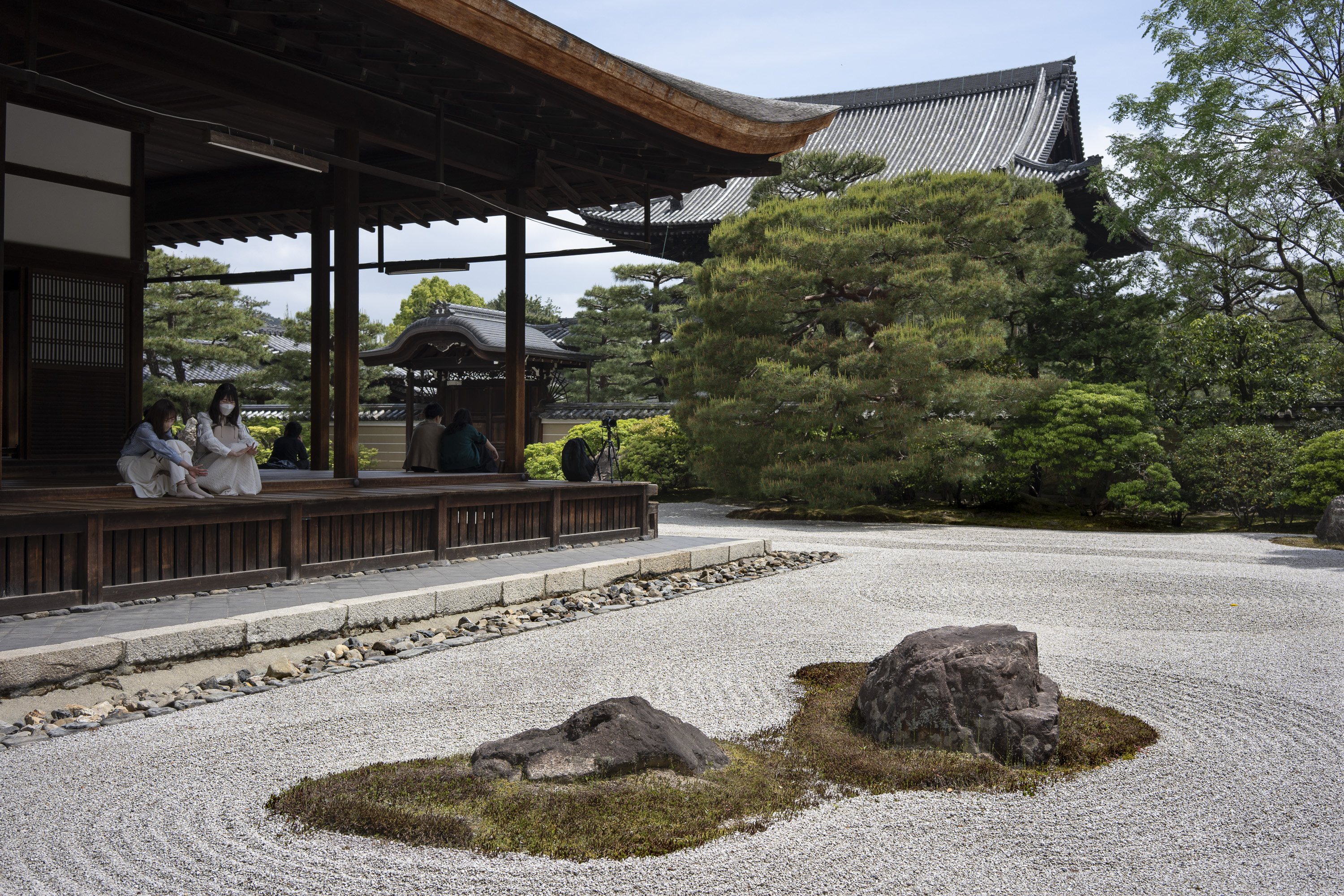
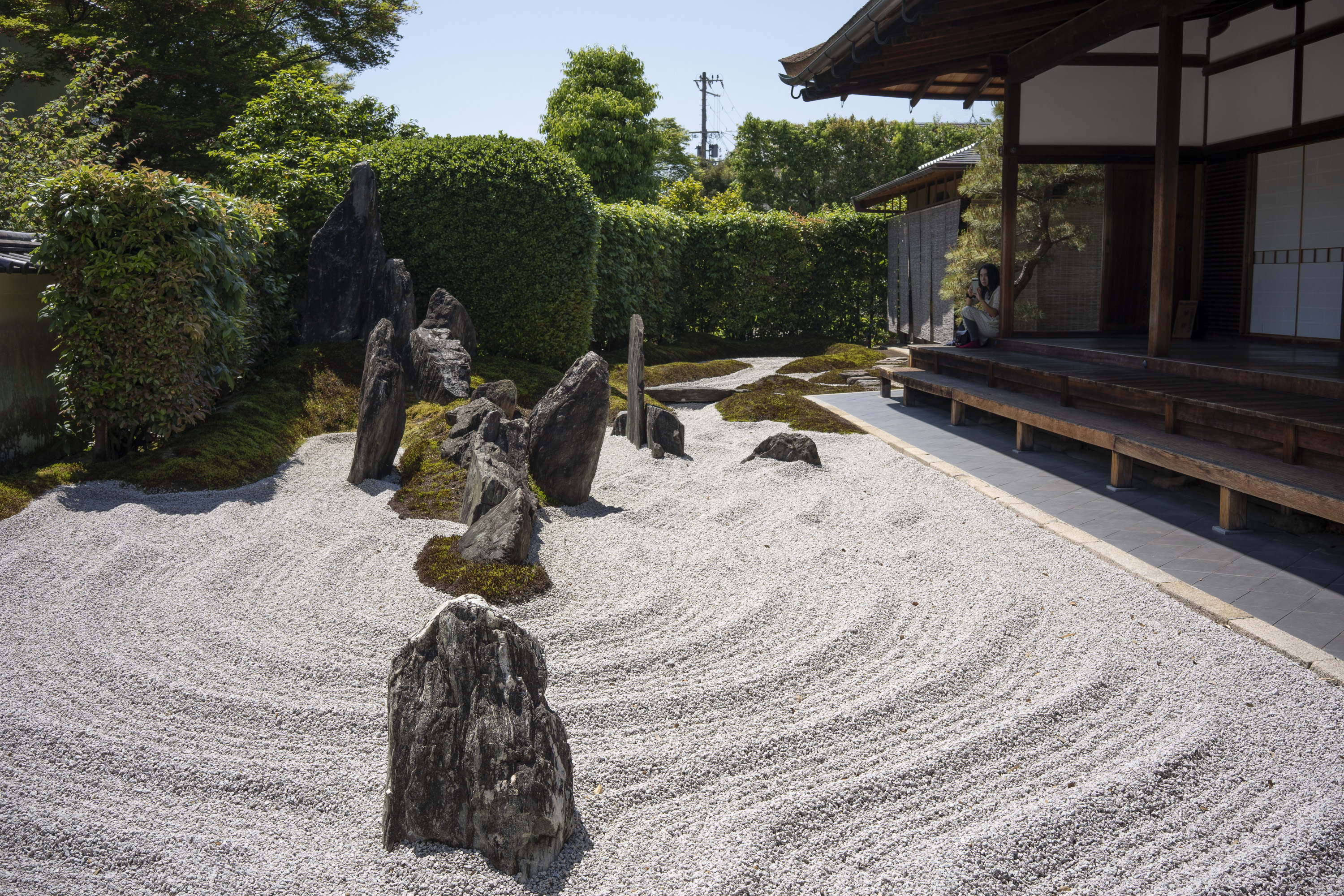
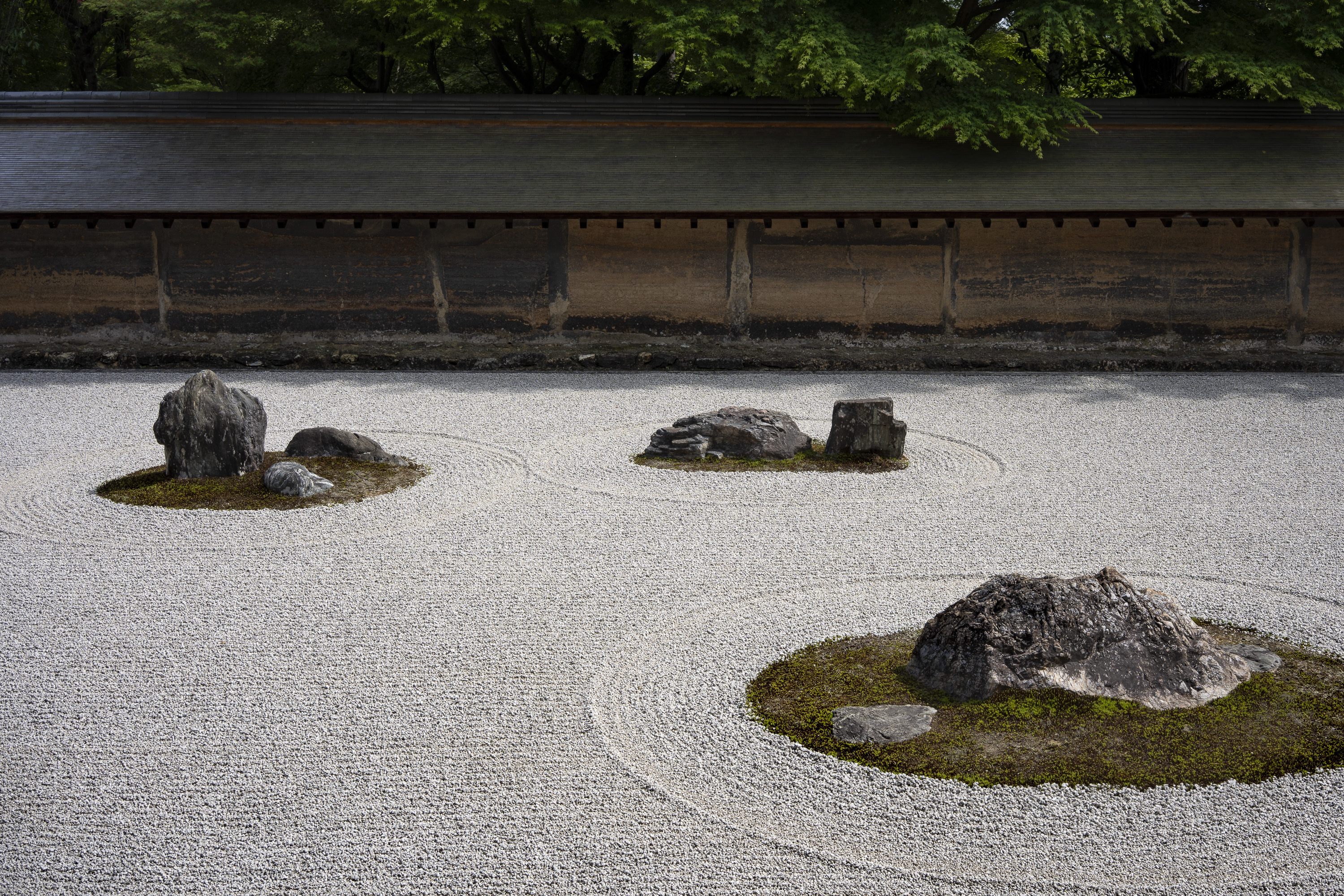
Zen gardens, often called dry or stone gardens, usually feature raked stones and imagined landscapes designed to aid meditation. They’re typically adjacent to verandas with comfortable edges for sitting and looking. You contemplate such gardens rather than walking through them. The gardens’ abstract landscapes use large stones and groupings of shrubs and moss to represent mountains or islands. They’re surrounded by a broad sea of raked stones, sometimes with furrows deep enough to recall ocean waves.
Along with the other visitors, you sit on the edge of the veranda and absorb the scene in silence. The adjacent structures that frame the gardens and connect the temple buildings are beautifully constructed, and I have included photographs of architectural details that caught my eye as well.
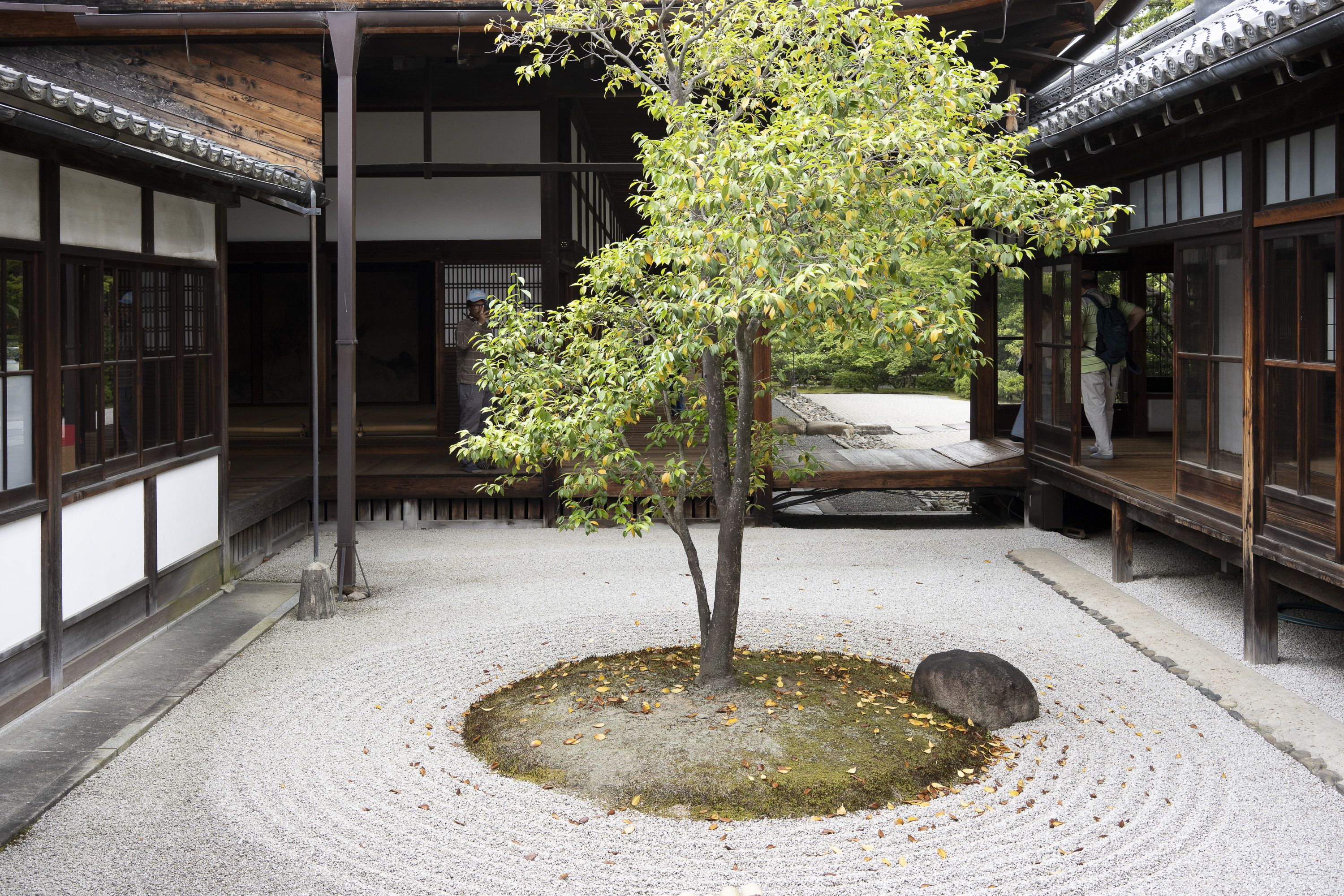
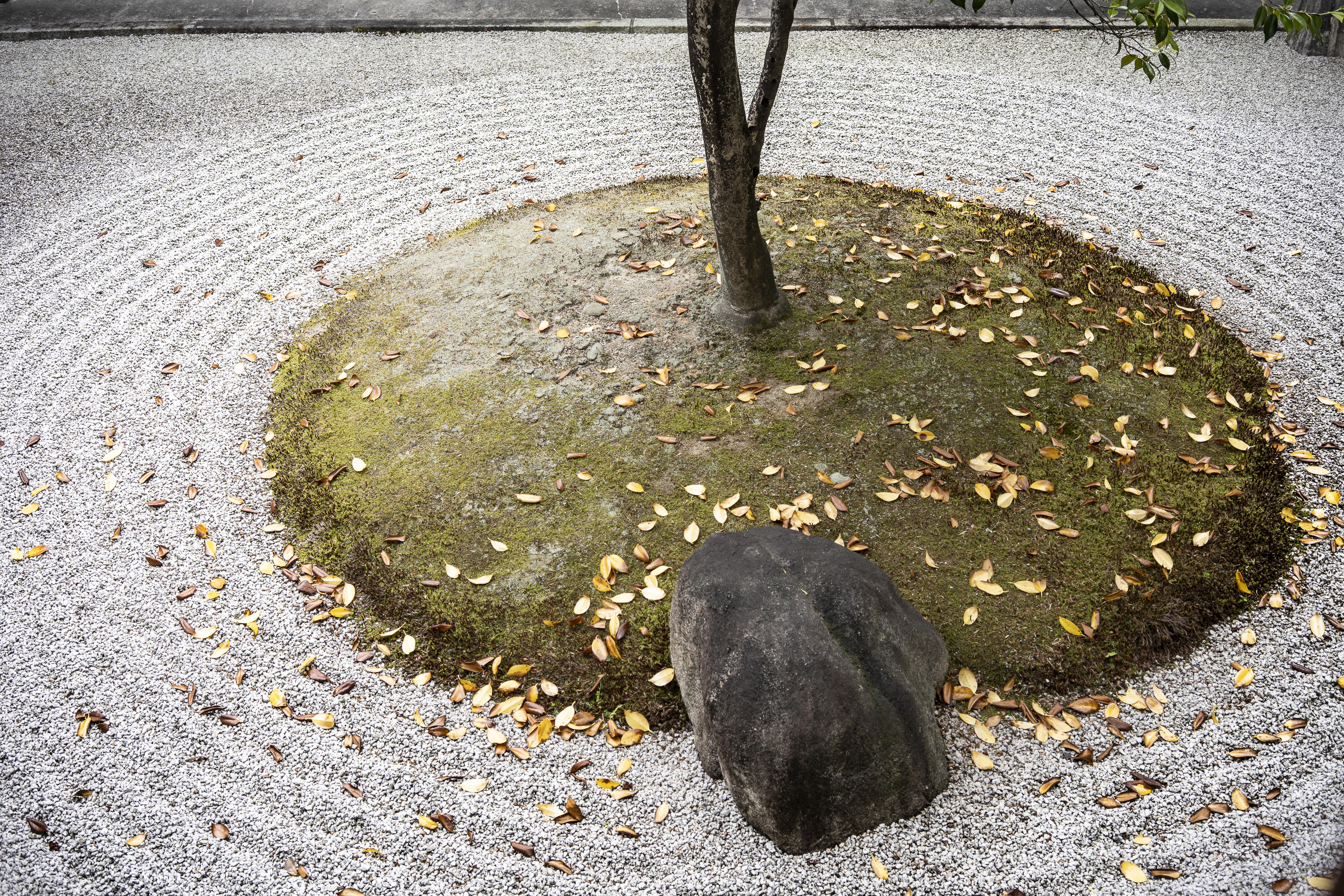
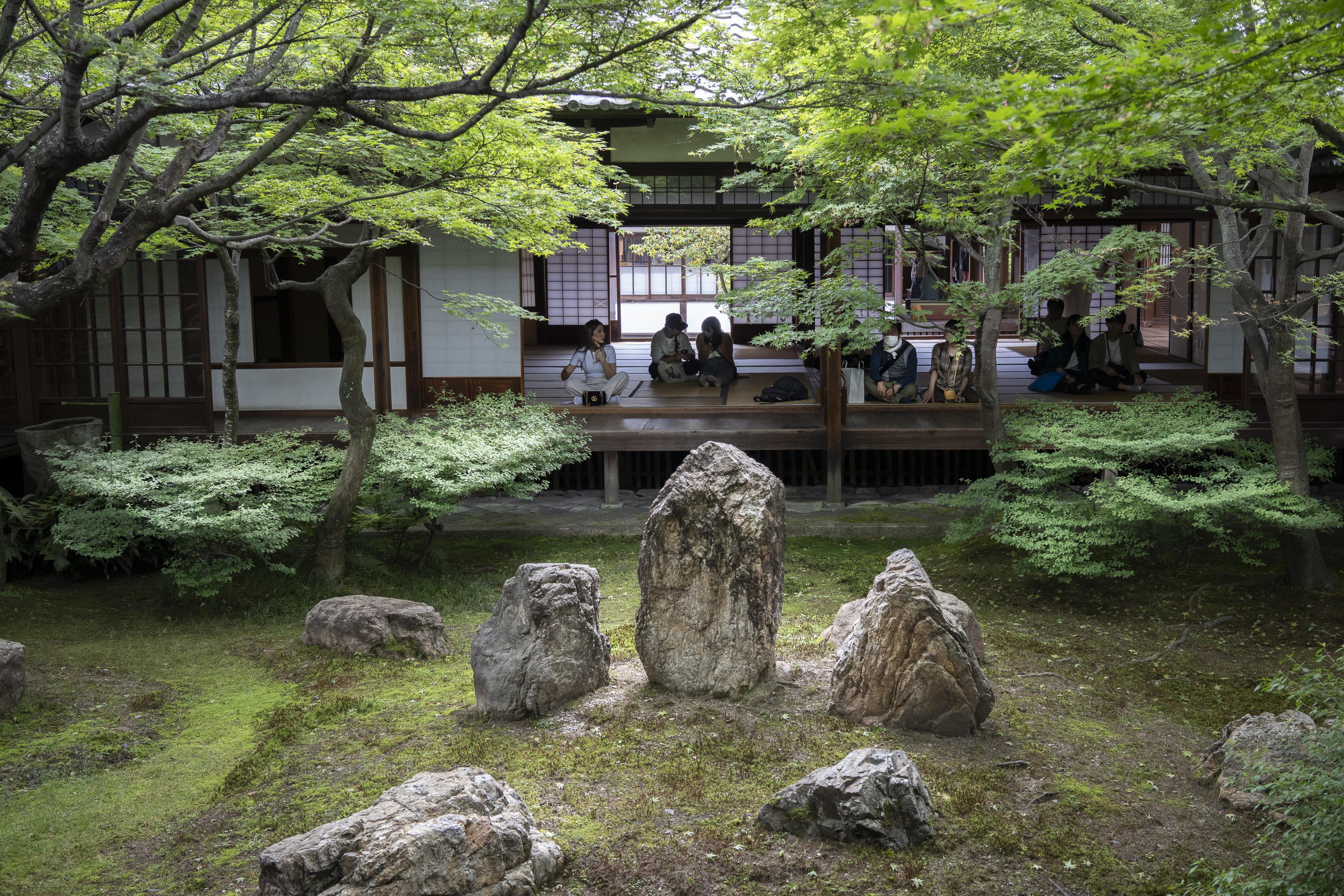
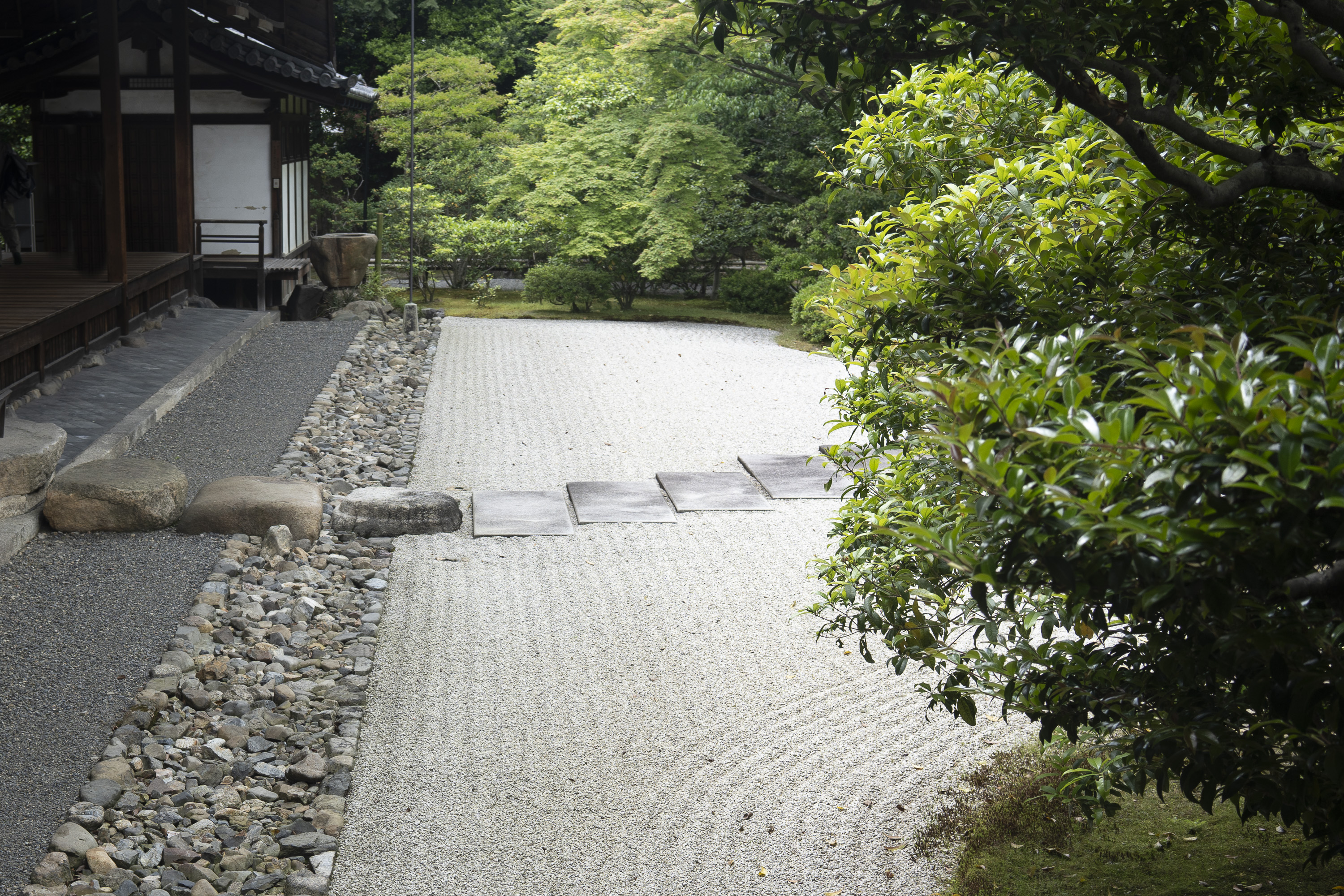
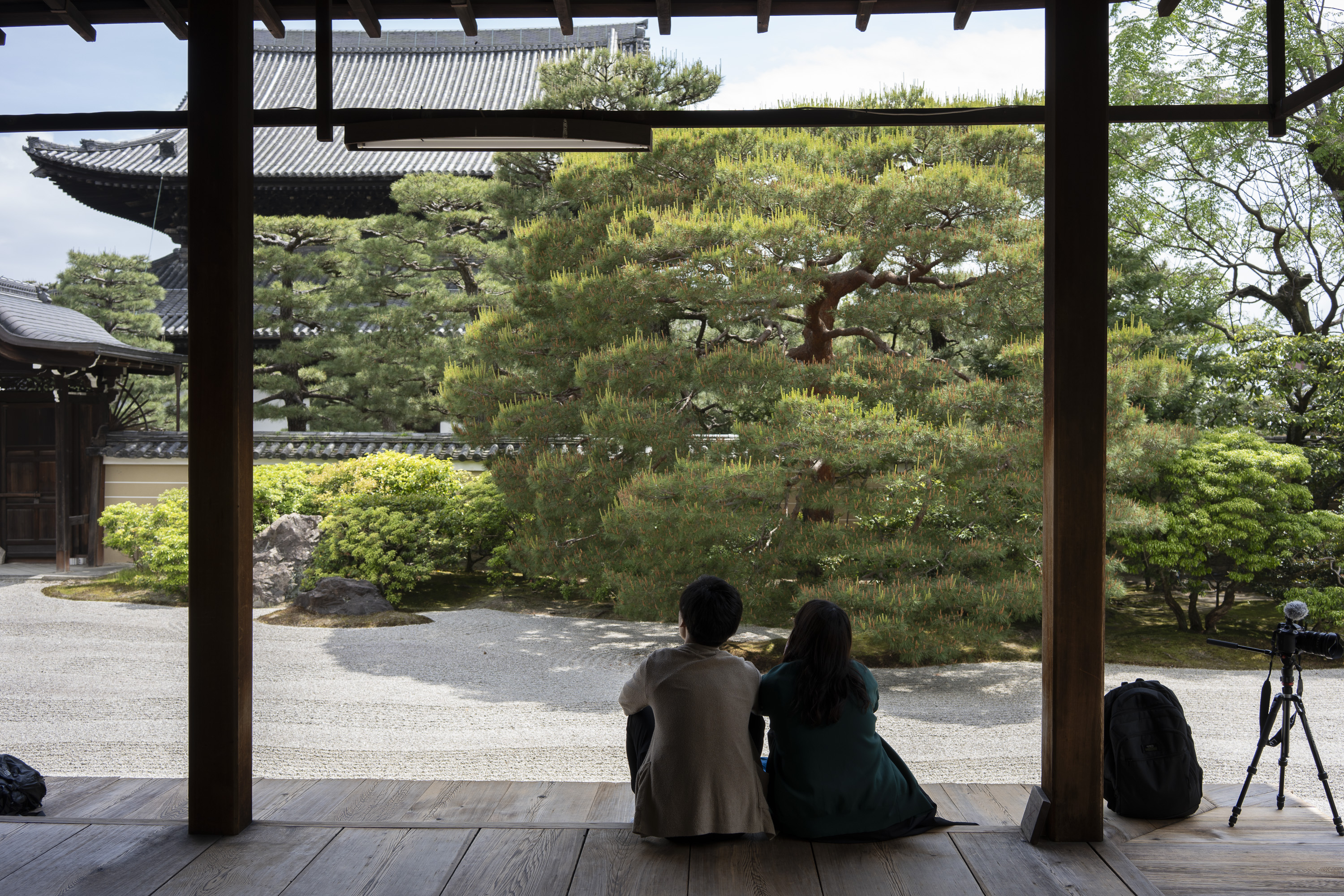
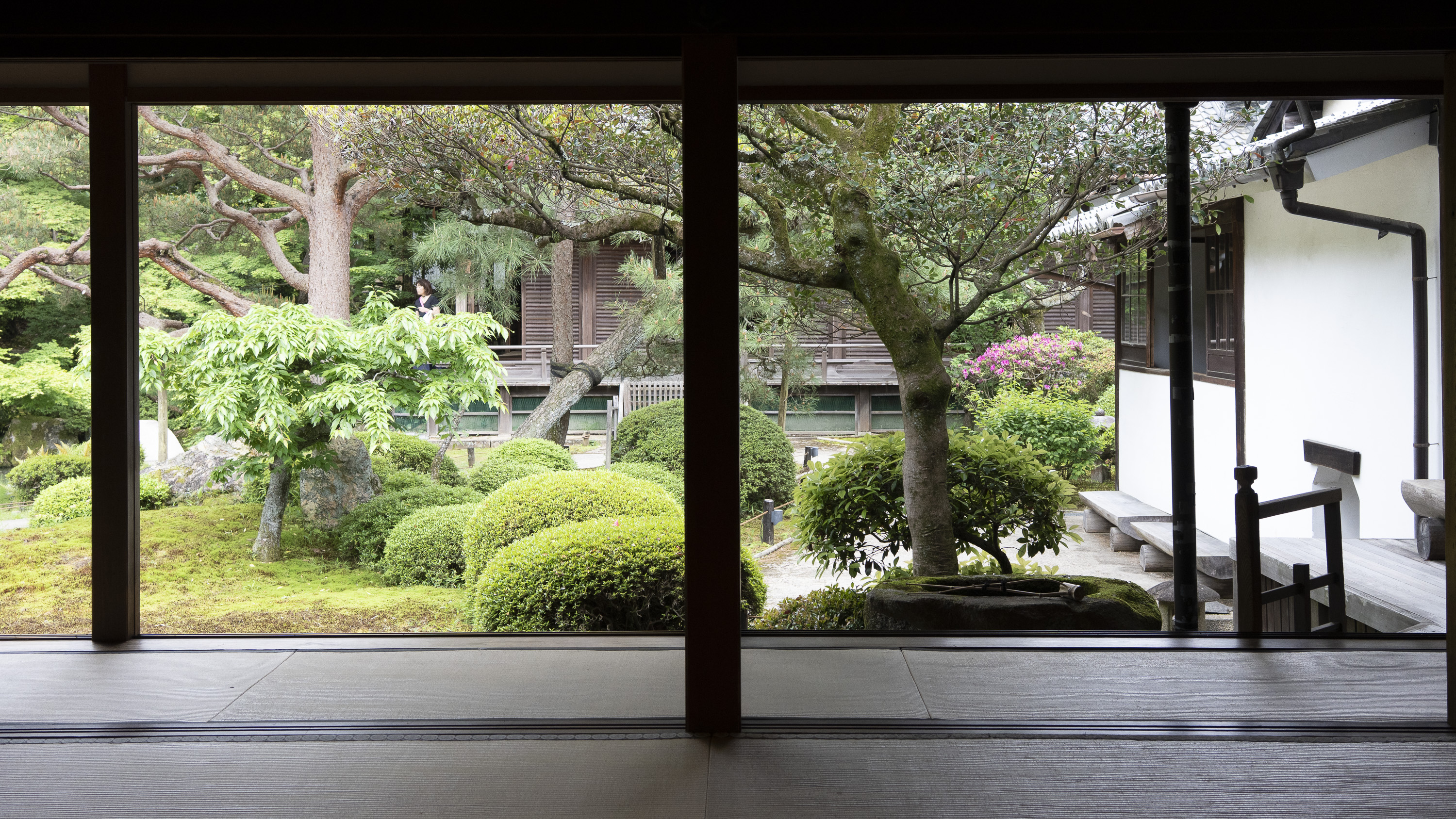
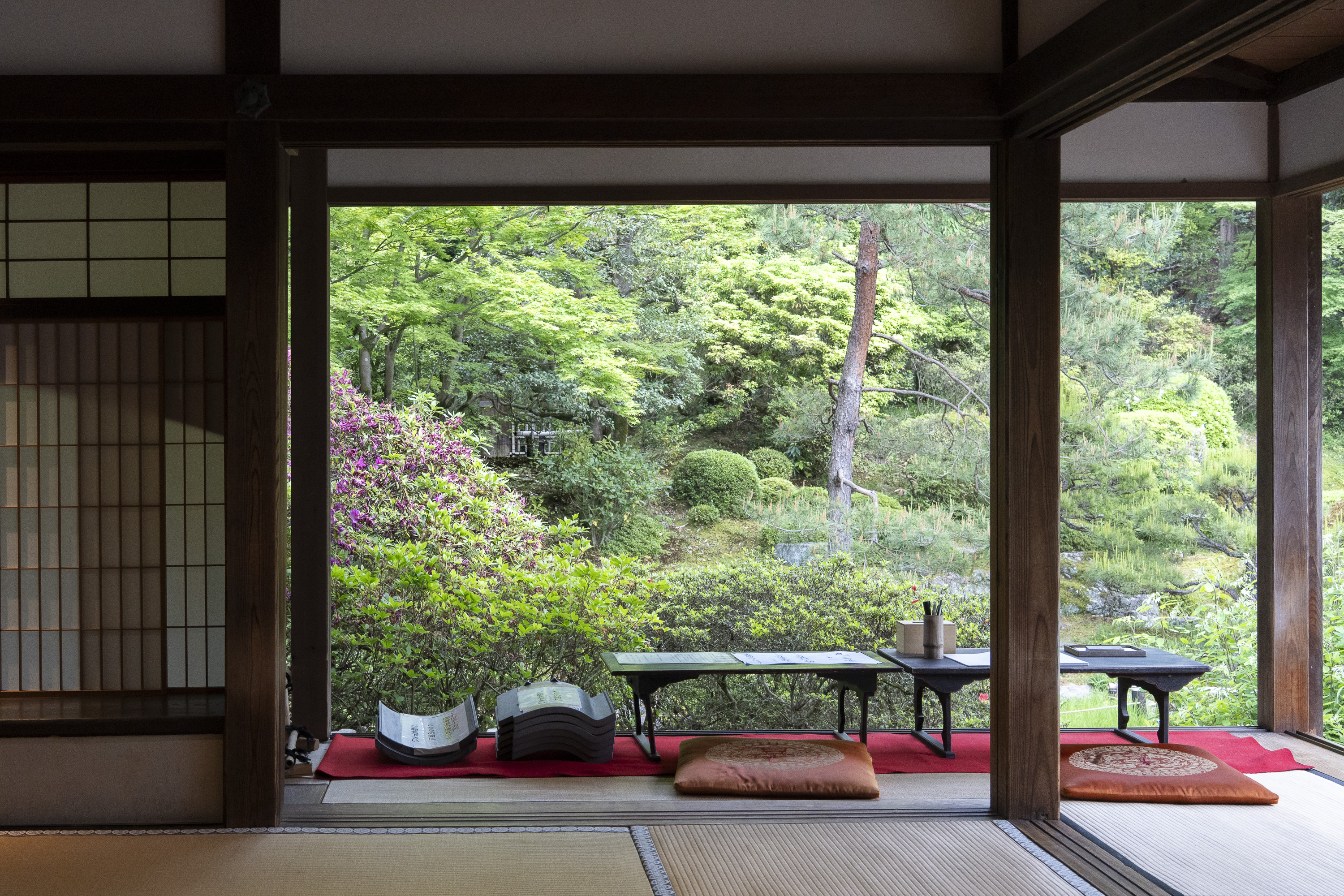
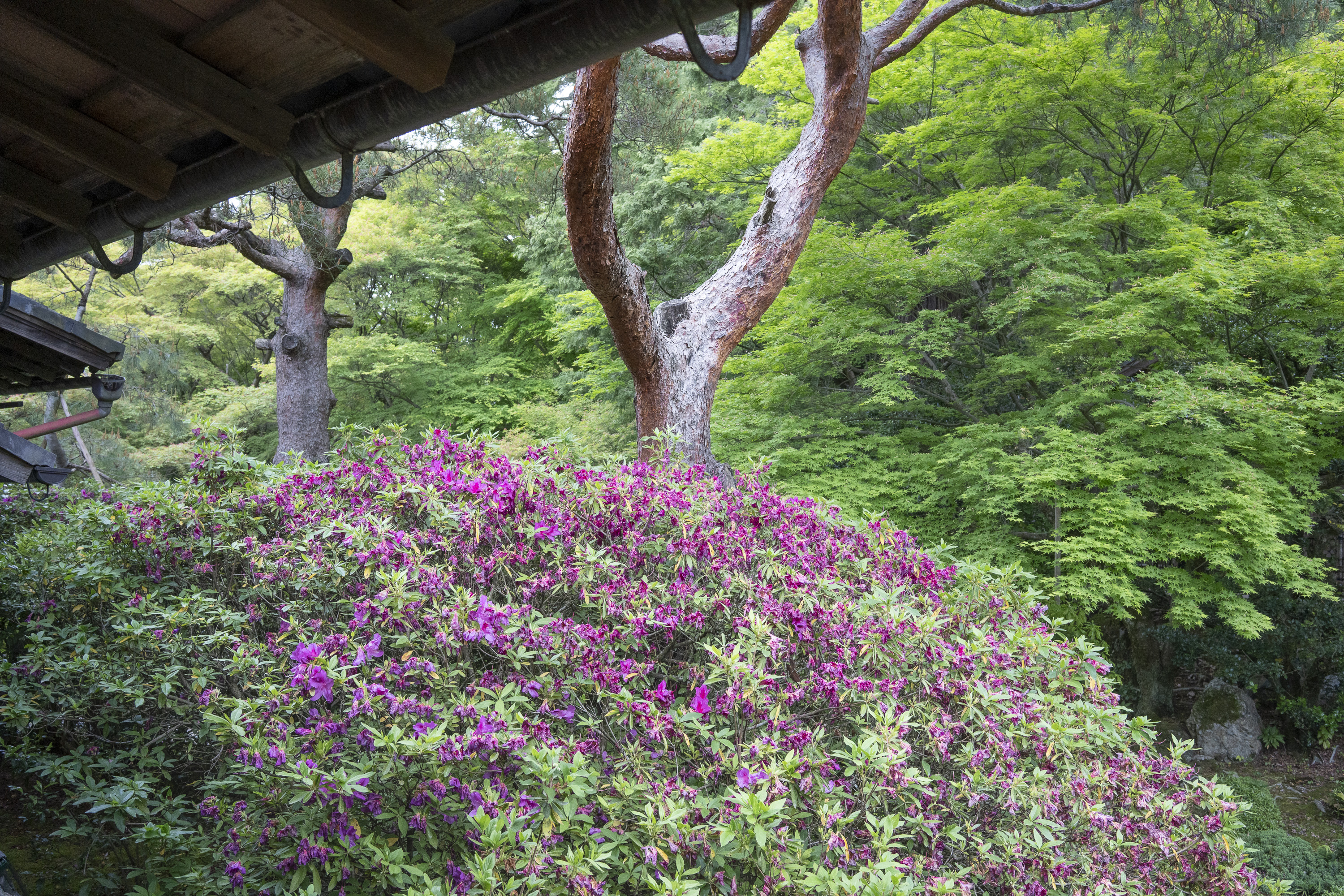
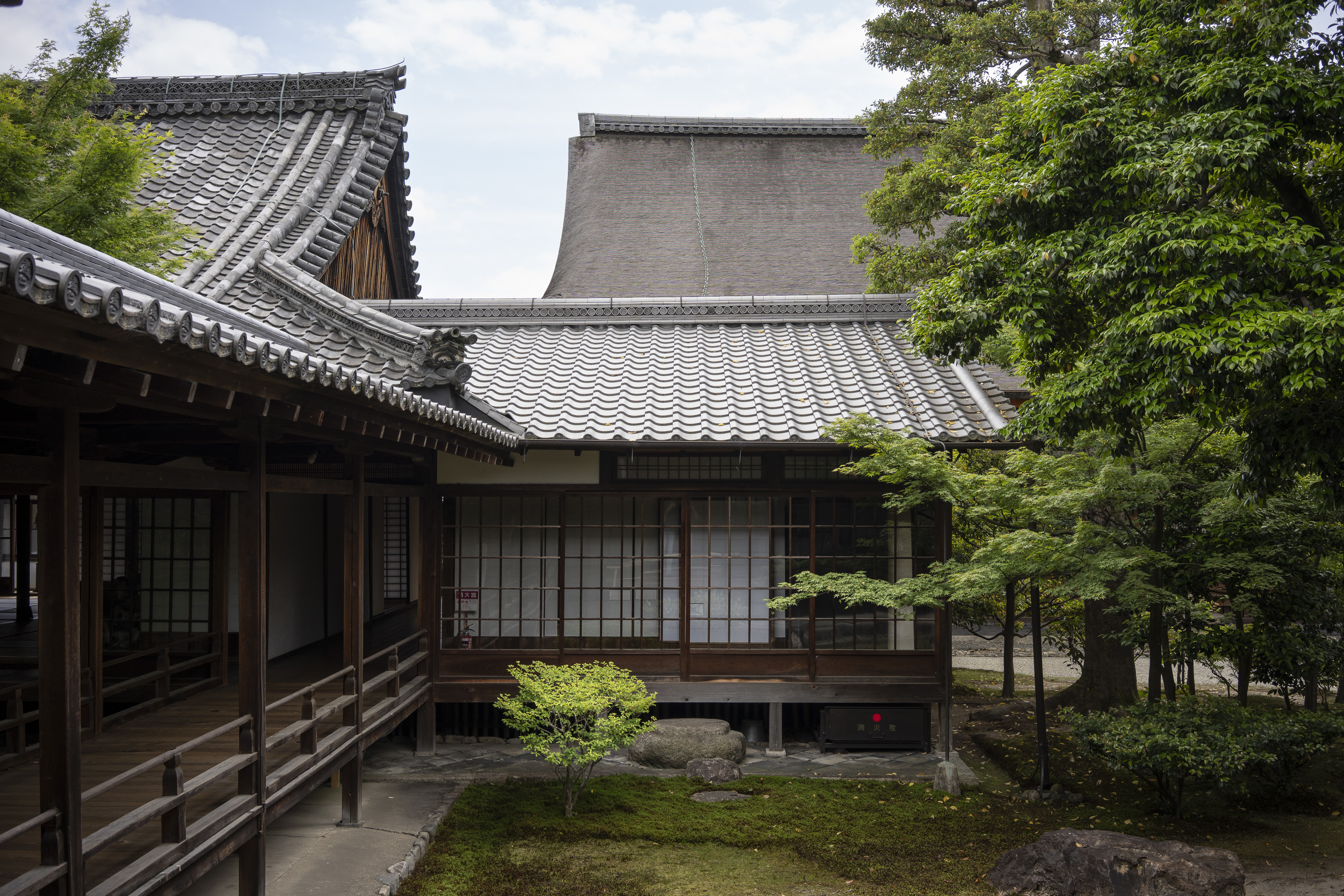
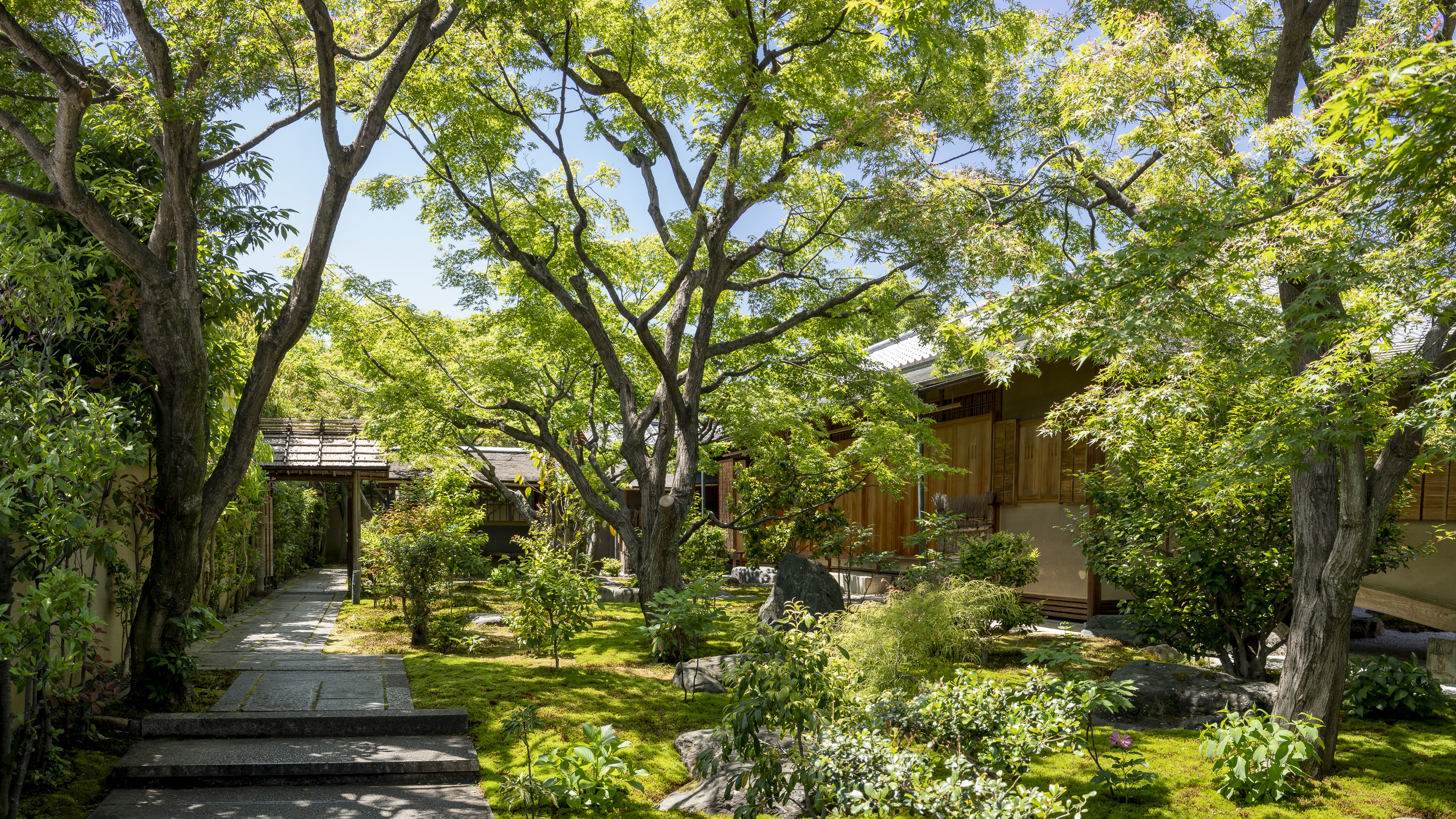
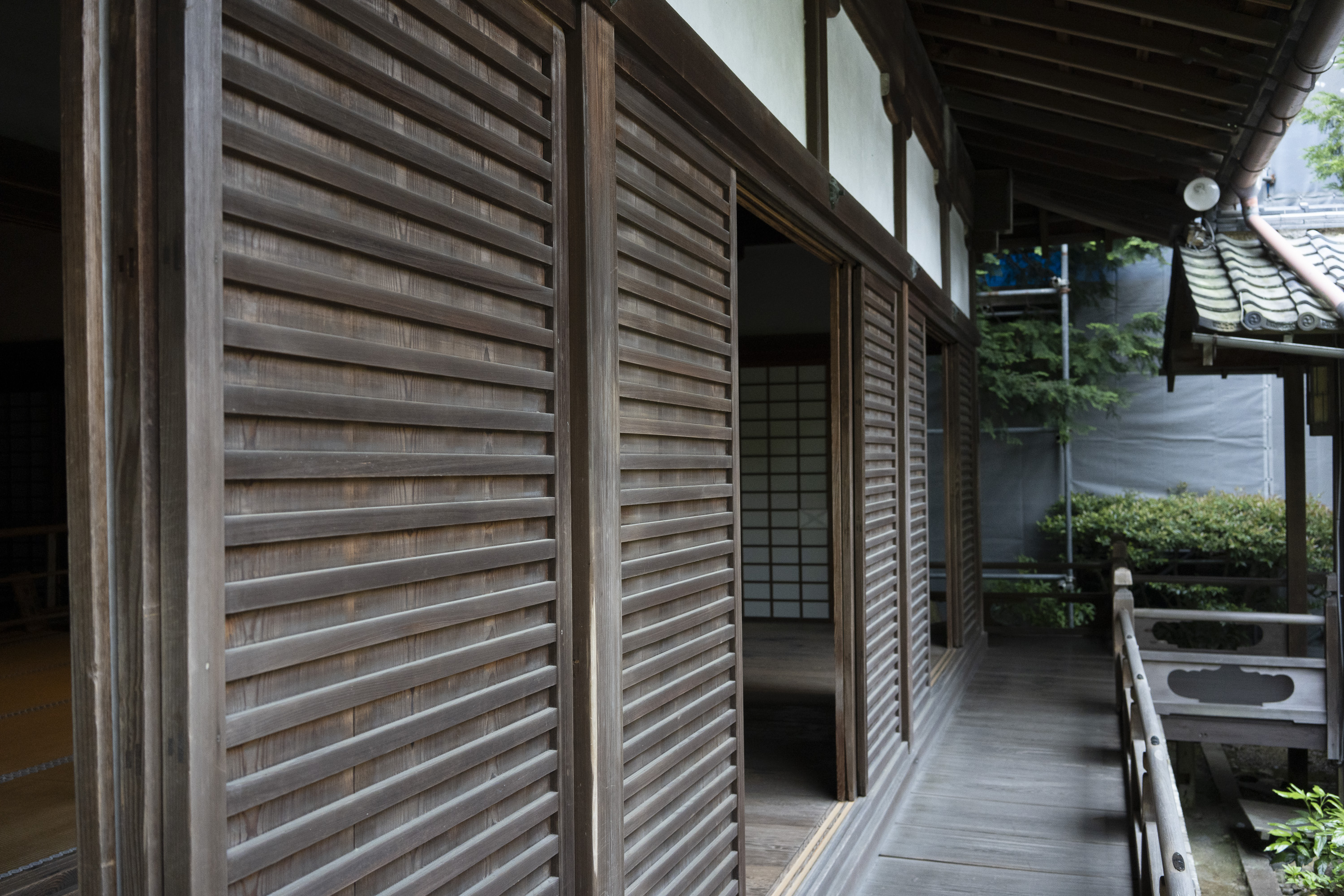
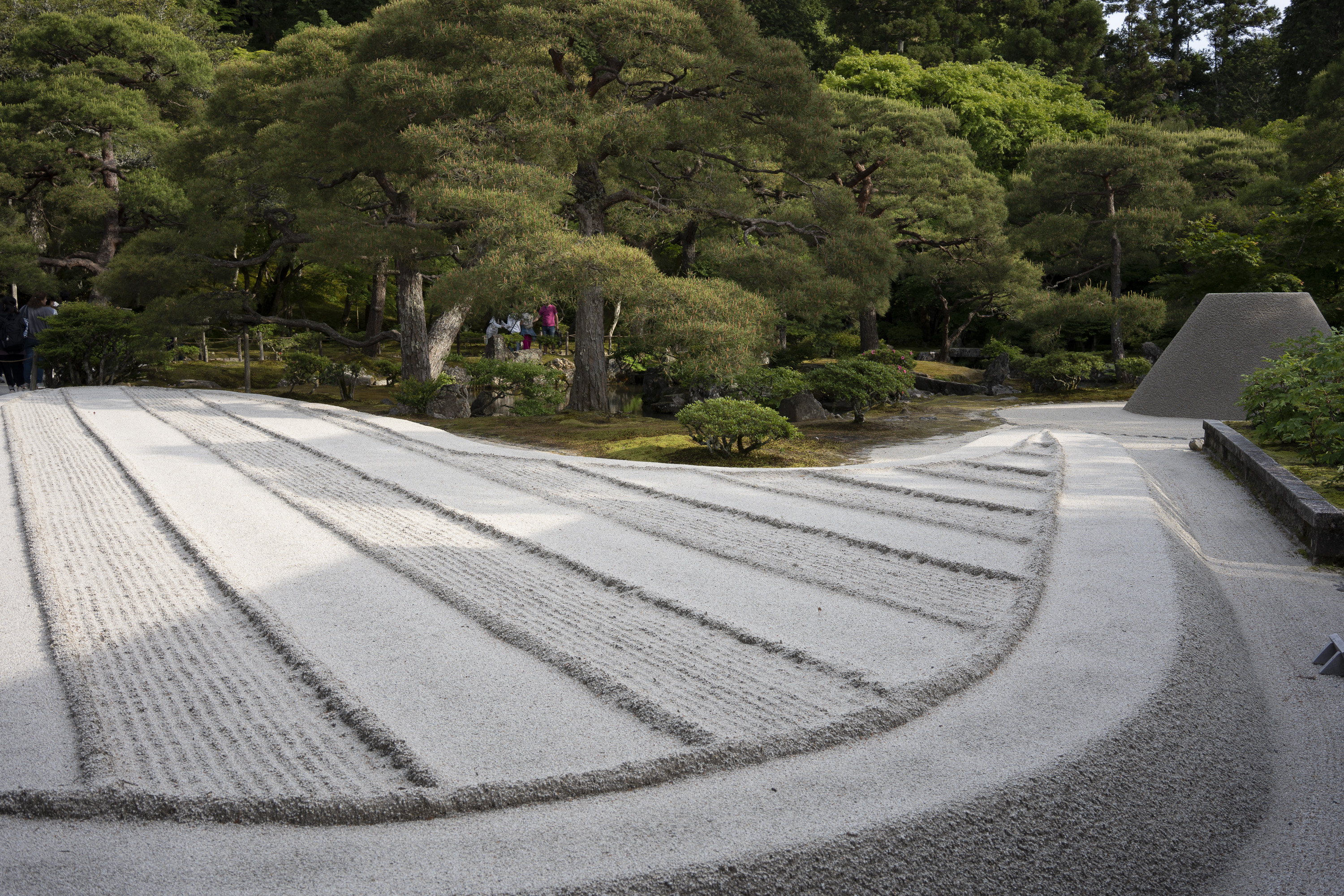
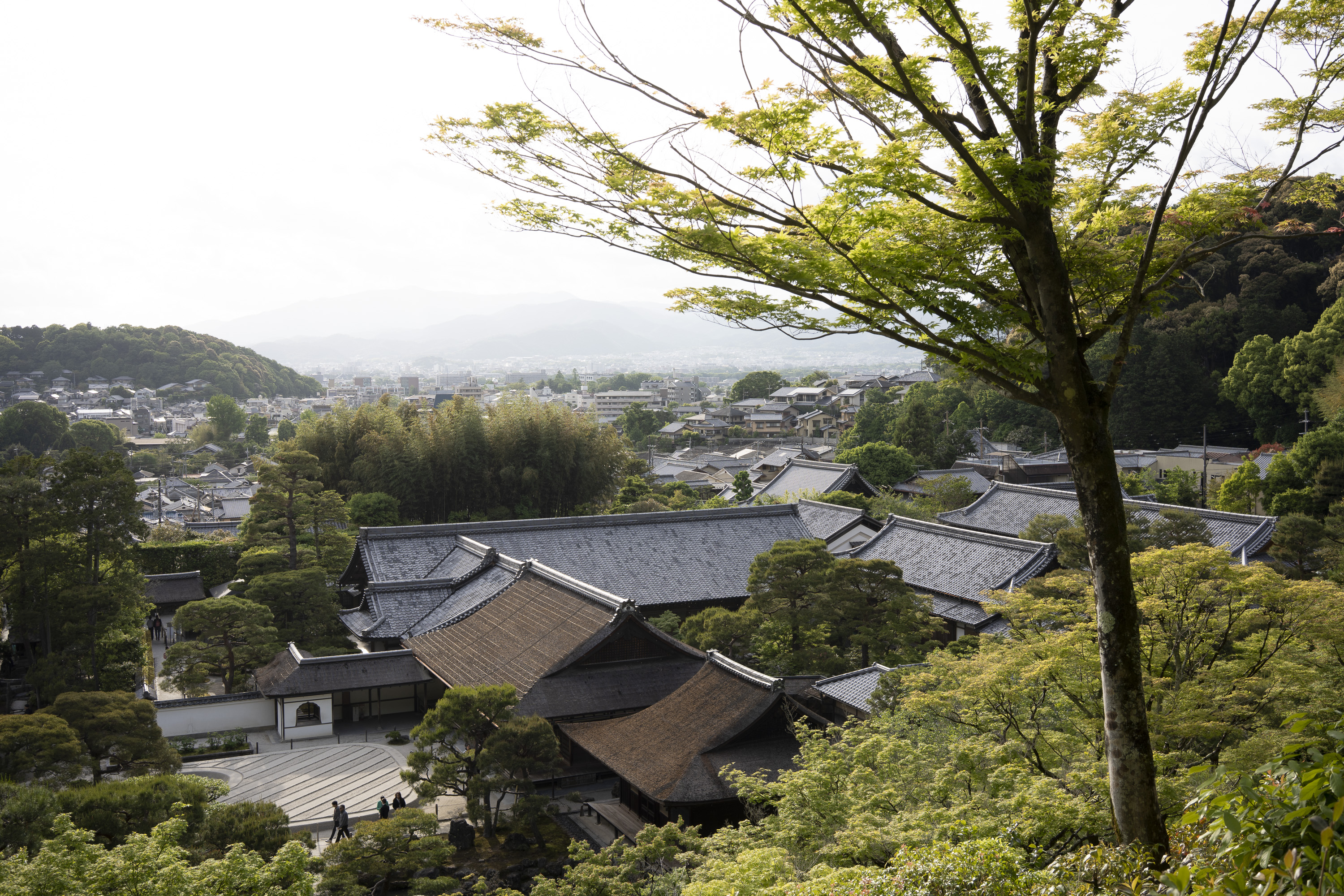
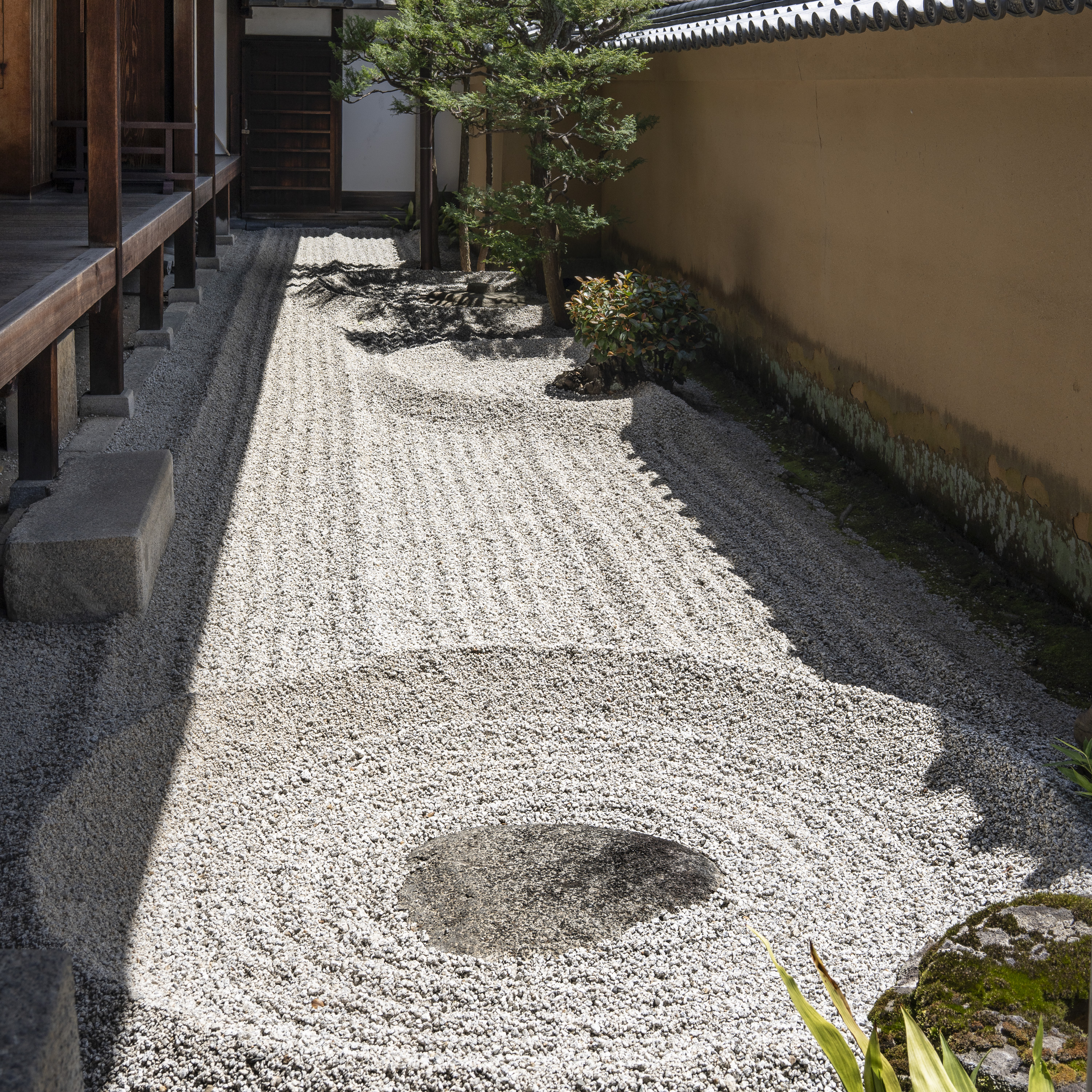
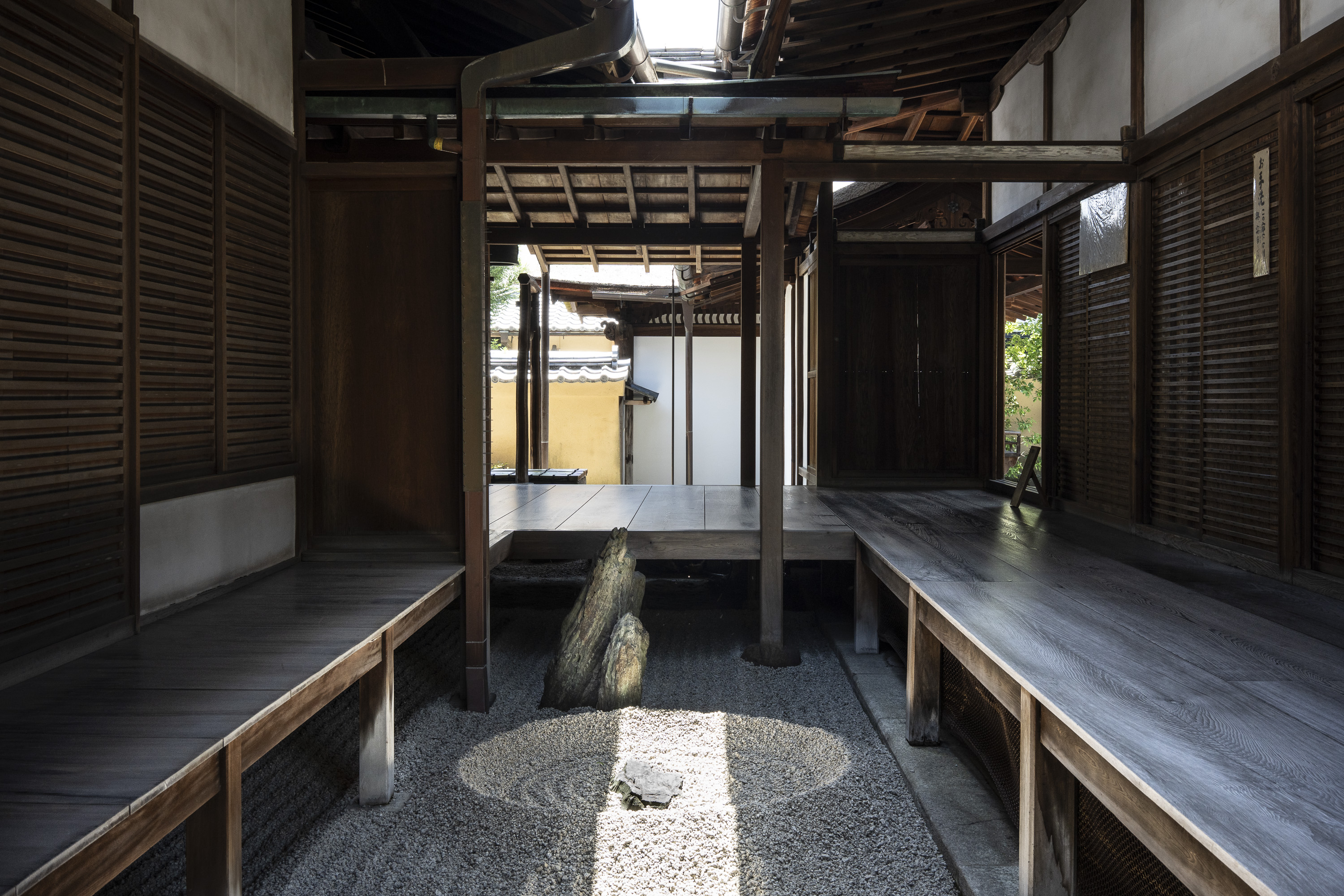
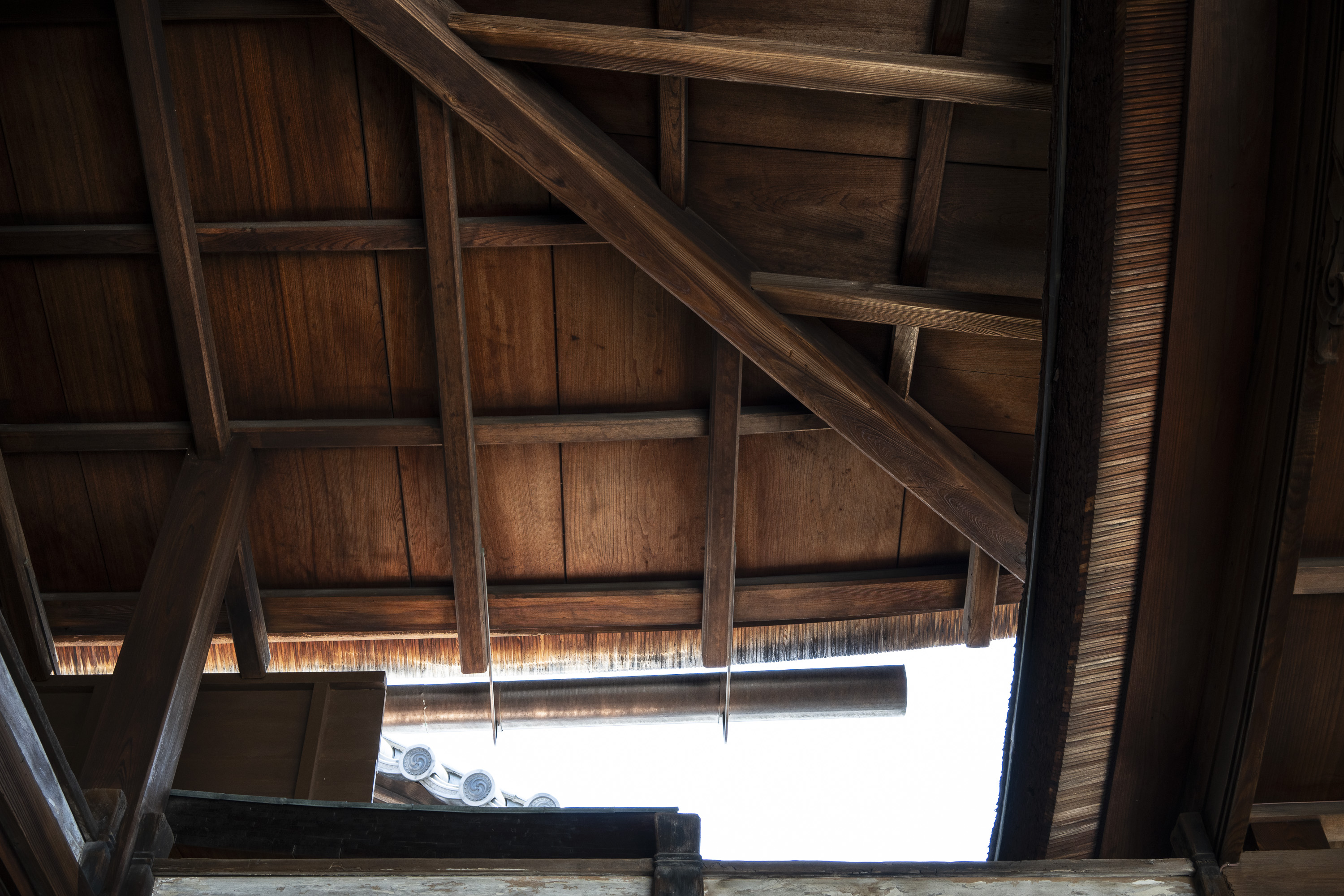
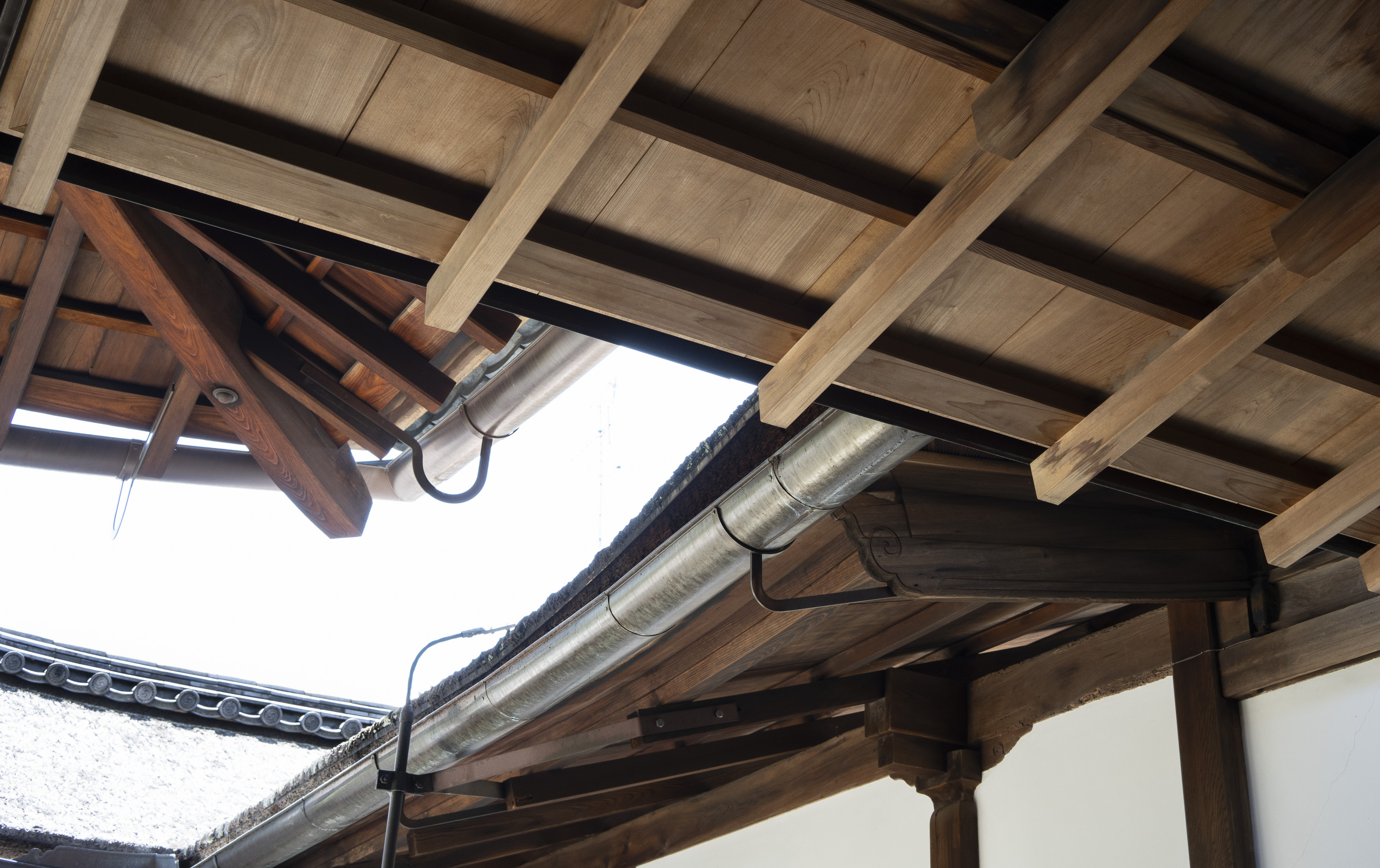
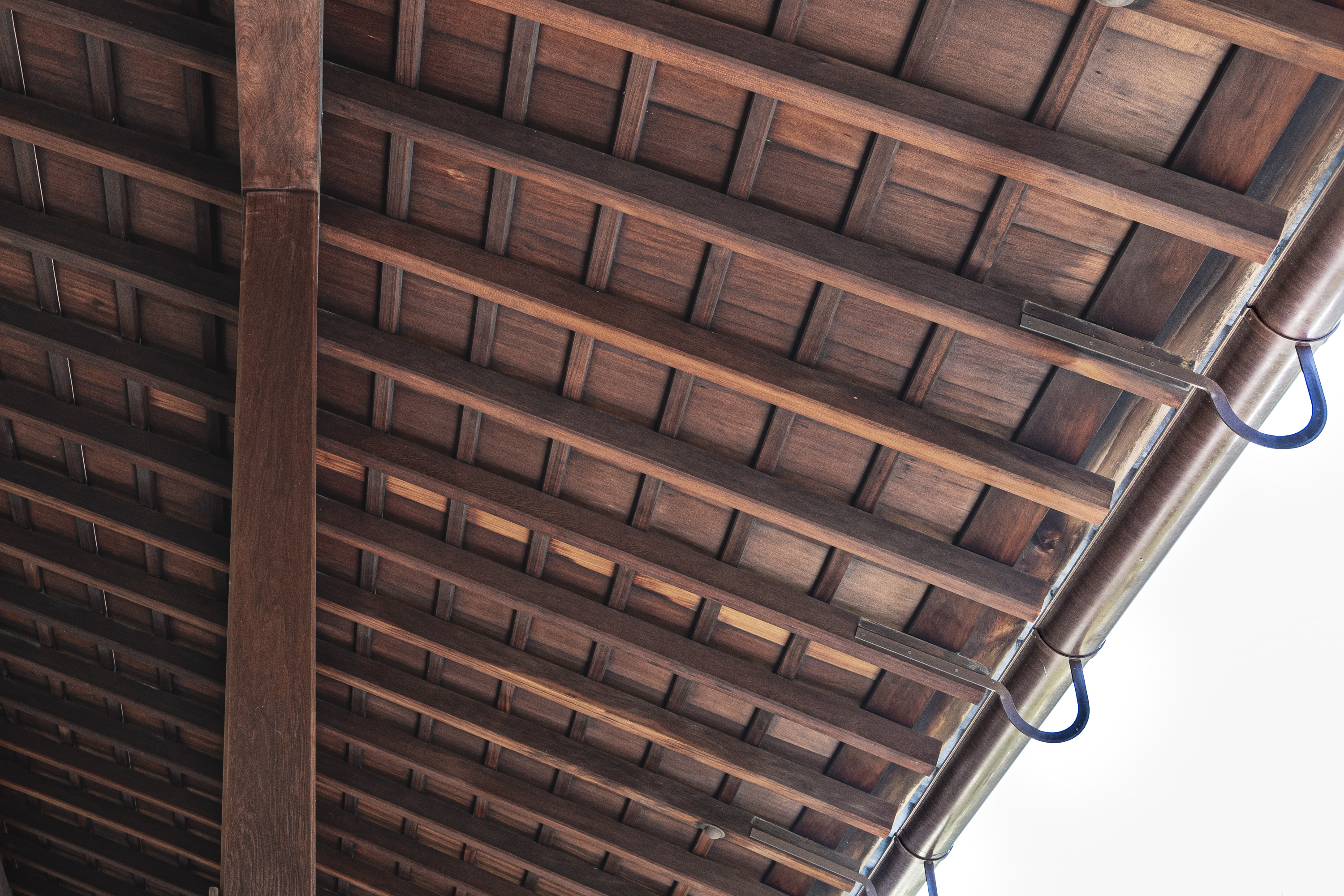
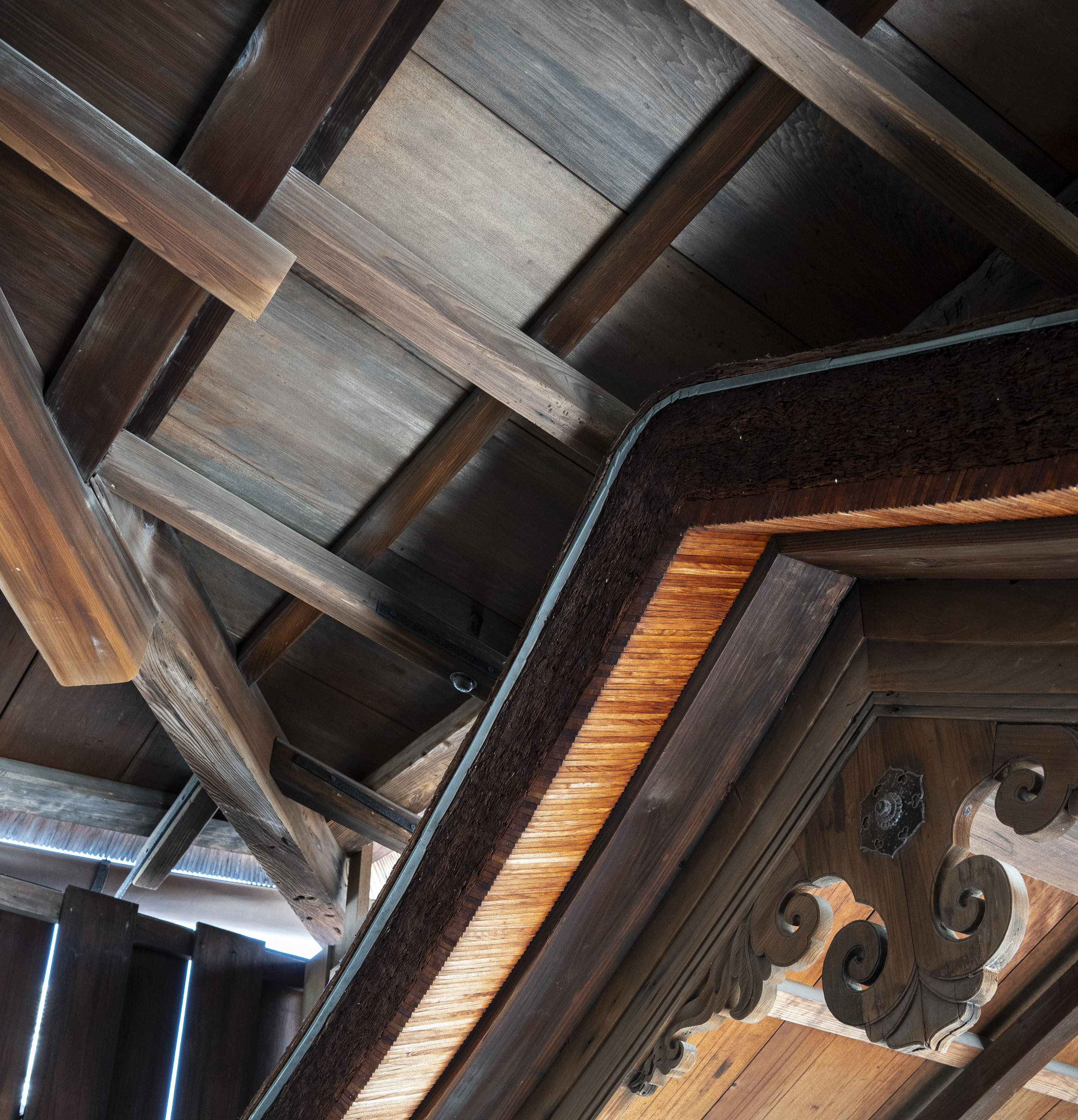
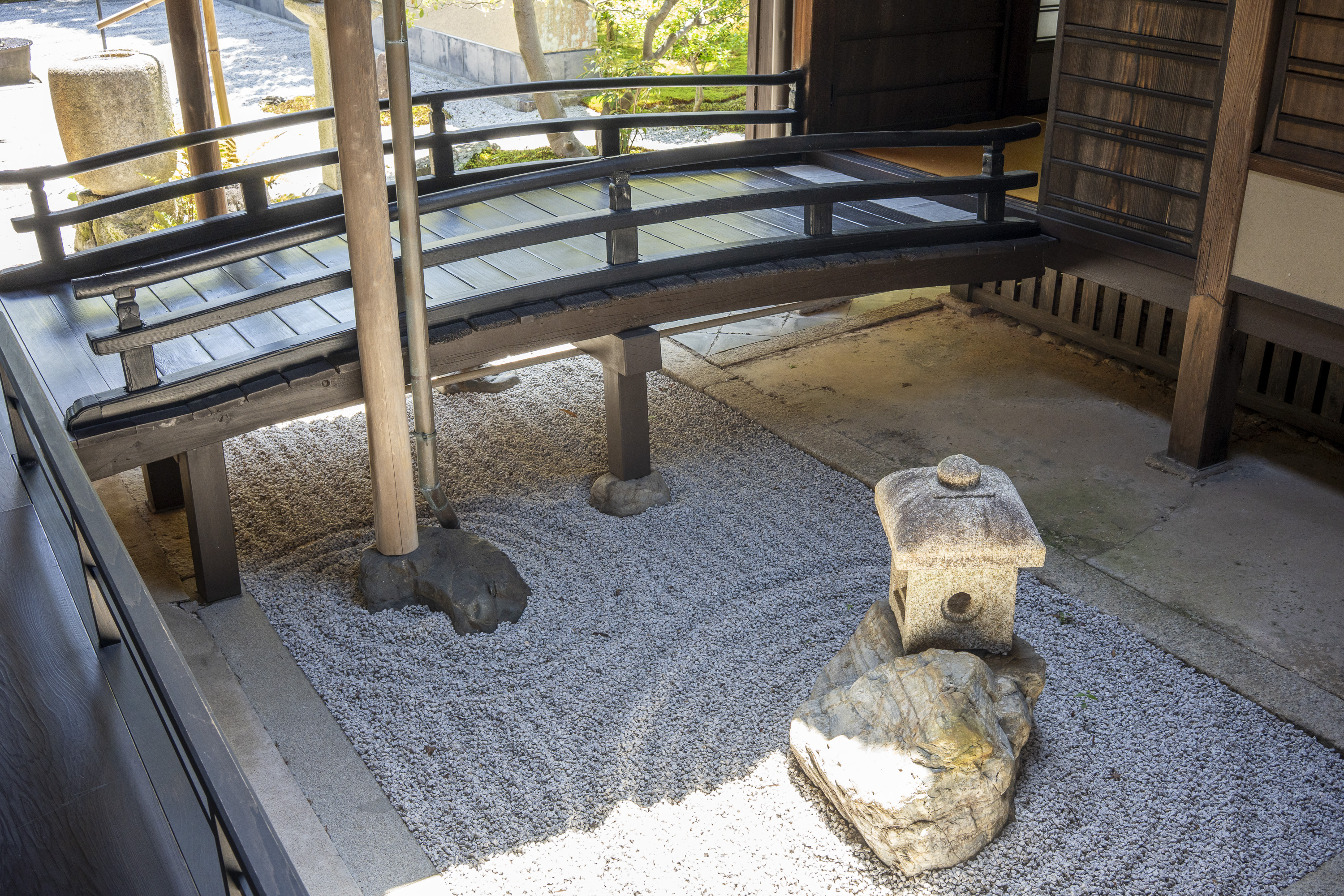
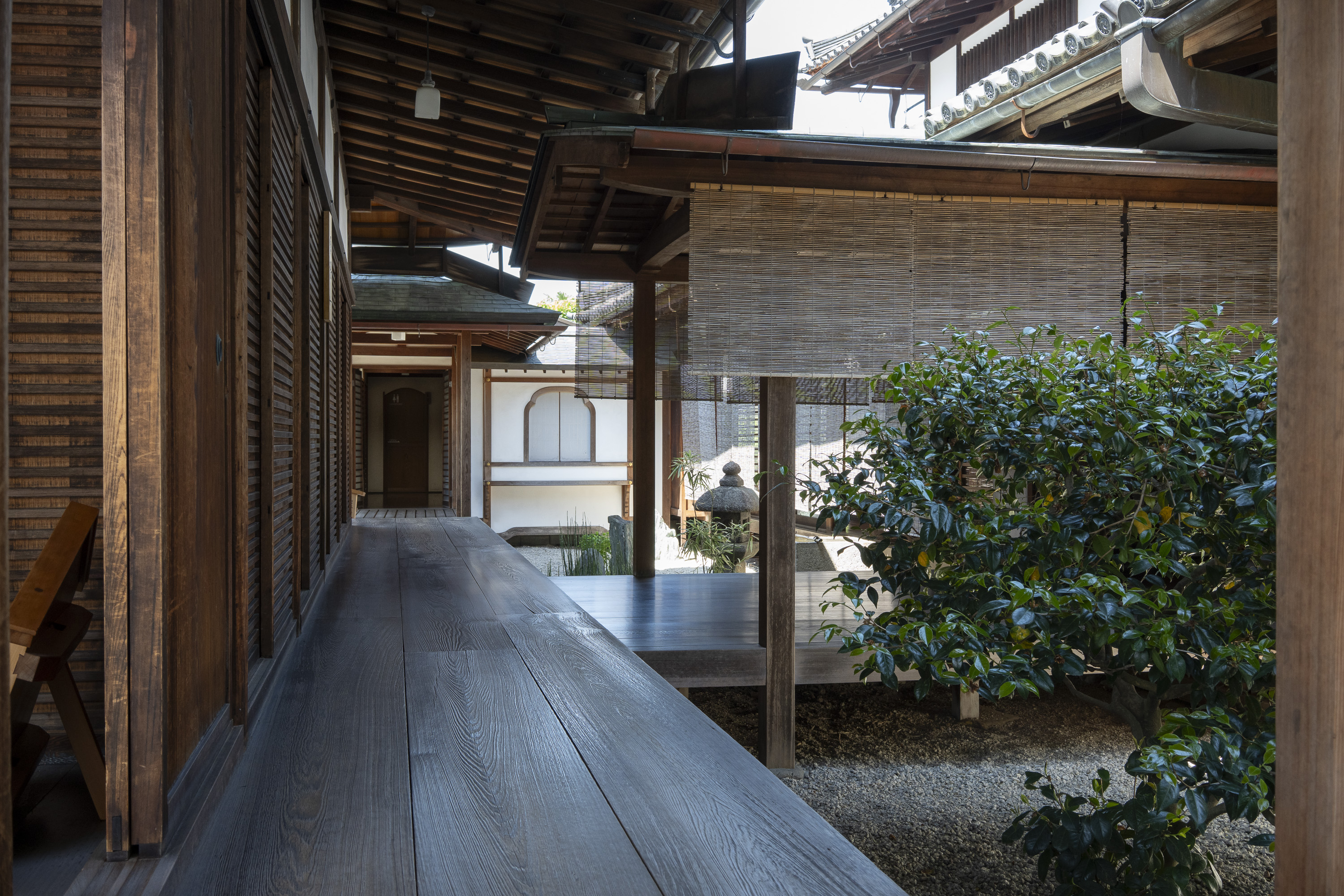
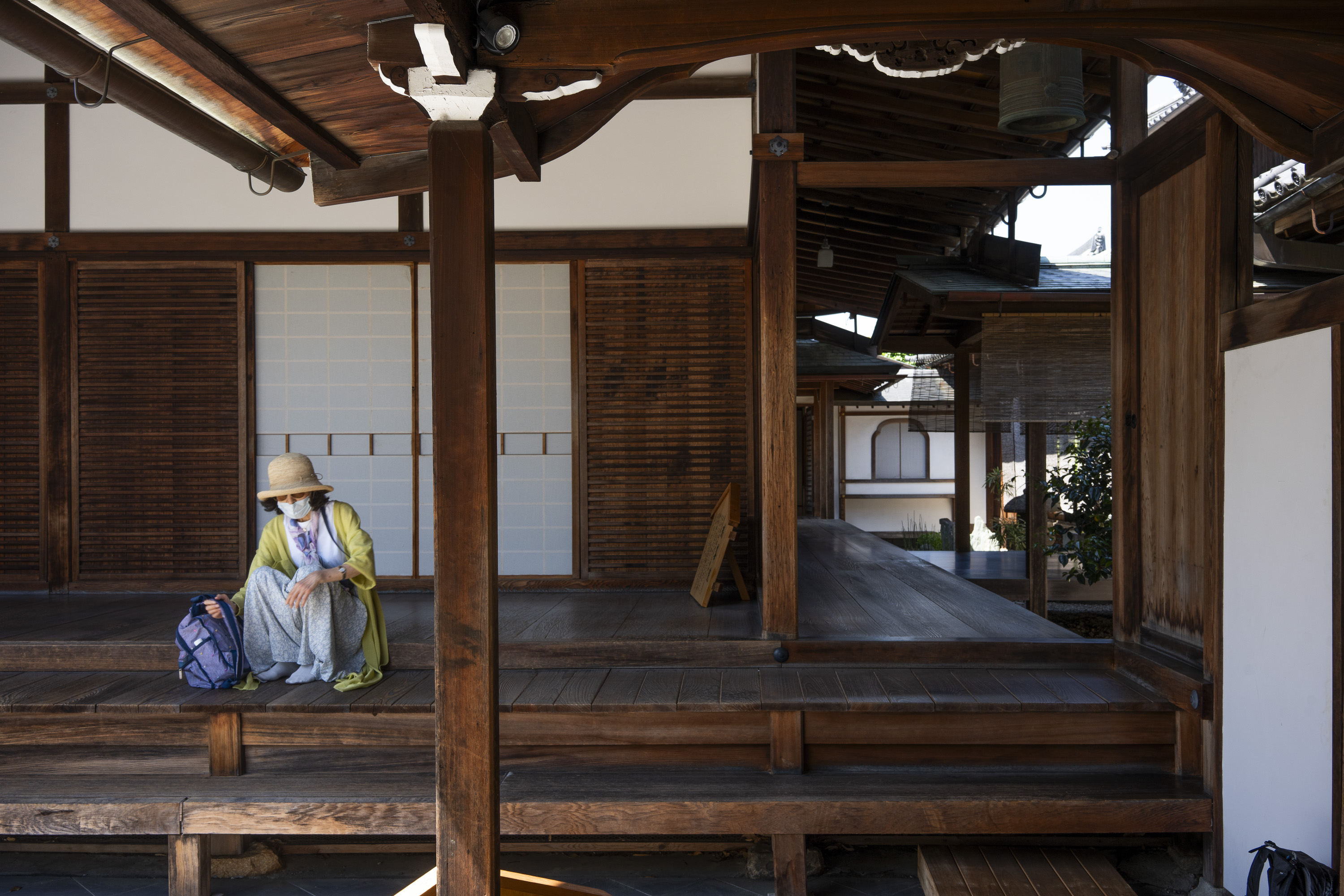
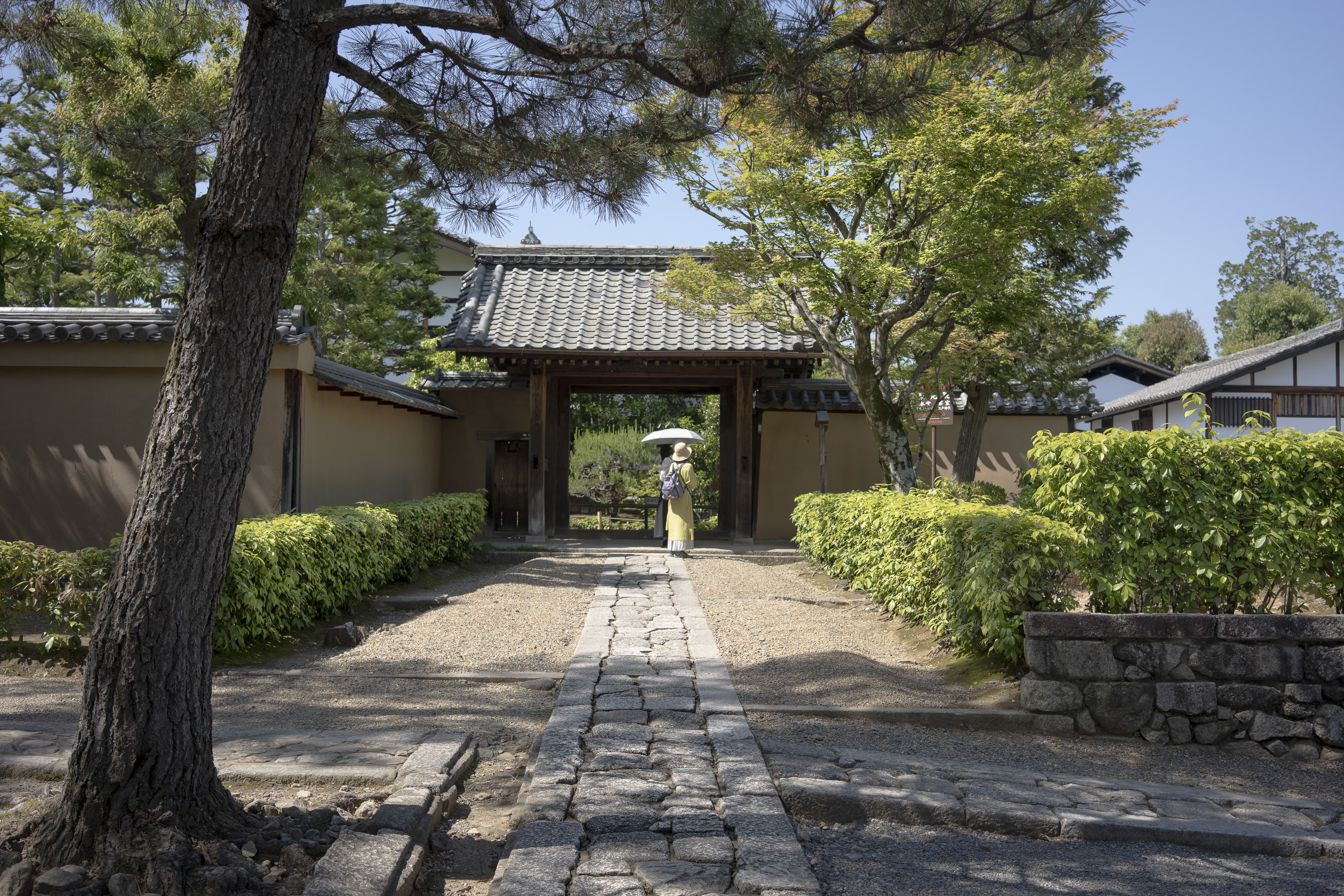
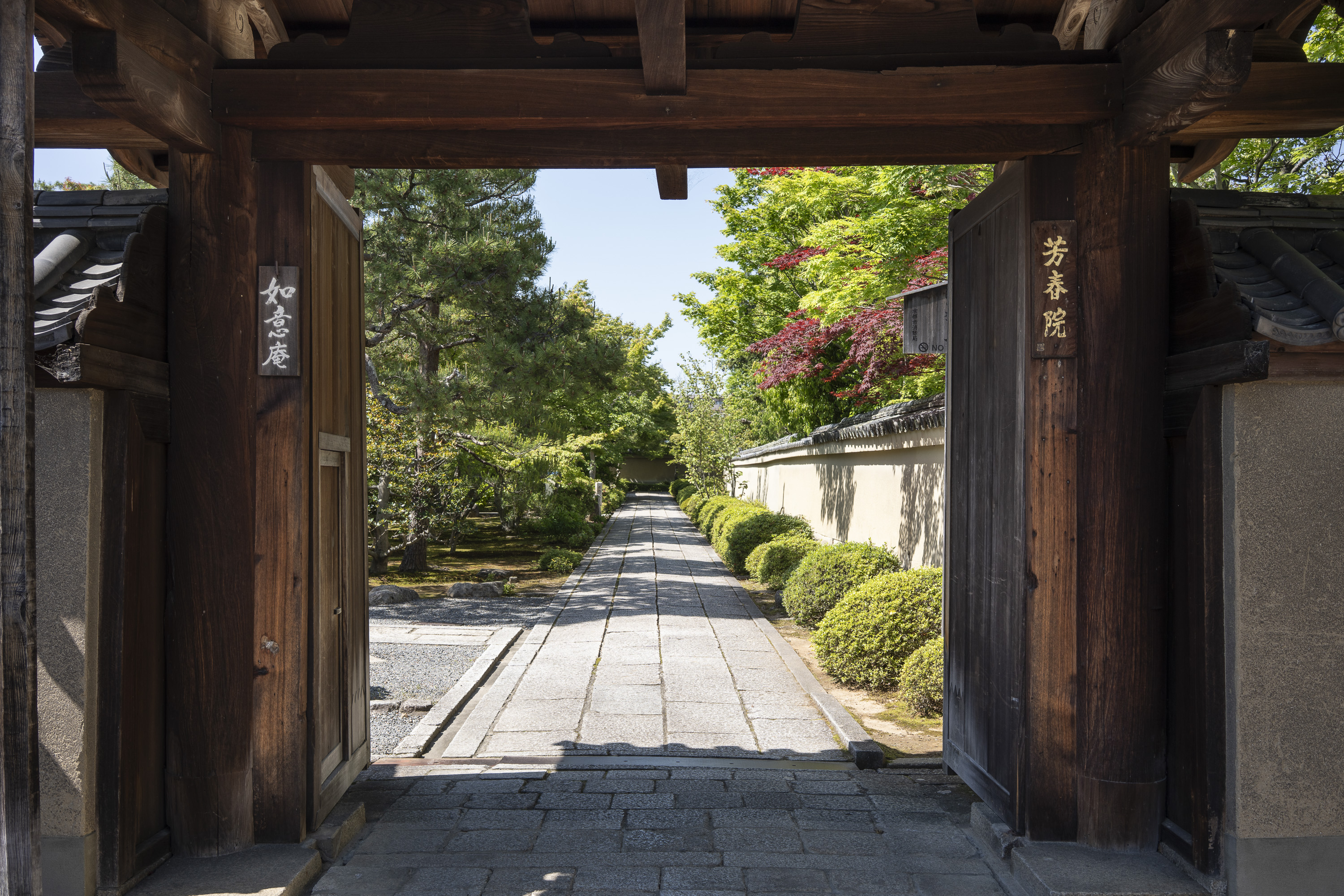
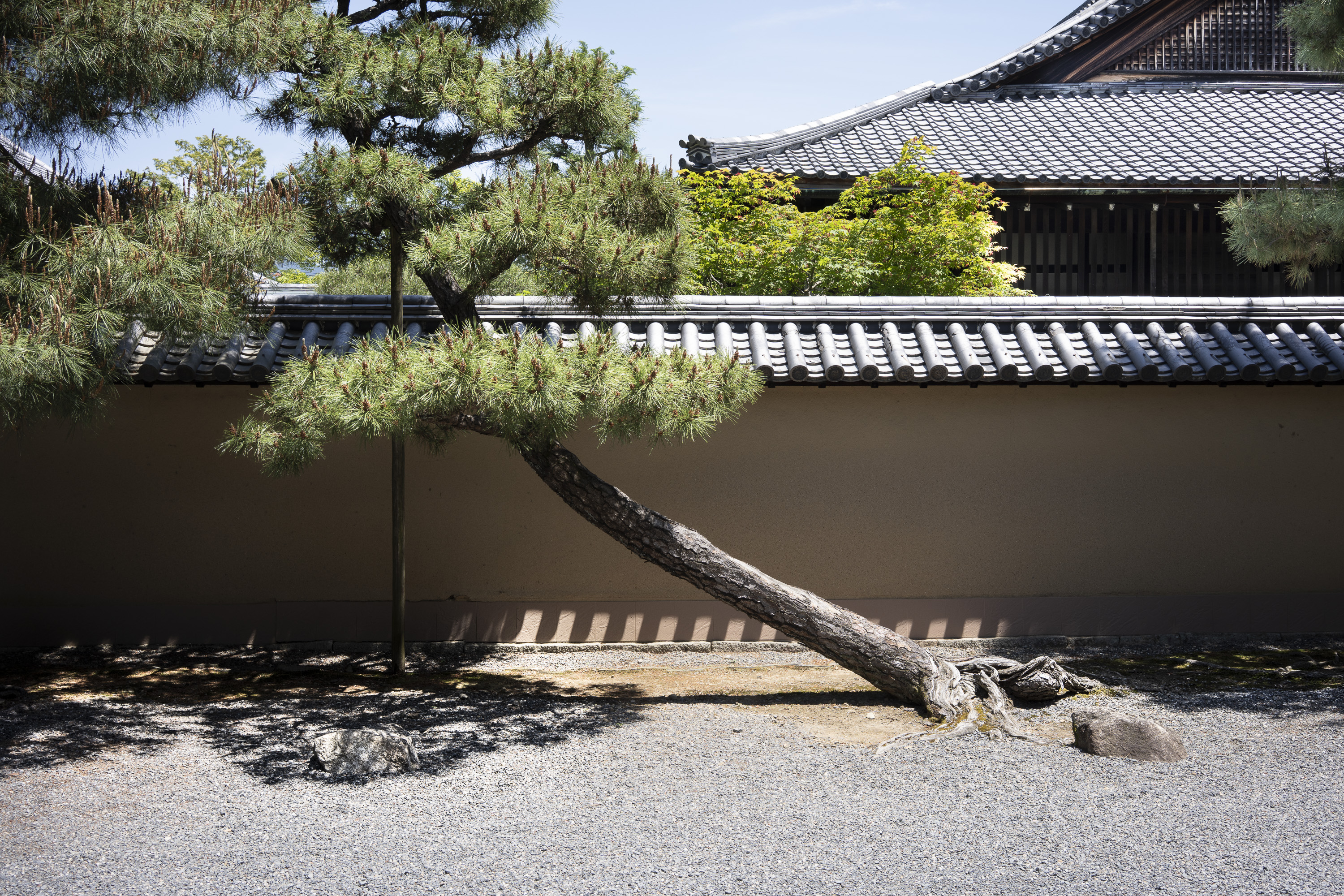
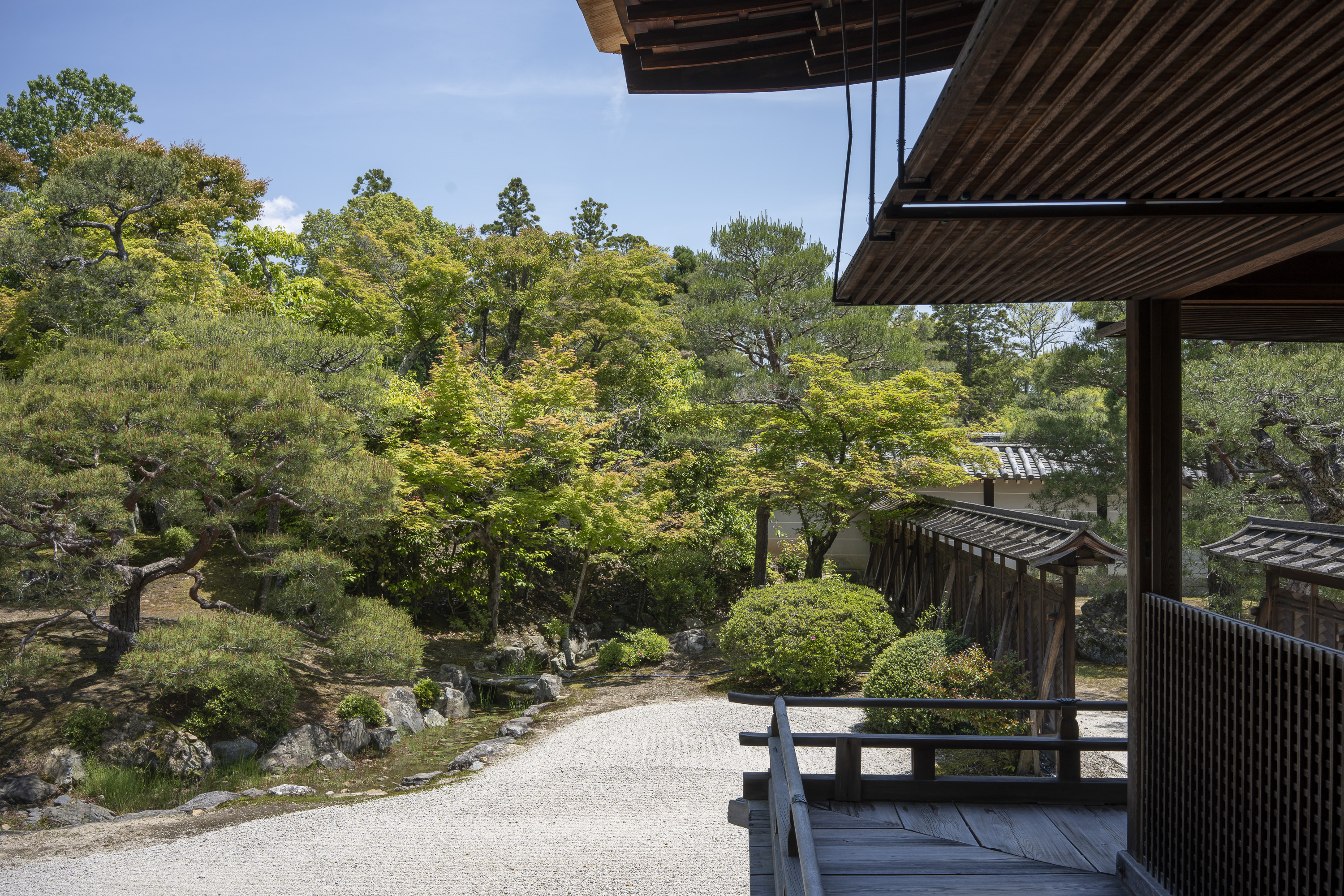
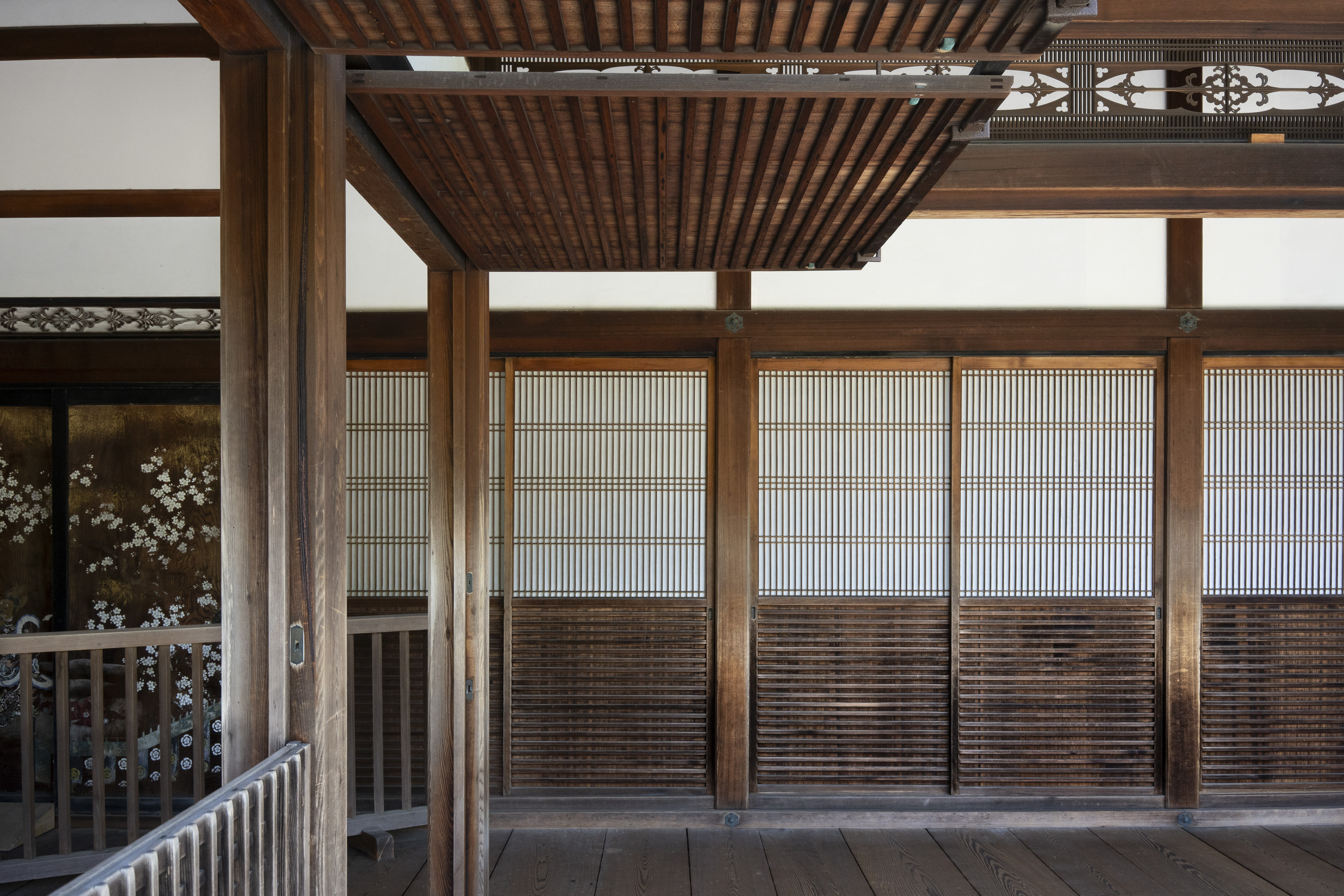
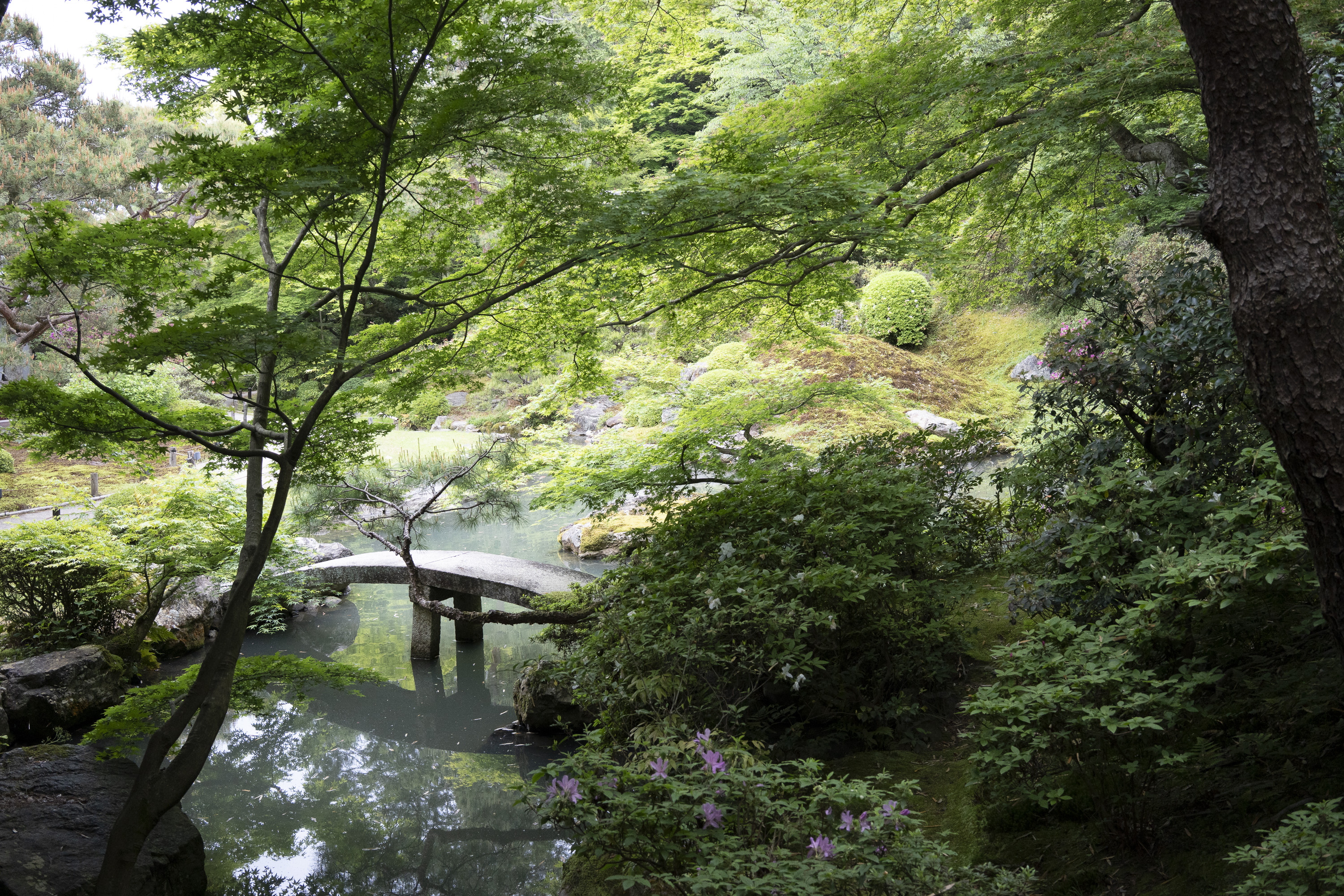
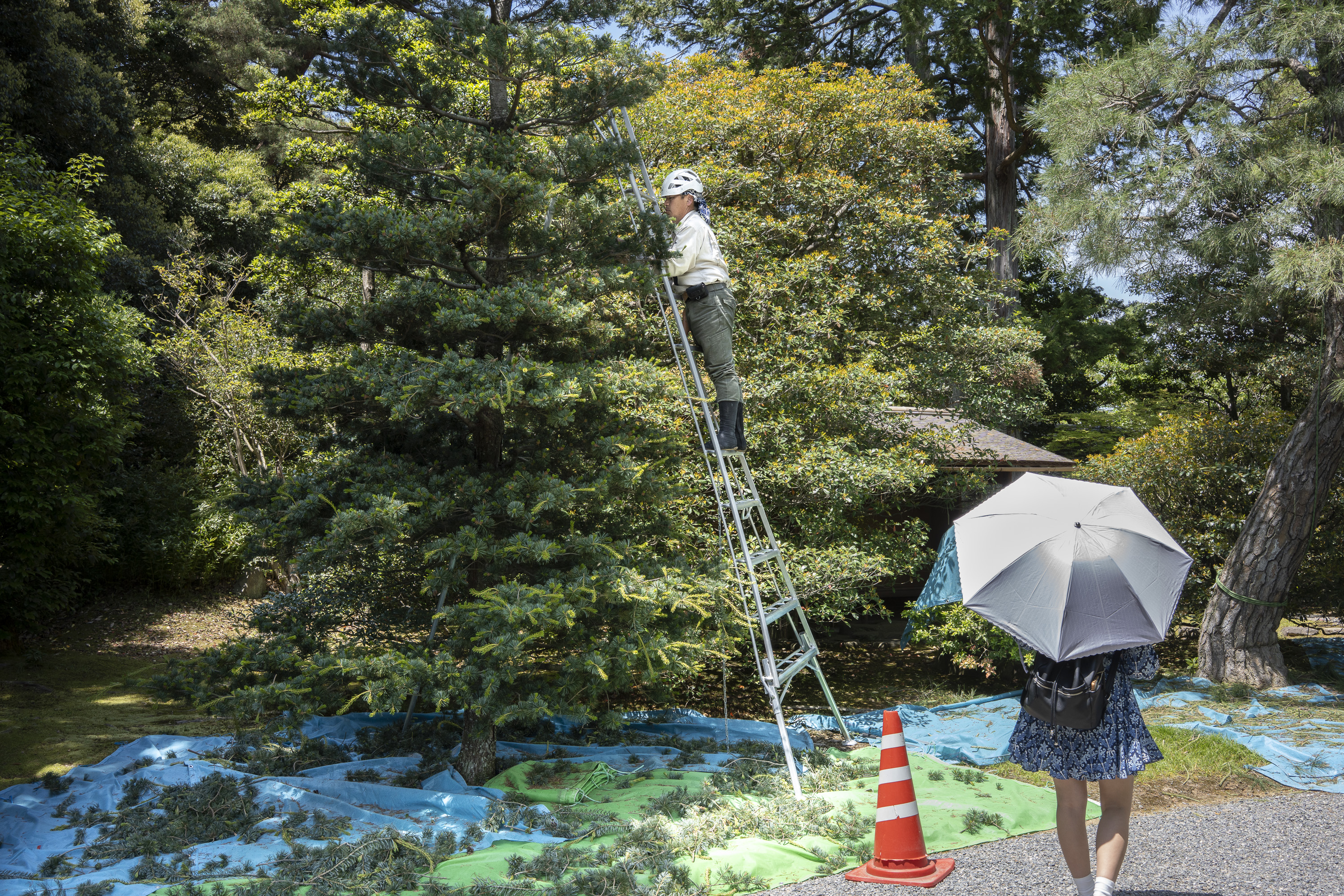
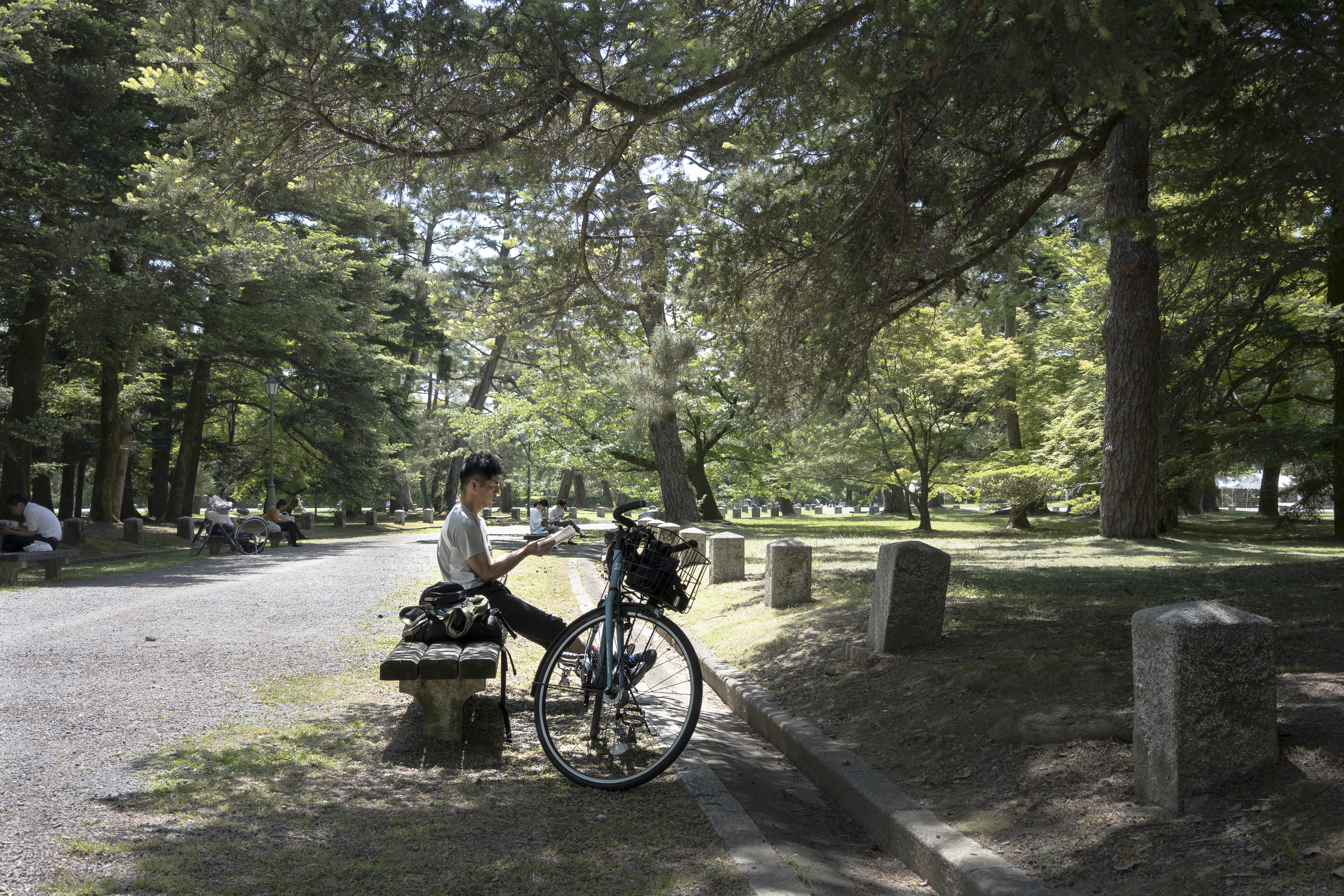
A small courtyard in the Kennin-ji temple compound encloses a young Japanese maple on a little island of grass. The circular raked furrows could represent waves lapping at the island’s edge. Each ground texture – the raked pebbles, the concrete edges, and the slim row of larger stones on the right – is neat and tidy. This is called the circle-triangle-square garden. On the edge of the Japanese maple’s small island of grass a large stone becomes a feature of the imaginary coast. Visitors contemplate the large stone arrangement in Kennin-ji’s Chouon-tei garden. Covered walks enclose the garden. It’s suggested you make your way around the garden and fight a spot where the view connects you to the scene most strongly. On one side of Kennin-ji’s large Hojo (Abbott’s quarters) smooth flat stones step sideways across a ground of raked stones to a small mortuary (out of sight on the right). Natural stepping stones rise up to the Hojo across bands of rocks and darker pebbles.On the other side of Kennin-ji’s Hojo its Daiou-en dry garden evokes a sea, with patterns raked into the stones. The veranda on right is nicely designed for sitting comfortably at a wide step. Large stones opposite the veranda are placed to represent mountains. The scene here is typical of the peace and contemplation such gardens inspire.At the far end of the Hojo’s veranda a couple abandons their camera and tripod to just sit and look. Around the corner of the Hojo’s Daiou-en garden a third dry garden features another imaginary landscape of moss and rocks. The Shoren-in temple uses the “-in” suffix of a sub-temple, but its history gives it the prominence associated with larger temple compounds that have the suffix “-ji”. This view onto a Shoren-in garden with carefully shaped azaleas and trees is framed from within its Kacho-den guest house.Another view of the gardens surrounding the Kacho-den guest house. Both the inner and outer set of building posts become elements of the building’s exterior when screens or panels are pulled along tracks (visible in the floor on the right) to enclose the spaces.A beautiful large azalea just outside – maybe just a bit beyond its peak blossom?Walkways and rooflines and gables – a typical scene in temple compounds.Not all Zen temple gardens are stone gardens. Here the sub-temple Oubai-in’s moss gardens are full of native plants and small trees. The new leaves of a group of Japanese maples shimmer in the spring light.The buildings within these temples and sub-temples use a lot of sliding panels, both within and at the exterior walls. They allow for flexibly arranging space inside, and for opening the inside up to the surrounding gardens and nature.At the Gingkaku-ji temple a unique stone garden is elevated above the adjacent path, and a tall, truncated cone of stones at the far right is incorporated into the somewhat sculptural composition. Looking at the precise surfaces of the tall edges, and of the rows of thick and thin lines across the top, makes you think about how the folks who tend these dry gardens carry out their precise work.Still at the Gingkaku-ji temple, a walk up through its hillside moss garden gives a view of the temple compound, and of part of Kyoto’s flood plain beyond. The raked pattern of the stone garden can be seen at the lower left.This narrow dry garden is at Ryogen-in, a sub-temple within the large temple complex of Daitoku-ji on the north side of Kyoto. I sat at the edge of the small porch and admired the raking of the stone, and the circular and semi-circular ponds around the stone and the plants.Another narrow stone garden at Ryogen-in. It’s outside, but the roof overhangs above shade it except for a narrow slot of sunlight. The sun illuminates an encircled stone, and the two taller stones behind reflect the sunlight coming off the deeply raked bowl. The floor boards are also nicely lit by the light bouncing around. Looking up at the roofs over the connecting walkways at Ryogen-in, the structures are simple and finely crafted. At the edges you can see the fine detail of the shingle assembly – ultra-thin shingles are layered at fine intervals to create a thick flexible roof edge.More walkway roofs intersect and overlap in this view. The copper gutters are carefully laid out and supported. Even the cable from the lightning rod is supported by a clever bracket. The repetition of the slender wooden roof supports sets up a pleasing pattern. Note the nicely curved gutter support brackets, and the way they’re secured to the wood structure.Here’s another interesting meeting of roofs at the Kourin-in sub-temple, also at the Daitoku-ji complex. You can more clearly see the way shingles are assembled to create a thick roof edge. Very fine and narrow wood slats form a base layer over which many thin shingles are laid up.At the Daisen-in sub-temple a subtly arched wooden bridge crosses a virtual stream of stone, raked in circles around stone post pads and carved elements.At the Zuiho-in sub-temple, also at Daitoku-ji, the main garden is known at the Garden of Solitary Sitting. The temple pamphlet notes that the garden “is characterized by vigorously raked sand, giving the impression of rough seas. Whereas flat stones convey a calm and solid feeling, tall pointed stones project a strong and active mood.” Zuiho-in has the typical exterior walkways, roof overhangs, and sliding panels of temple compounds that have been configured from multiple buildings. The complex arrangements result in interstitial spaces for neatly kept shrubs and little sculpture arrangements. This view steps back a little from the previous photo. The veranda of the structure comes into the picture – the woman has a view of the Garden of Solitary Sitting. Note some of the faces of the wood structure above have been painted white – a treatment I saw at other temples that highlights the craftsmanship without being too decorative.Paths from the primary lanes at the Daitoku-ji temple complex lead to the gates of sub-temples. Here the woman who was sitting at Zuiho-in in the previous phots is approaching a gate.Looking out through a sub-temple gate onto one of the stone paths at Daitoku-ji.The long pine boughs reaching over this Daitoku-ji path from the right are reinforced with bamboo poles.Every element of this temple compound scene looks carefully placed and nicely cared for. A leaning tree at a wall enclosing a sub-temple. Yes, the angle is impossible – a supporting pole has been installed under the trunk at the left!At the Ryoan-ji temple fifteen rocks are arranged in a number of groupings (not all are shown here) so that no matter where you position yourself at least one rock cannot be seen. Hinged panels at Ninna-ji, in western Tokyo, swing up to open the interior of one of its buildings to a veranda overlooking an expanse of raked stone at the edge of a natural forest. In this complex the emphasis is on natural landscapes rather than the abstracted landscapes found in the Zen gardens.Another view of the hinged panels, showing a fine hierarchy of wood structure and panel textures.At Shore-in temple, another example of a natural garden scene, adjacent to its Kacho-den guest house.At the Kyoto Sentō Imperial Palace gardens, an evergreen is carefully pruned. The ladder supporting the gardener is actually set up like a tripod, with a supporting pole (not very visible) hinged from the top of the ladder and threaded down through the branches. Kyoto Gyoen National Garden is a large urban park in the center of Kyoto, adjacent to the Kyoto Imperial Palace gardens. Not quite a Zen garden, but its broad paths offer a peaceful and shady refuge.