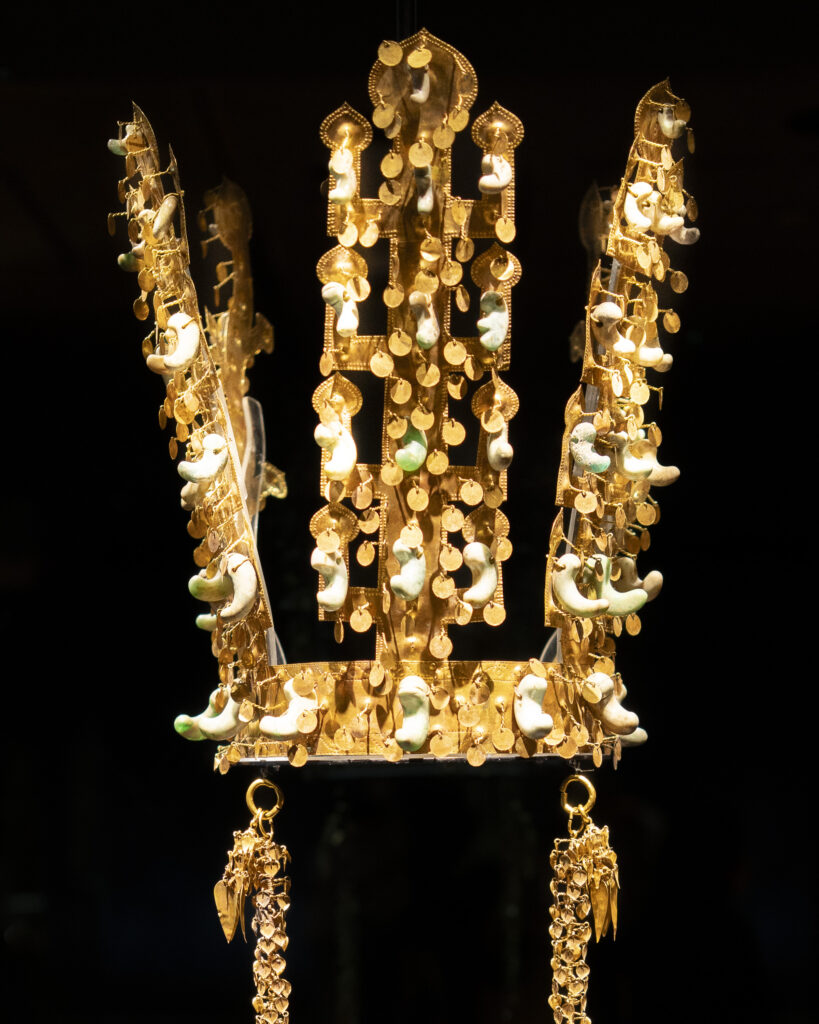
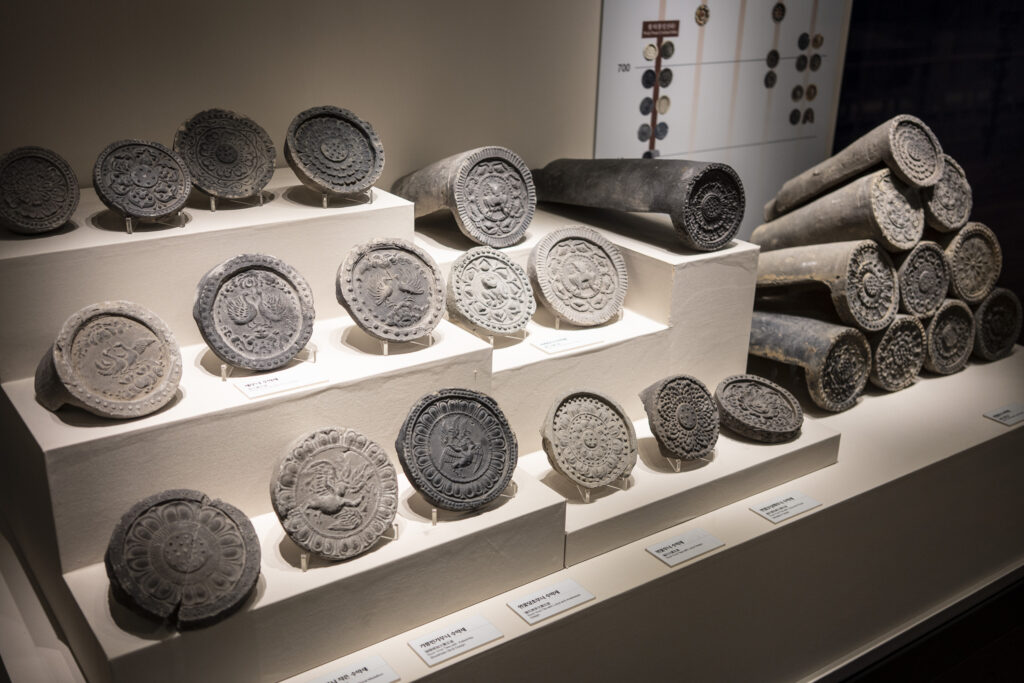
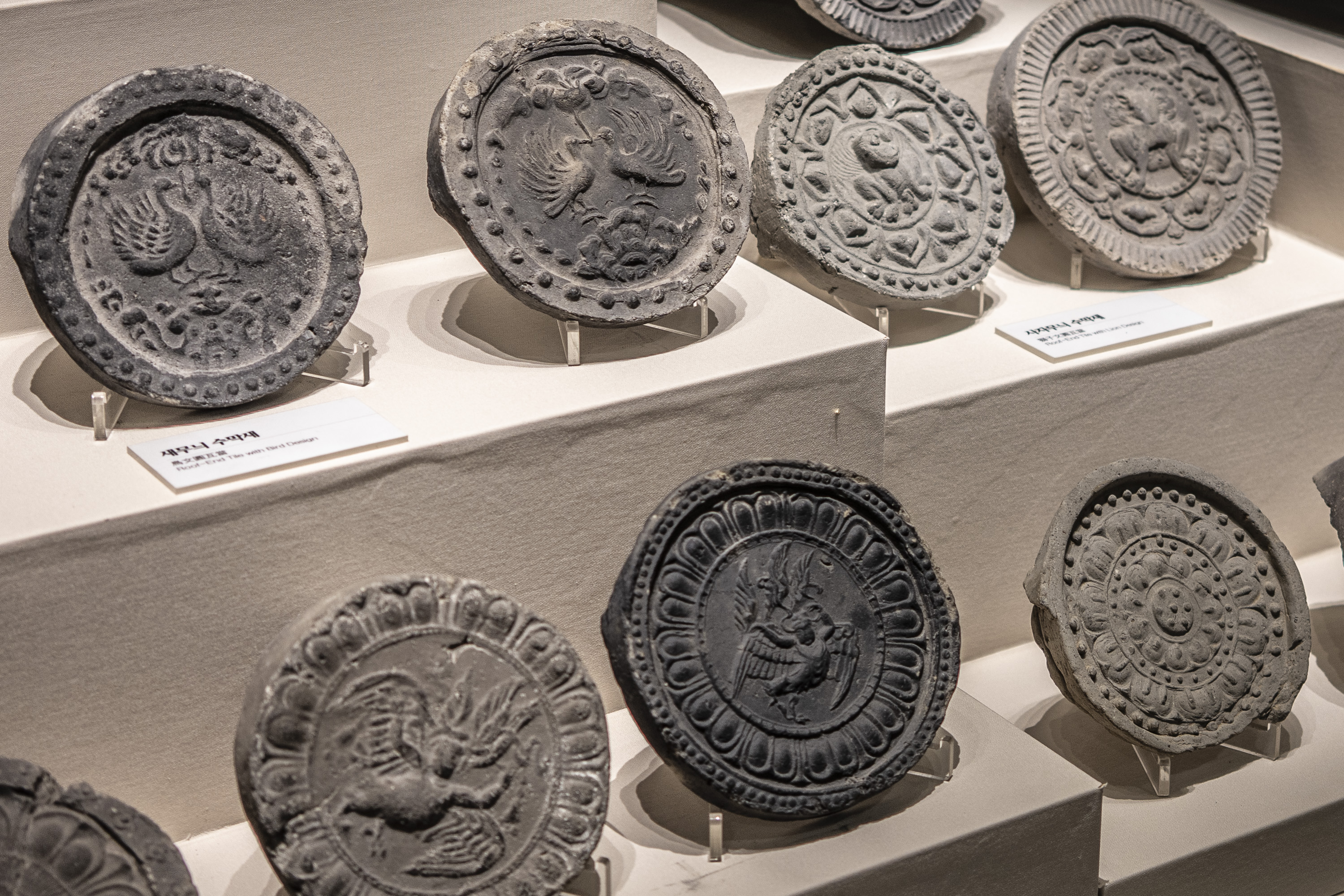
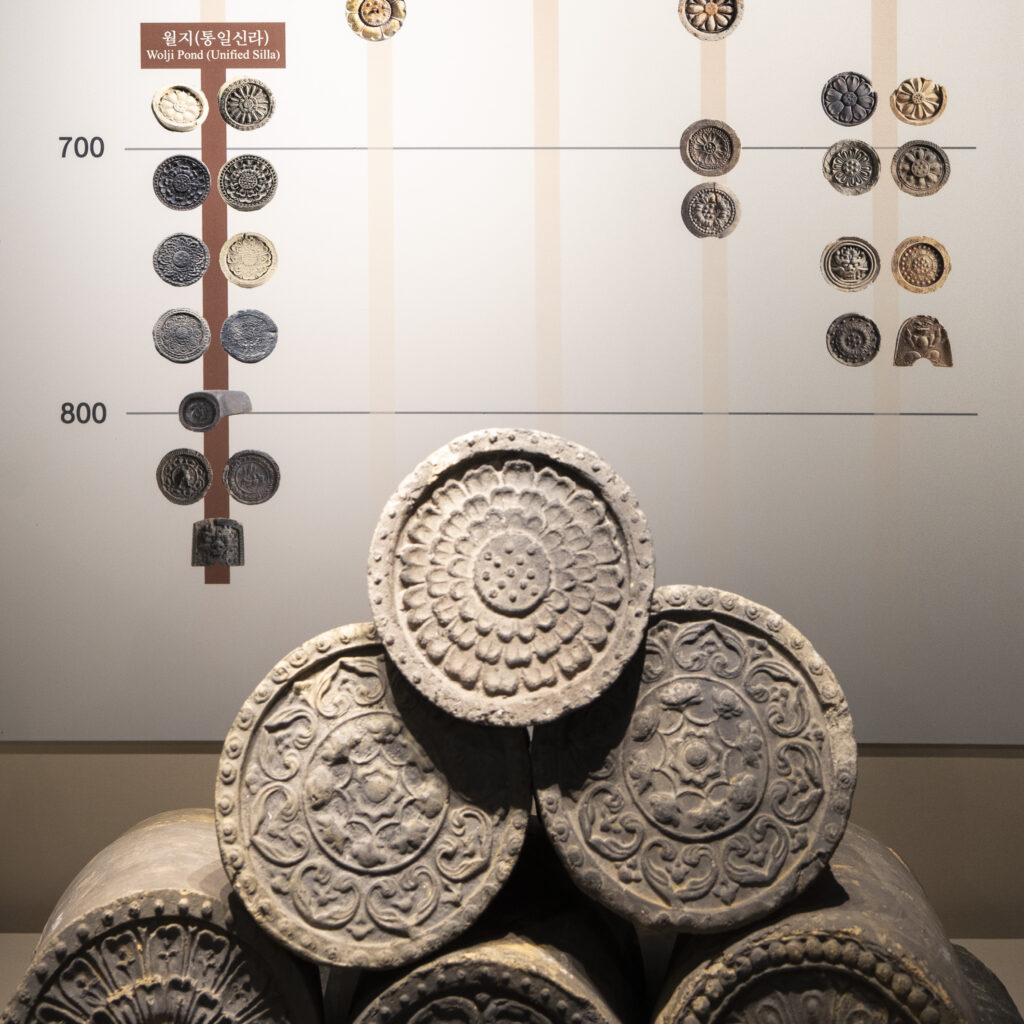
Gyeongju, a city near the southeast coast of the Korean peninsula, was once the capital of Silla, a kingdom that existed for about a thousand years, from the 1st century BCE to the 10th century CE. In my previous post I shared photographs of a park-like complex of royal Silla tomb mounds that I admired for the carefully places trees and landscaping that complemented the hill-sized mounds. In this post I’m taking us outside that historic feature of Gyeongju into adjacent areas that have more of the city’s past. It’s easy to roam in the past if you follow the routes that I took, including: To an adjacent expansive park that contains more tomb mounds, as well as the remnants of defensive fortifications for the main Silla palace compound; to a hike up and along the ridge of nearby Namsan mountain, dotted with small Buddhist shrines, and with soft trails carpeted with pine needles; to the Gyeongju National Museum, with its excellent displays of archeological finds and royal artifacts; to a little village of historic structures that preserves the small-scale architecture of the time; and to a beautiful small forest that was the site of an interesting myth.
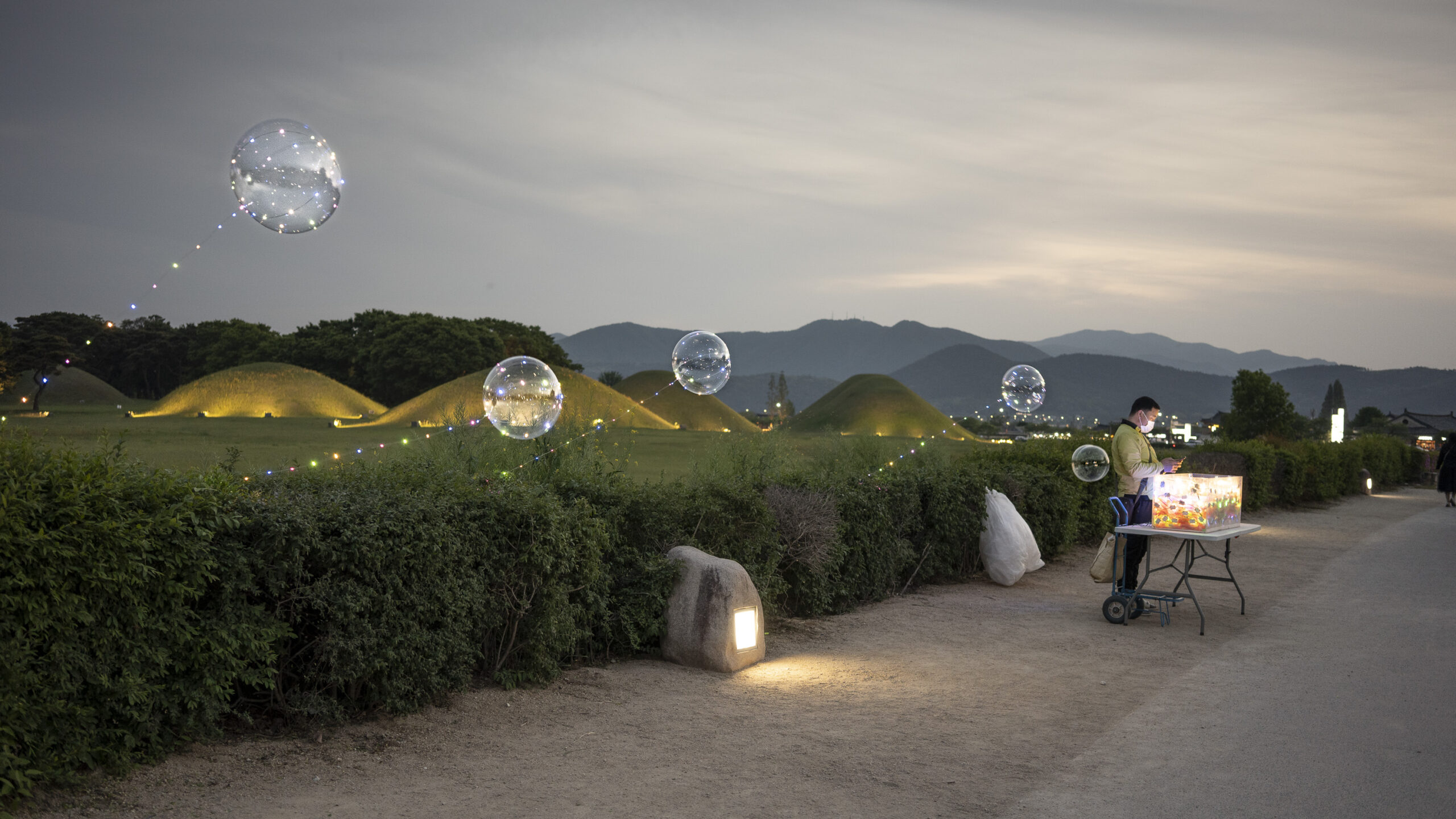
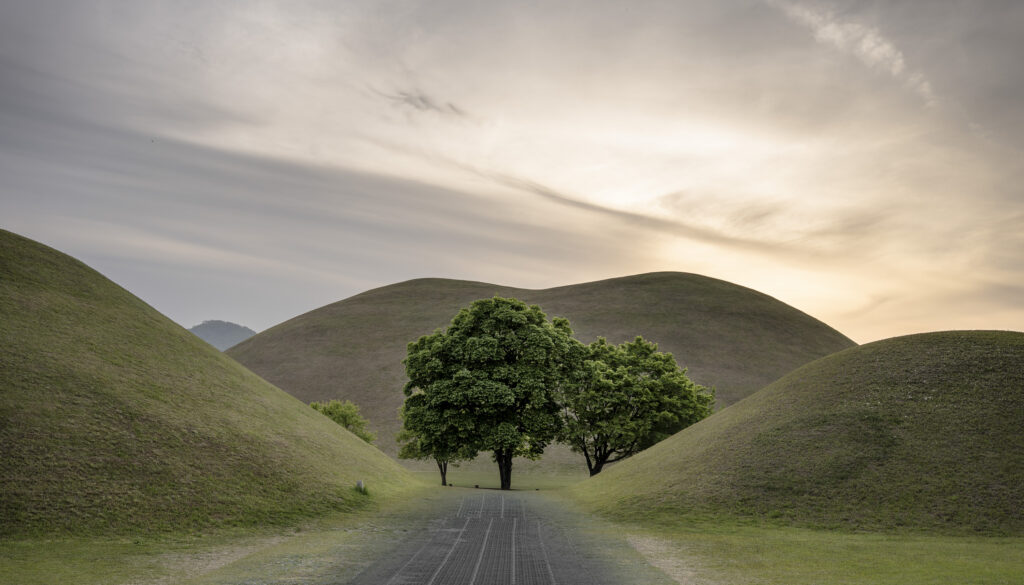
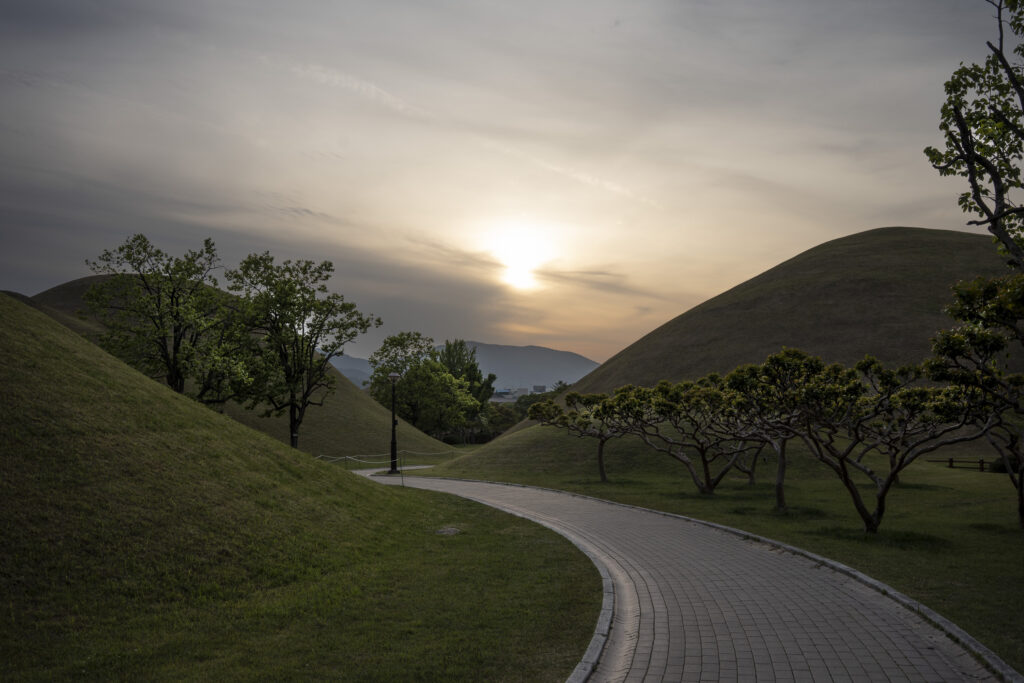
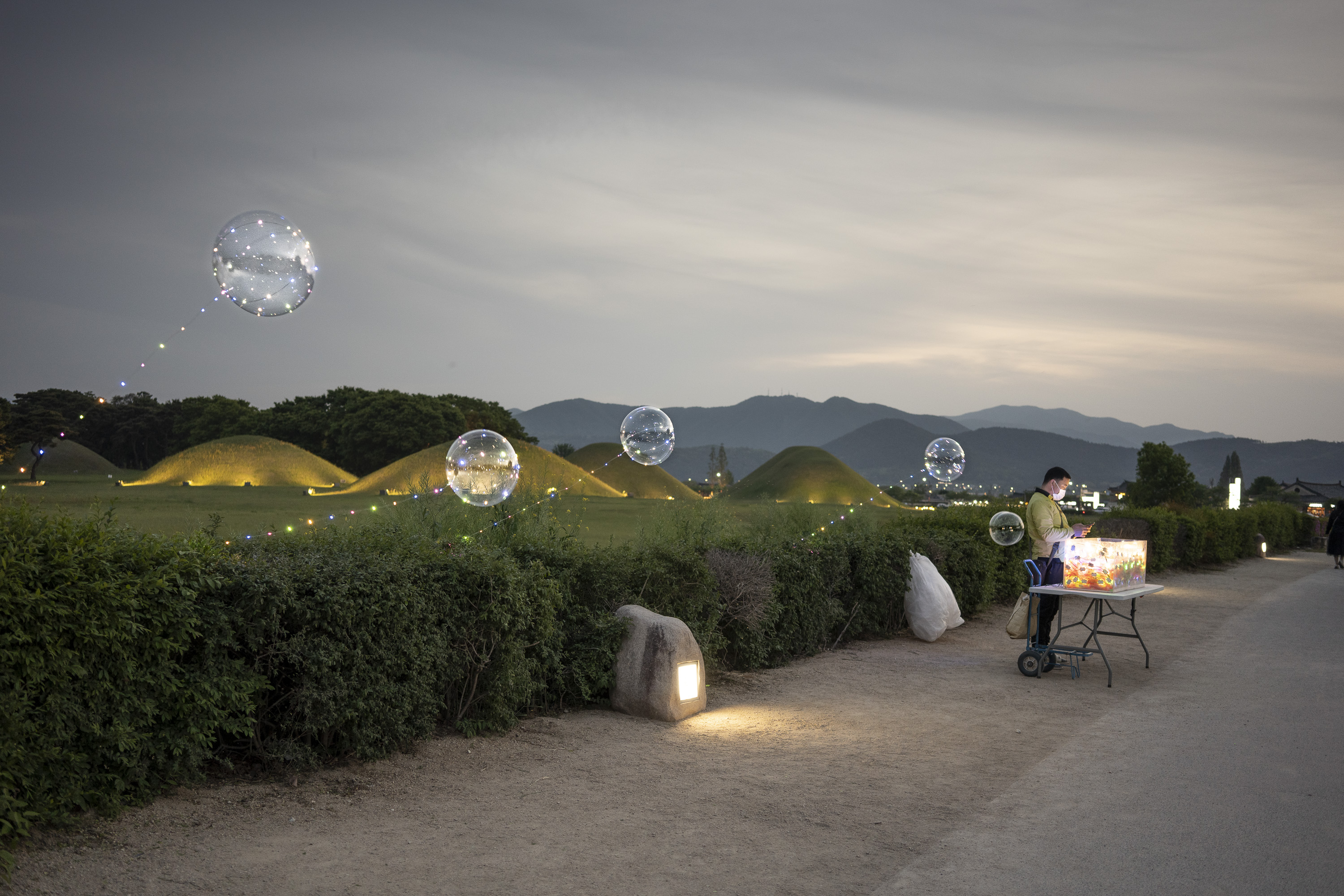
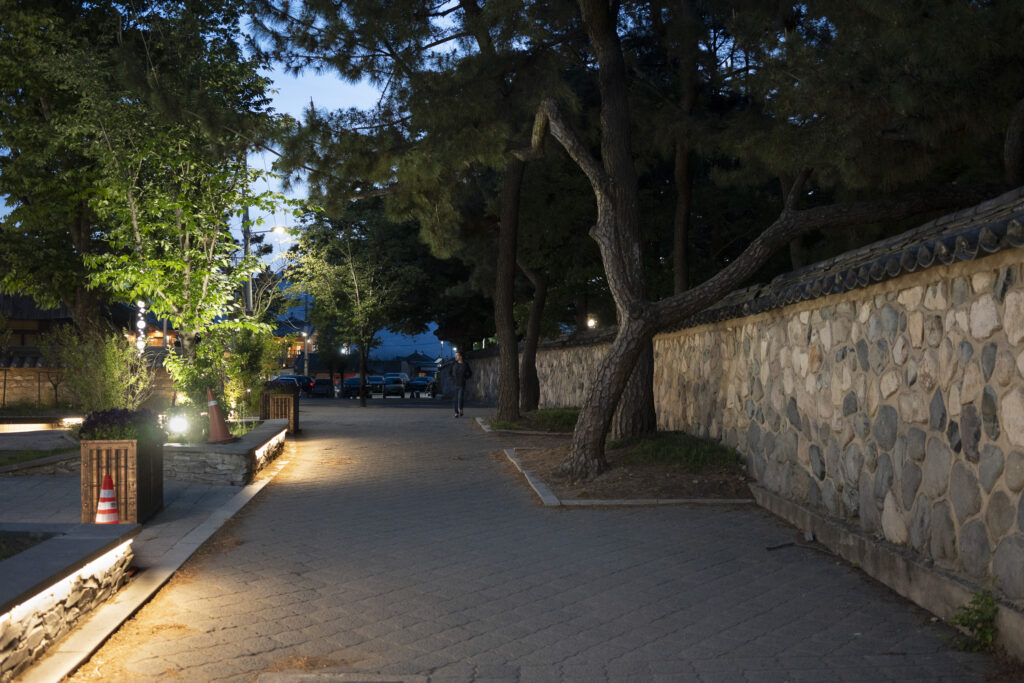
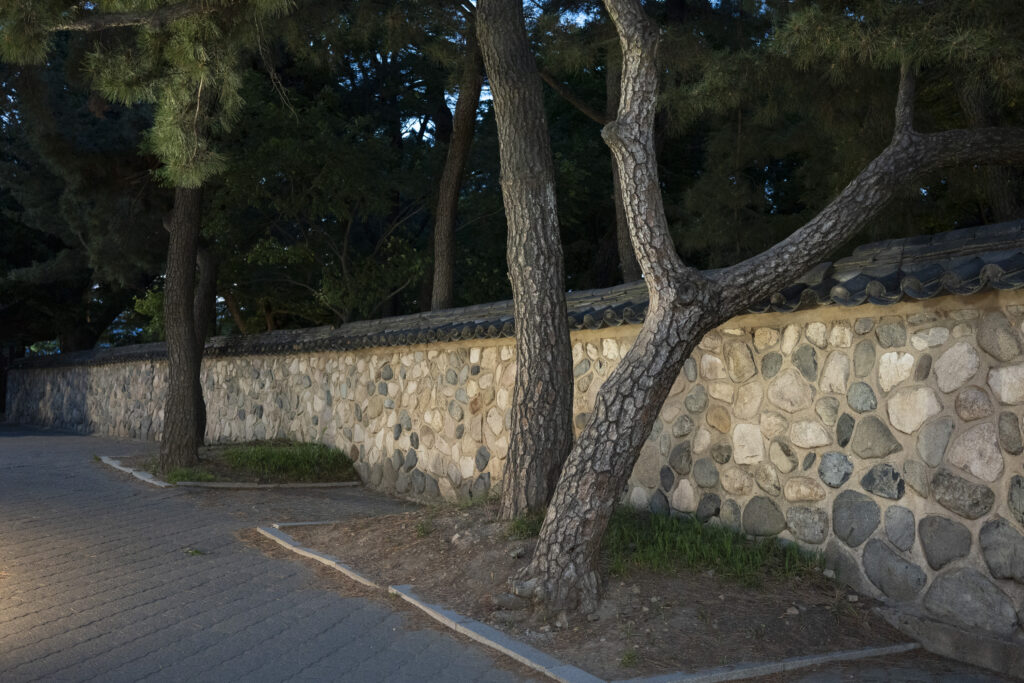
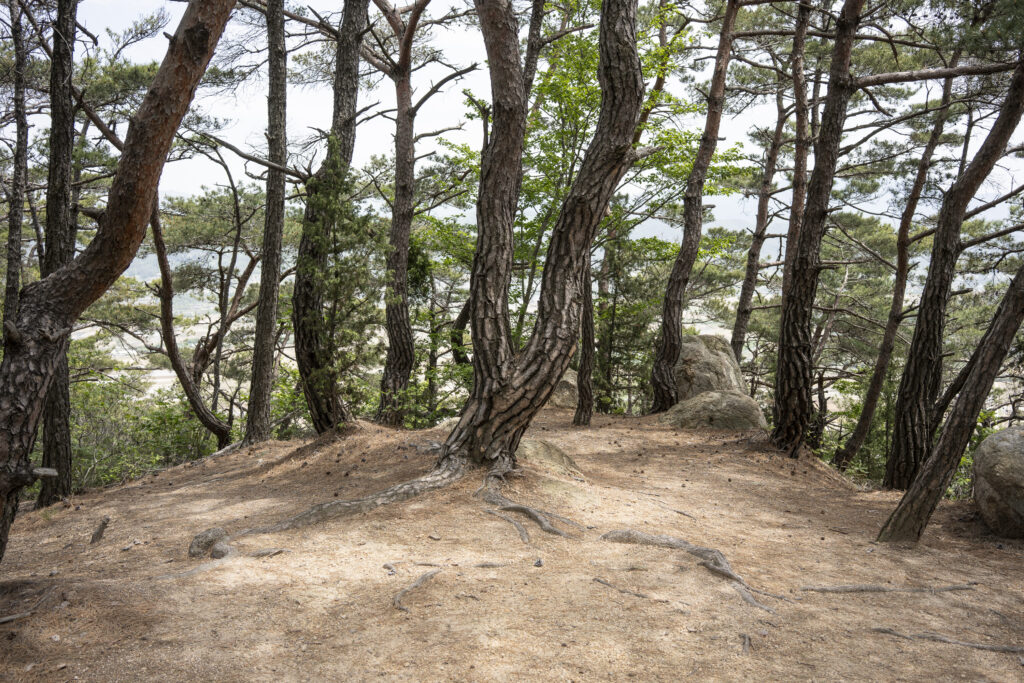
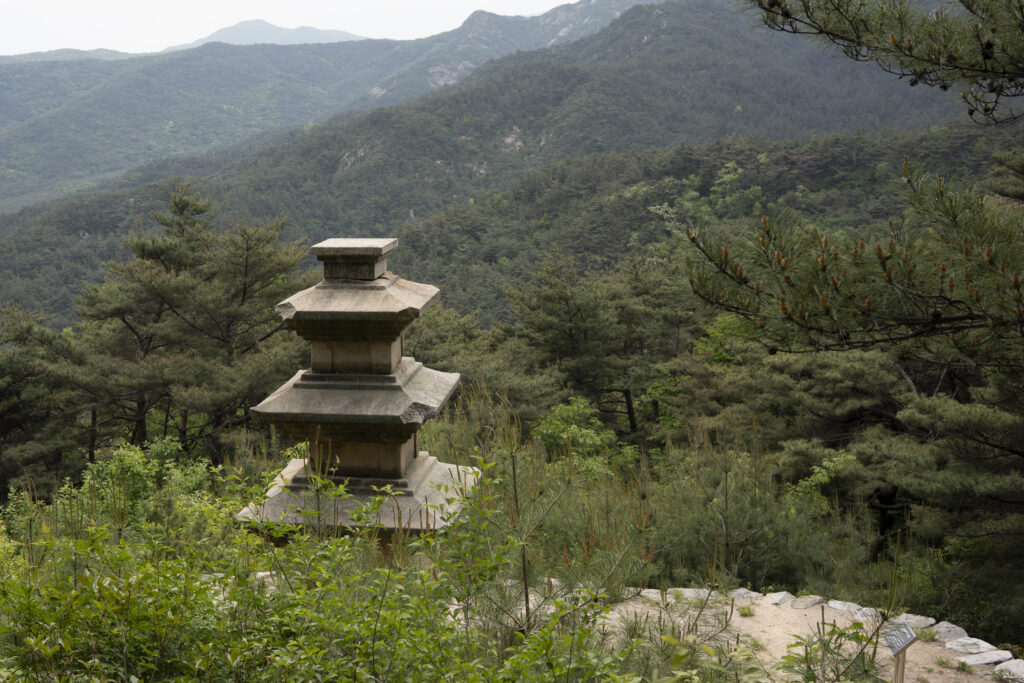
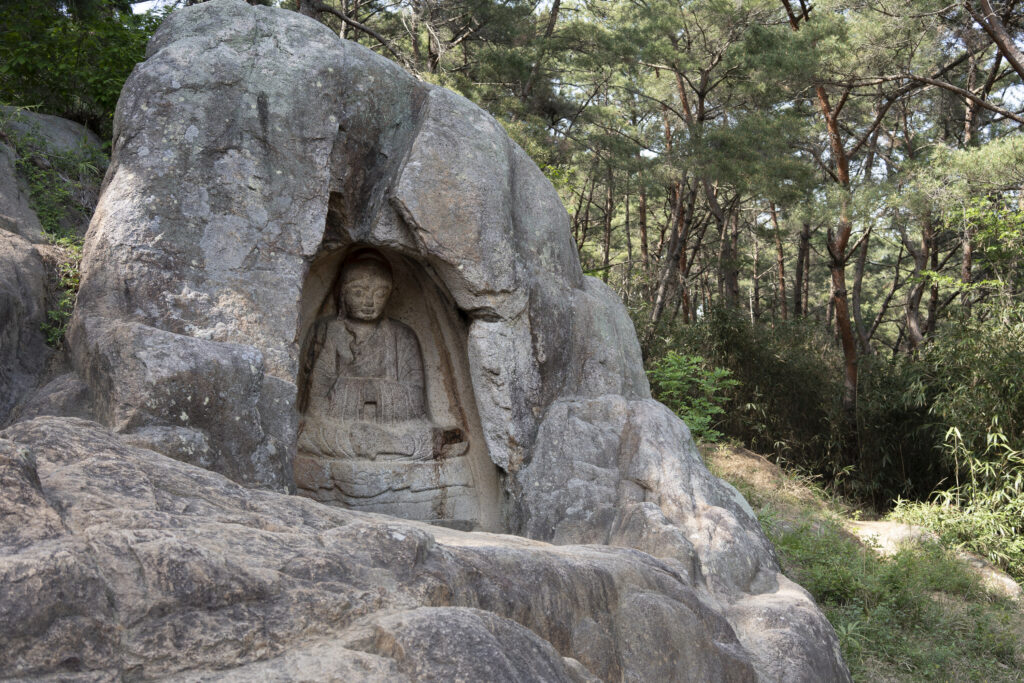
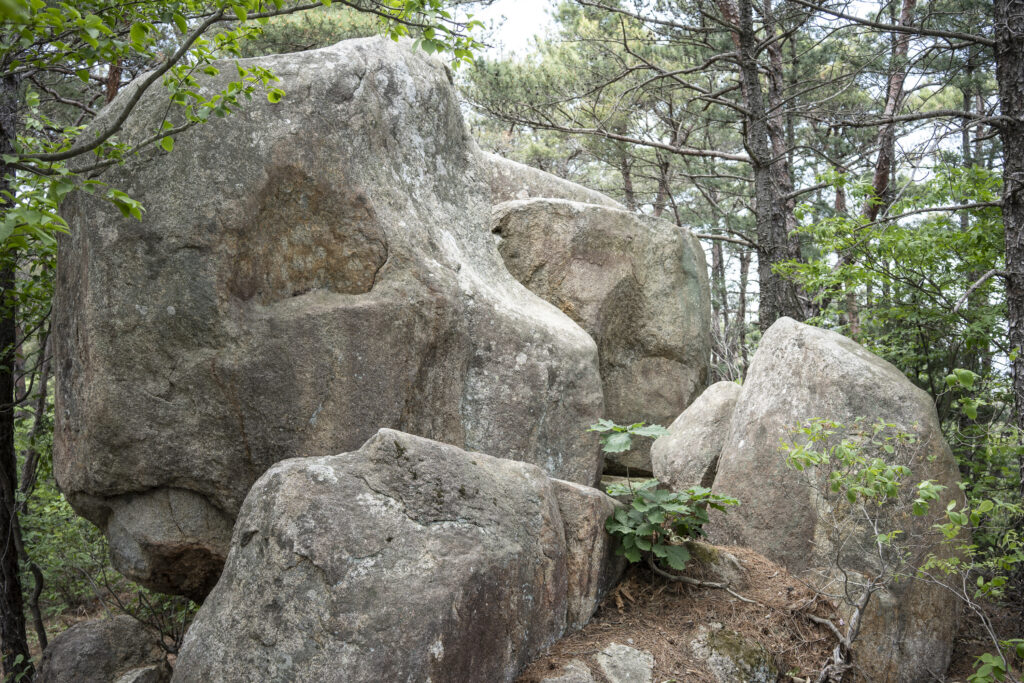
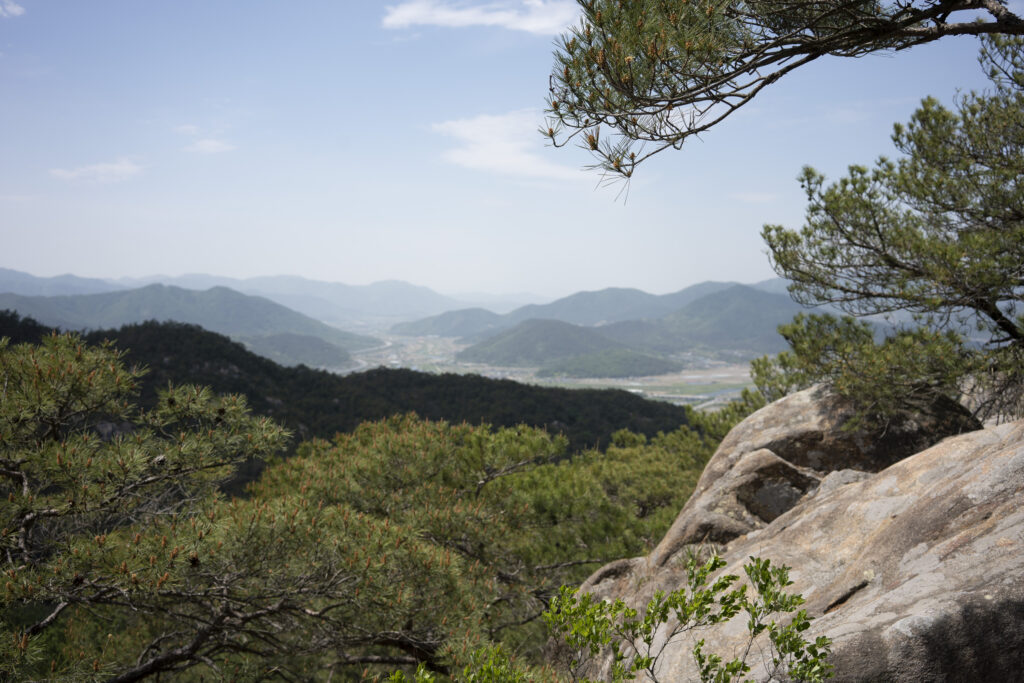
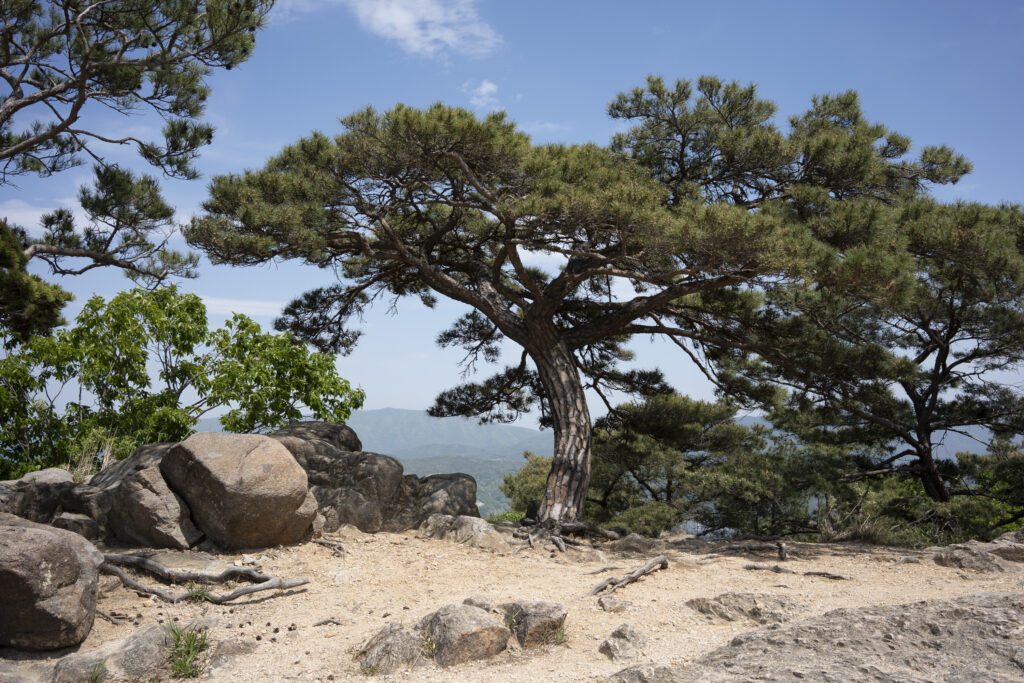
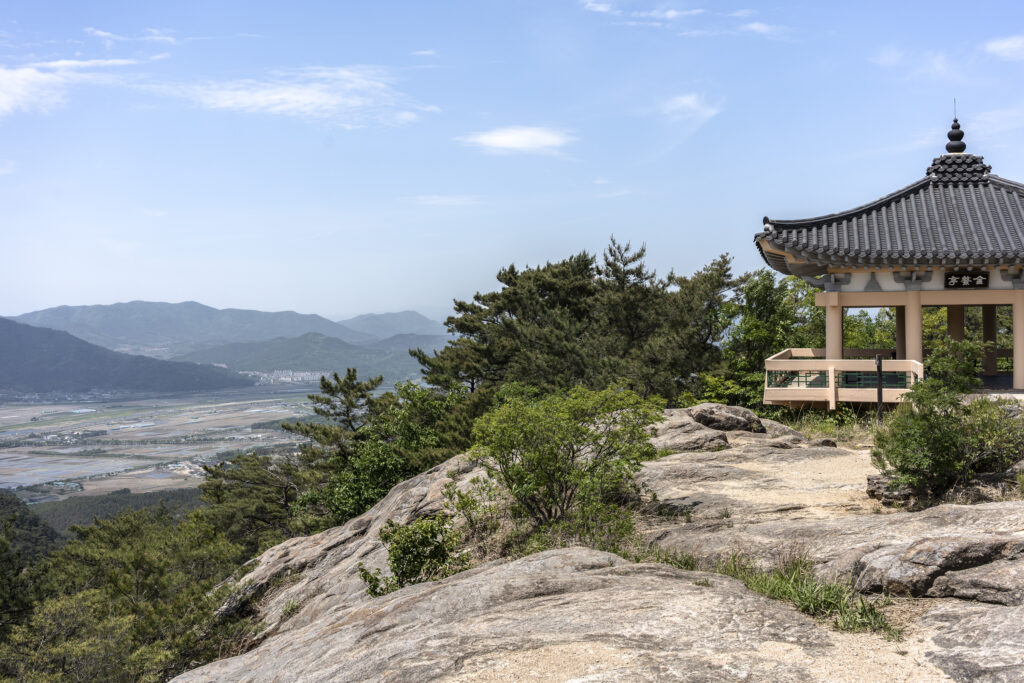
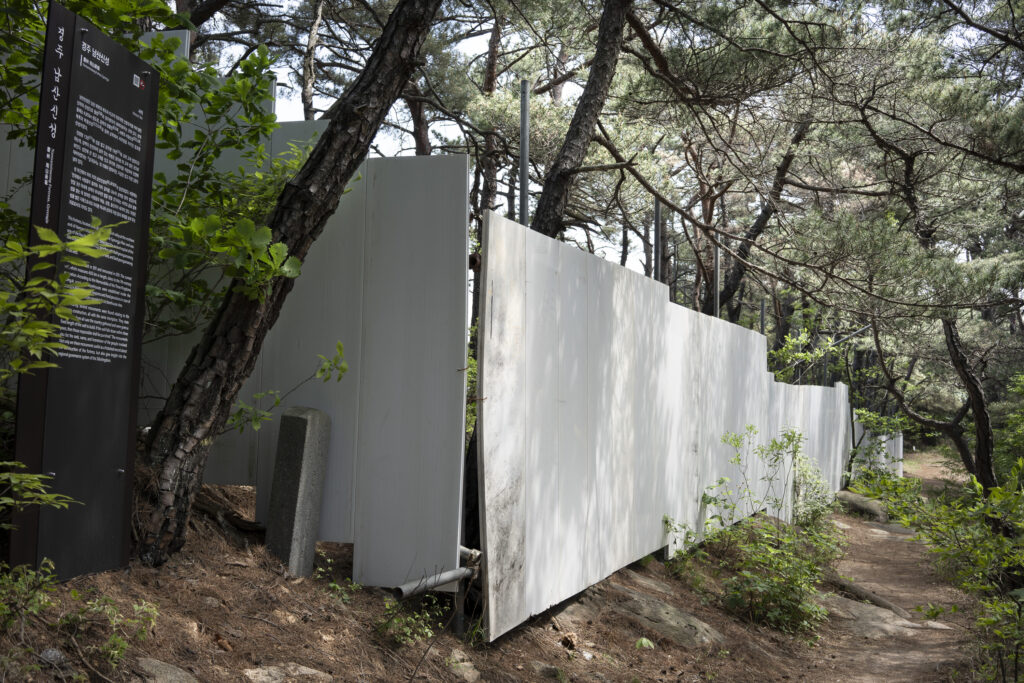
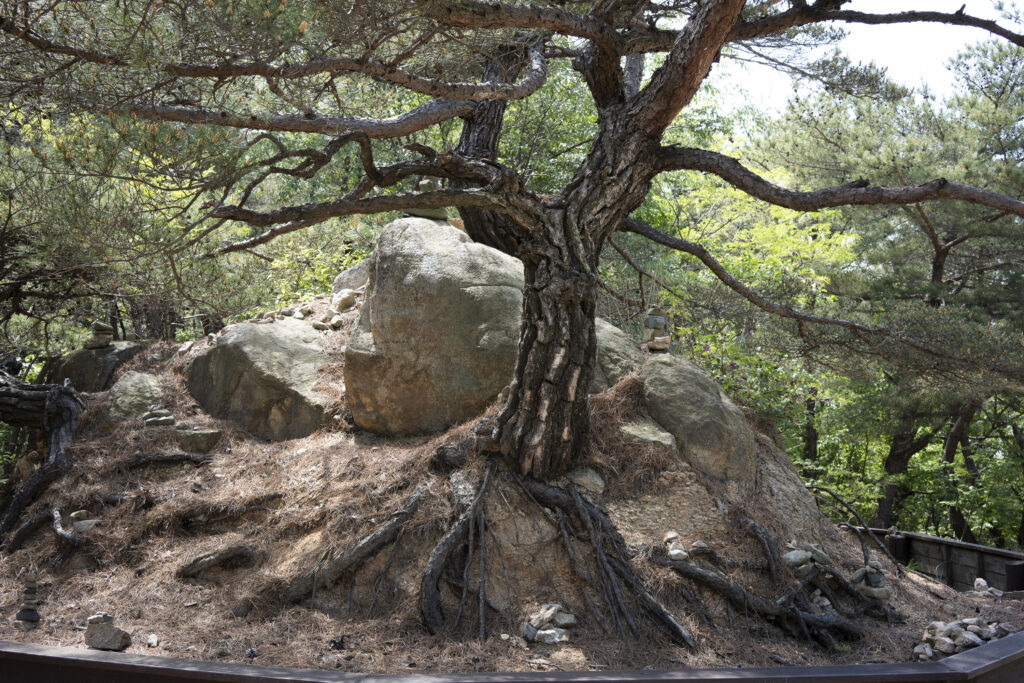
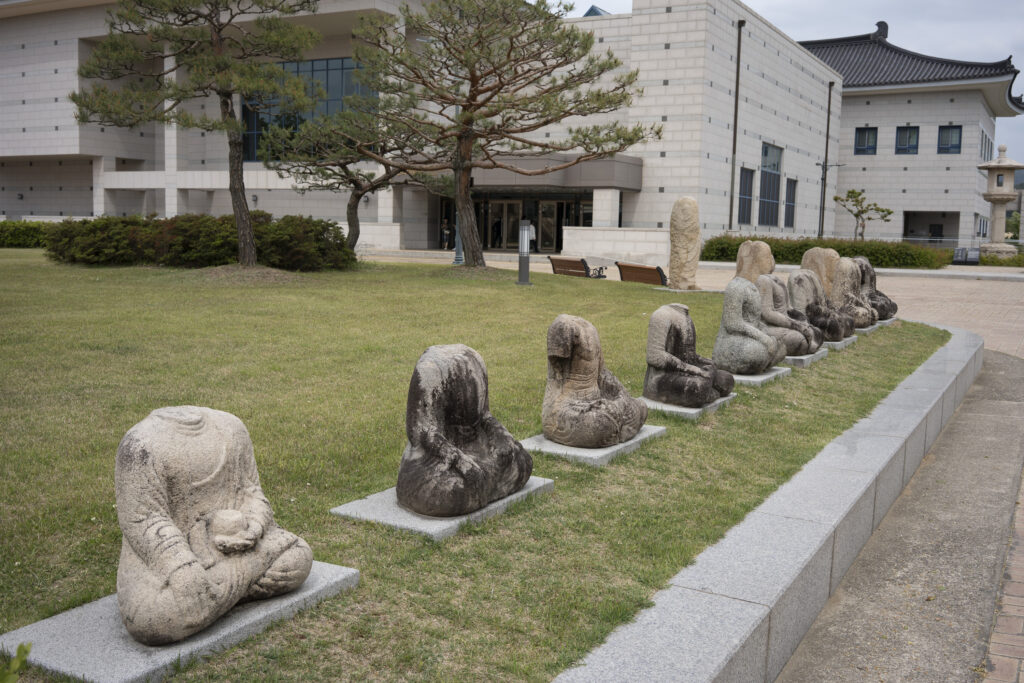
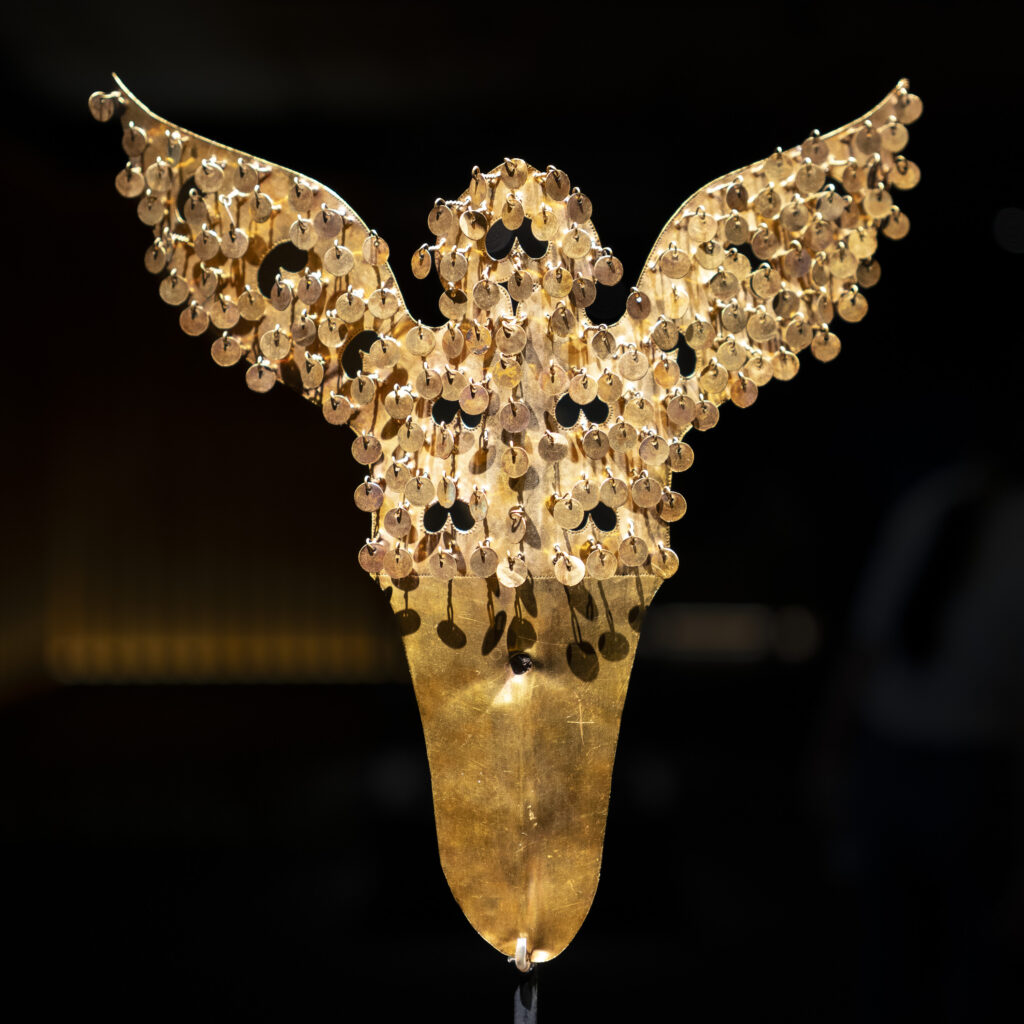
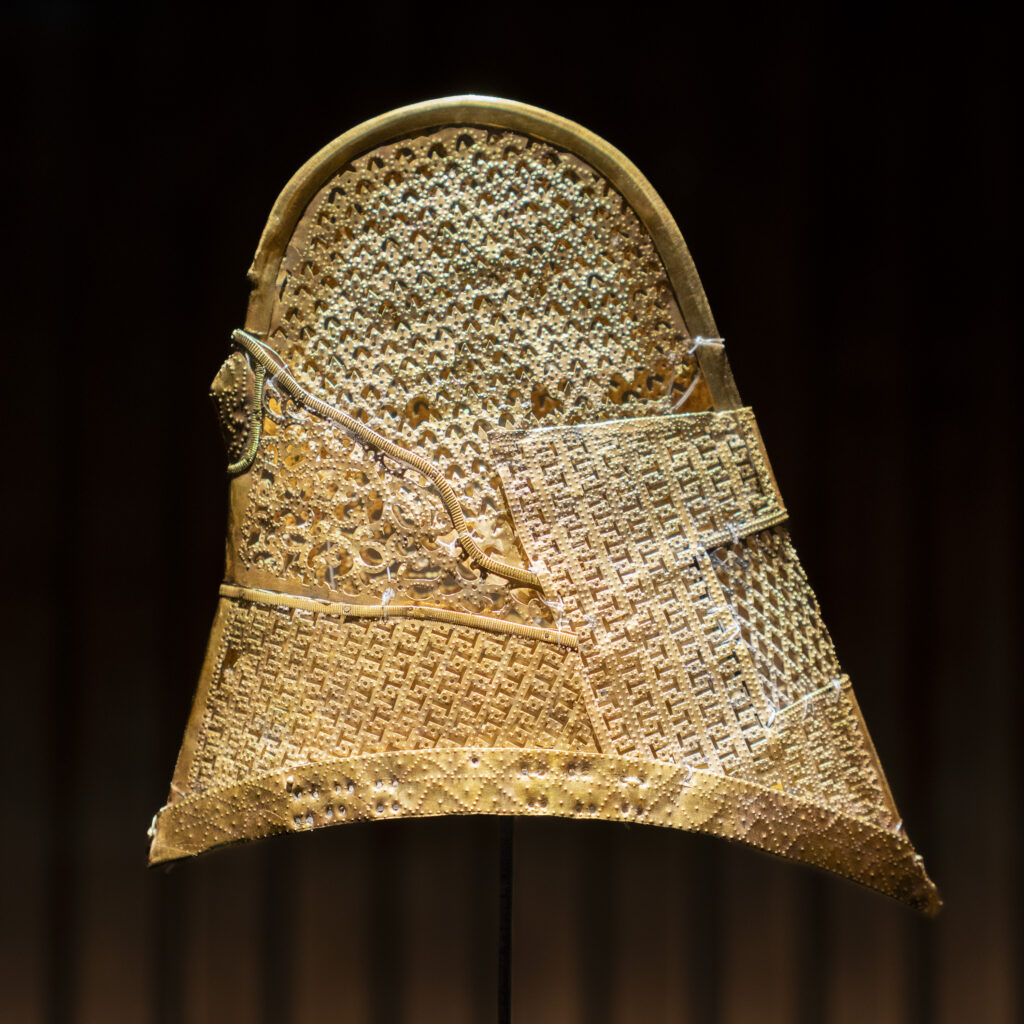
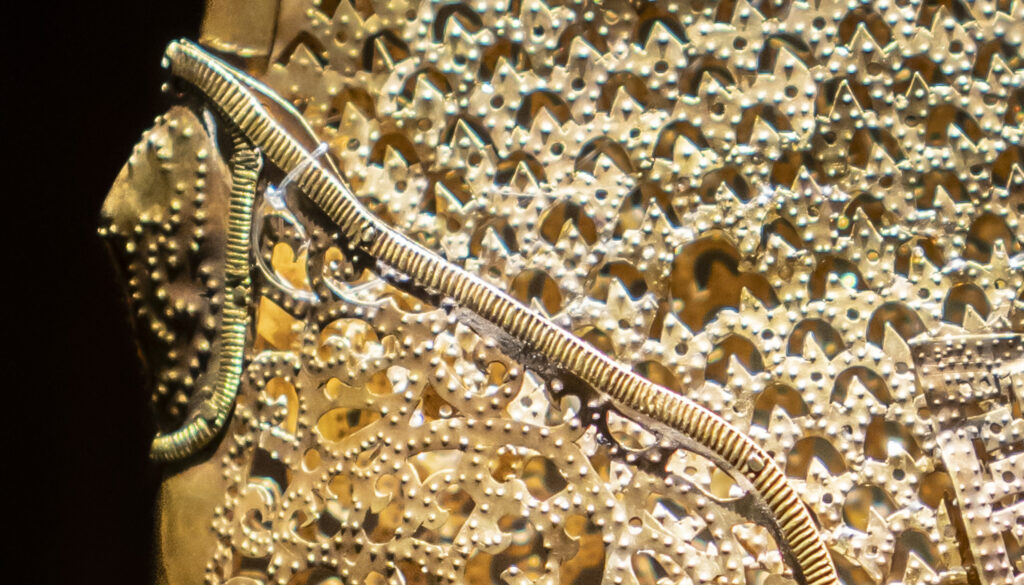
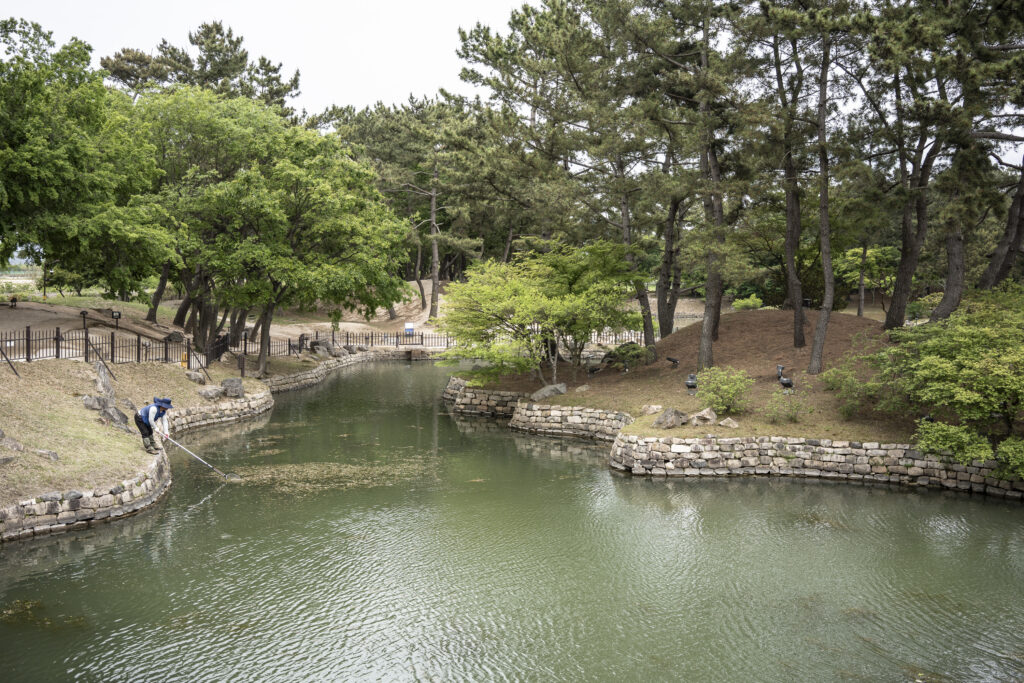
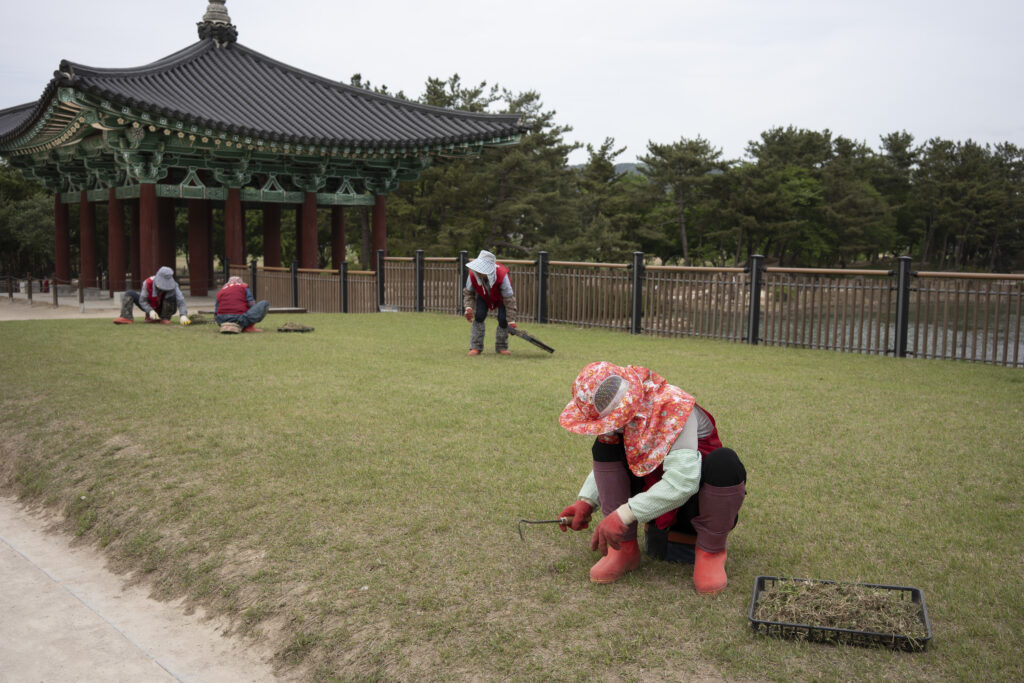
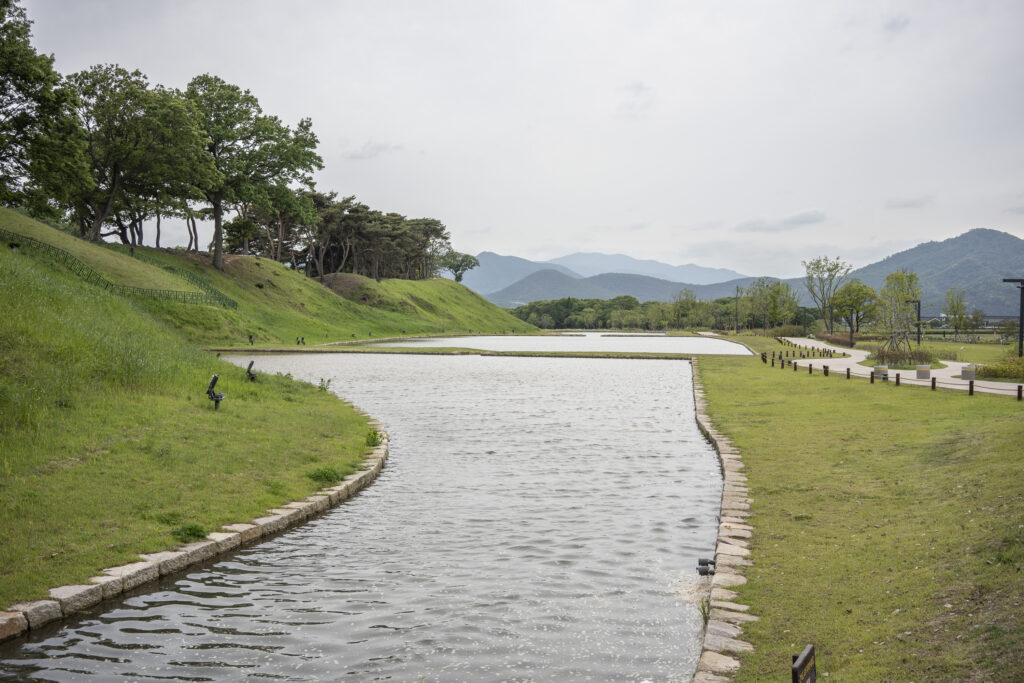
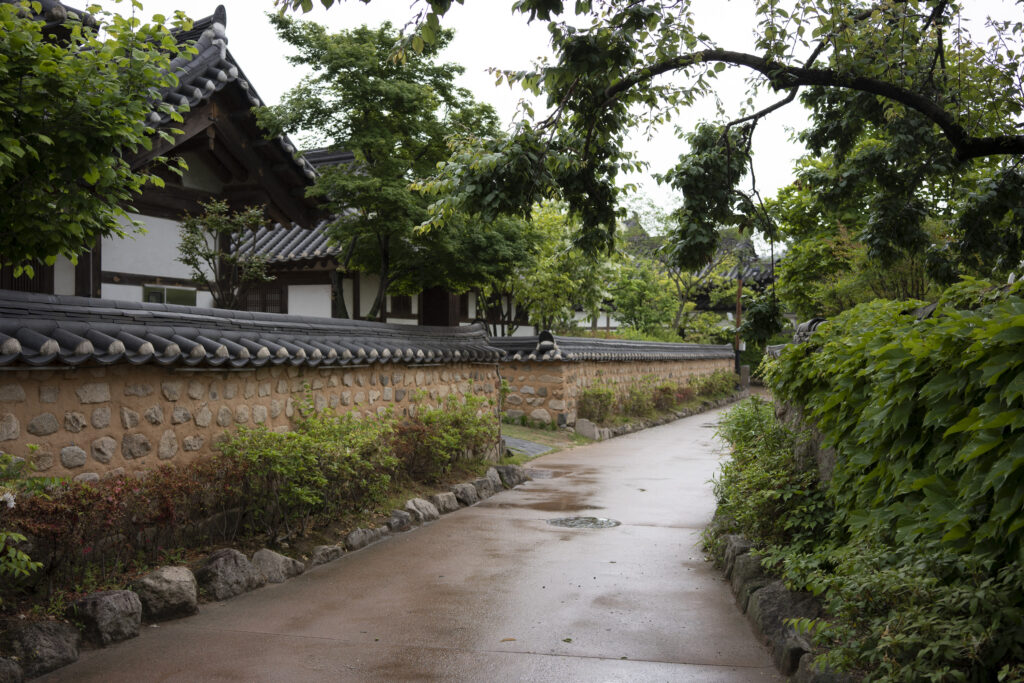
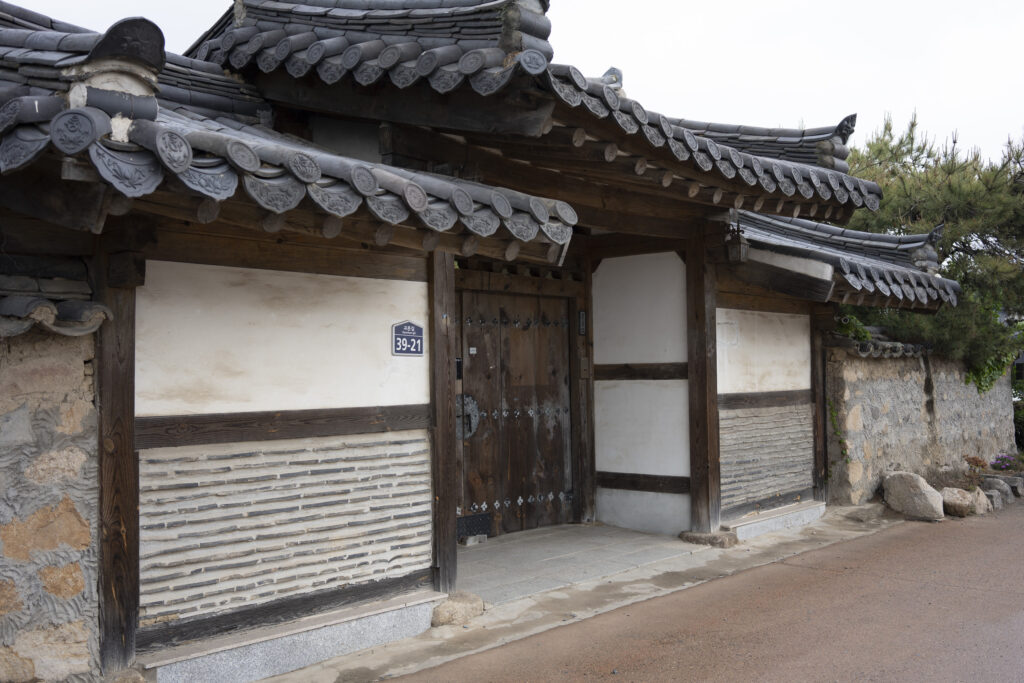
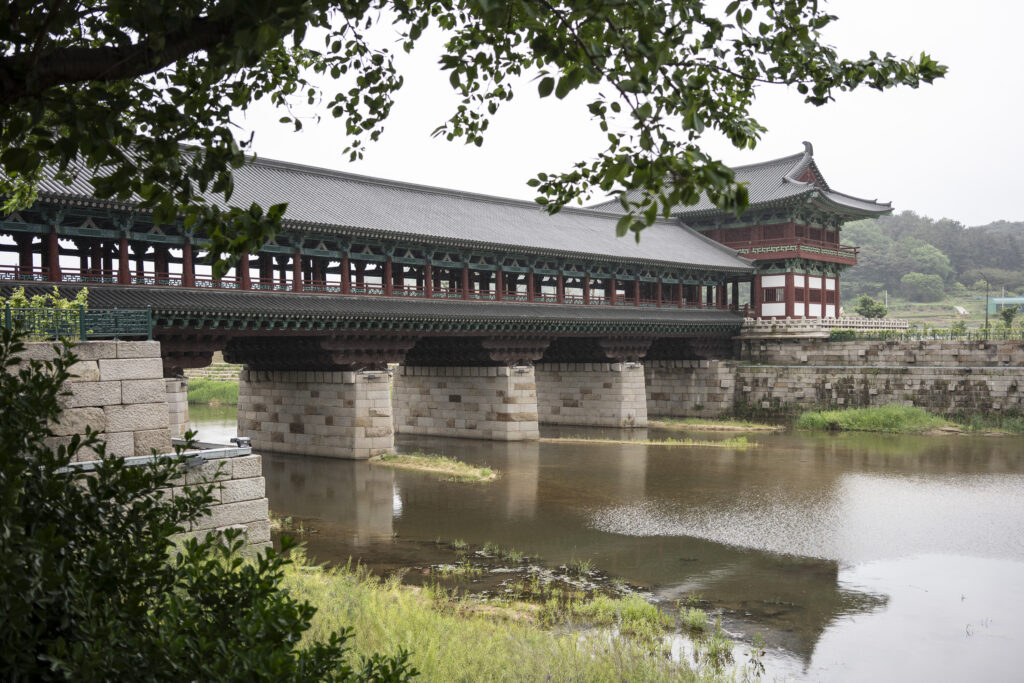
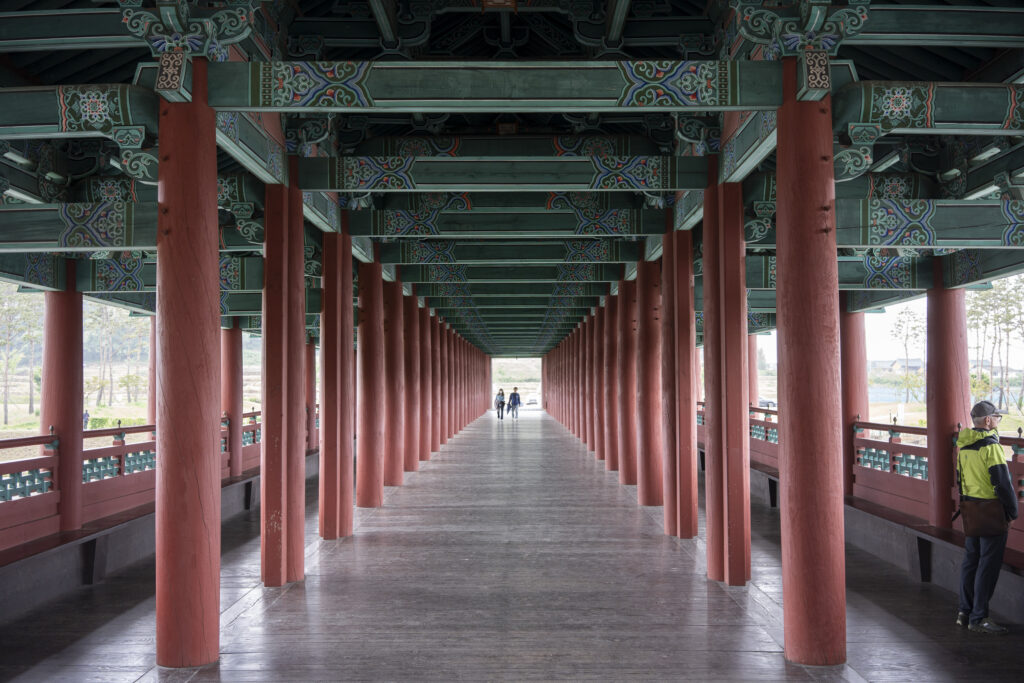
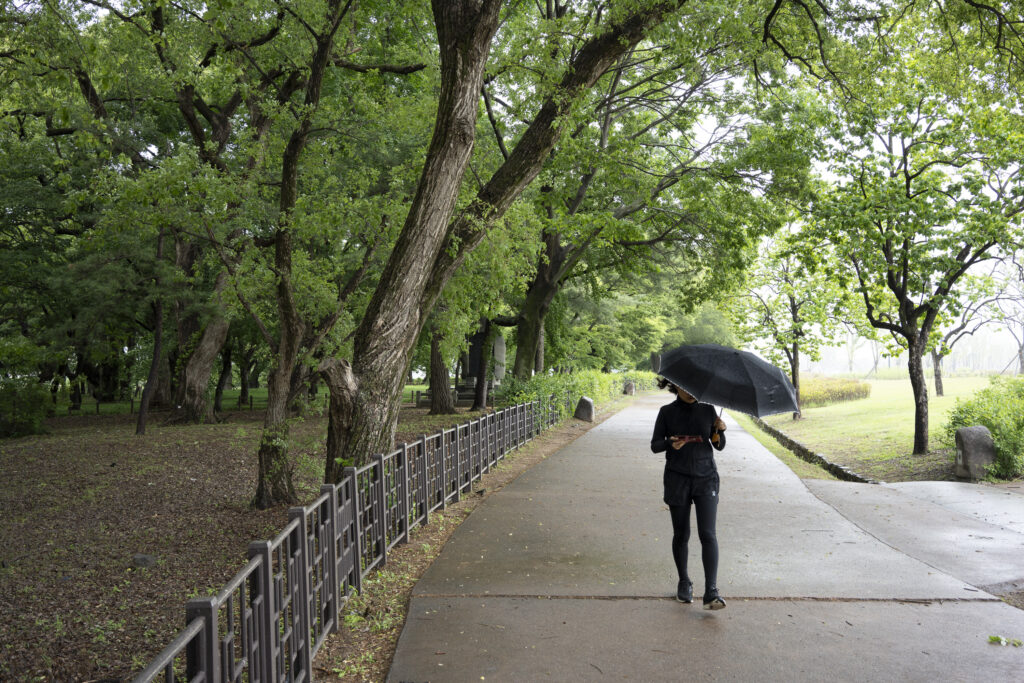
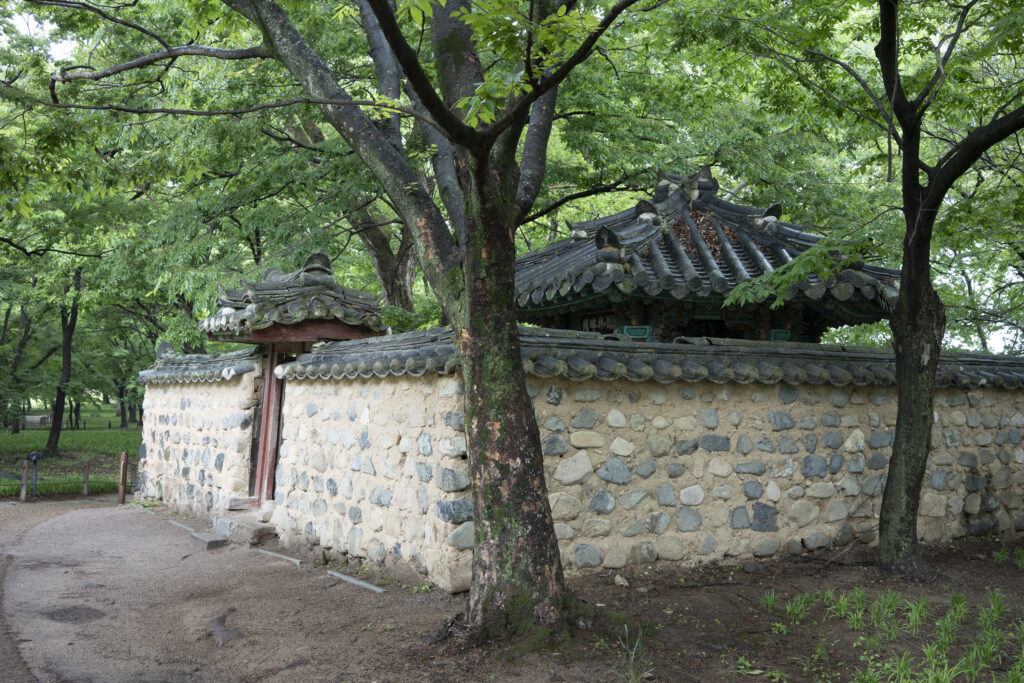
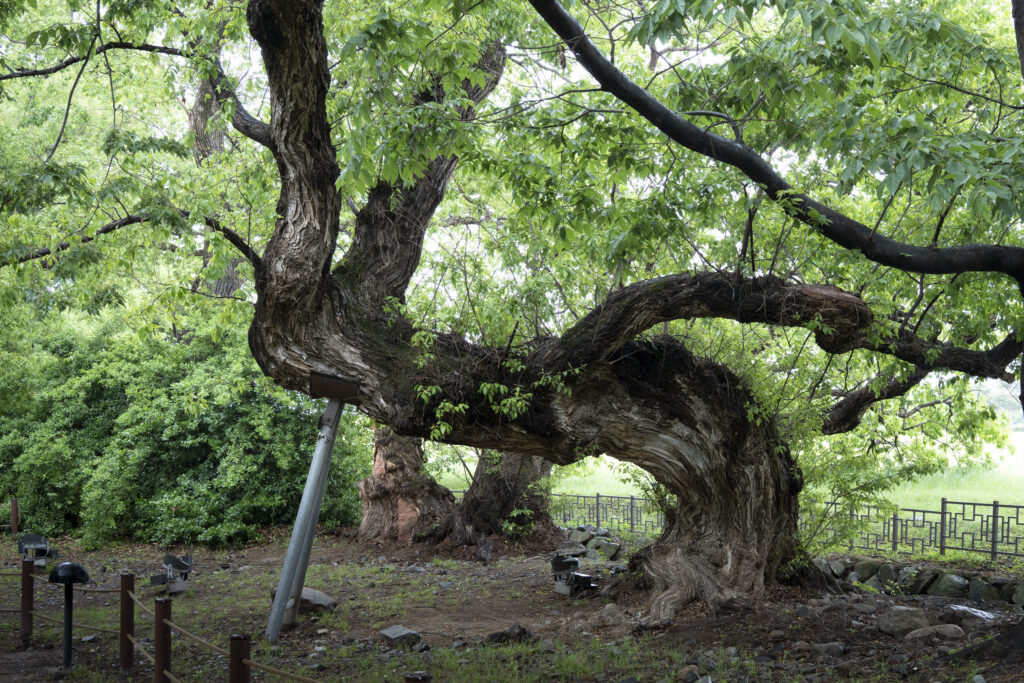
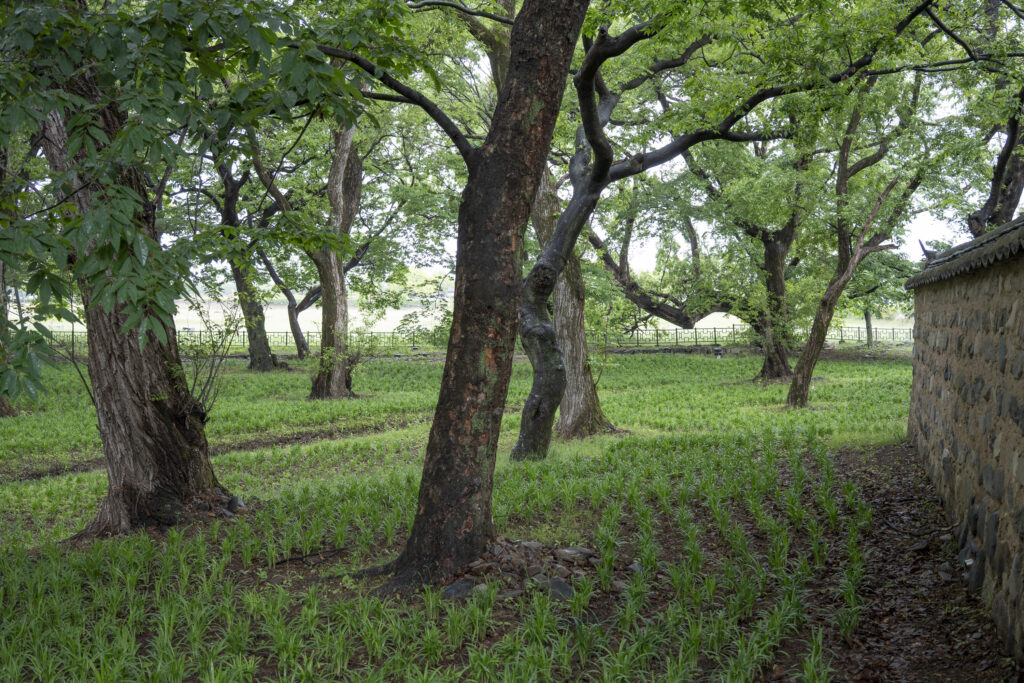
It’s toward the end of the day at the Daereungwon tomb complex, and things have quieted down. This particular spot is a favorite location for visitors to take photos – but they have all left! A small peak of a nearby mountain, on the left, is visible between two mounds. Its slopes seem to match the angles of the mounds.Within the complex, the sun is about to set behind the distant mountain ridge. This group of burial mounds is about to fade into the night. The distinctively shaped crepe myrtles lining the path are still catching a bit of sunlight.A short distance outside the Daereungwon tomb complex, the expansive Wolseong historic district park contains additional tombs (lit in the background), as well as remnants of the palaces and fortifications of the Silla dynasty. Here a vendor’s balloons, sparkling with LED lights, trace the direction of the breeze. It’s a quiet scene, with mountain ridges in the background stepping back in overlapping shades of lightening greys.Paths outside the wall that follow the perimeter of the tomb complex are nicely lit.The trees outside the wall appear to be shaped and maintained as carefully as those within. The next morning I hike a trail up Namsan Mountain, a ridge just south of Gyeongju that contains many (almost 130) Buddhist statues. They are among many hundreds of cultural heritage sites found in the ridges and crevices of the mountain – including remnants of Silla fortifications built to defend the city. Much of the trail is carpeted with a soft blanket of pine needles.A little three-story stone pagoda from the 9th century stands at the high point of what was a former temple complex. An information plaque states that the pagoda was discovered collapsed, and then reassembled in 2001. At the corners of each roof stone there apparently are/were small holes for hanging wind chimes.A small Buddha was carved into this stone outcropping in the early 7th century, which apparently makes it the earliest depiction of Buddha on Namsan Mountain. From the information plaque: “It has a round face and leans slightly forward, with large eyes, a faint smile, and a peaceful expression.”An interesting group of large stones – warm-colored granite in soft shapes.A nice outlook toward the north, with mountains rising from the flat Gyeongju Basin on which the city was built.Korean pines have beautiful and distinctive shapes. Namsan Mountain is known for its Korean Pines and Korean Red Pines. A small shelter at the top of the trail looks out over Gyeongju and the Hyeongsan River plain, part of the larger Gyeongju Basin.On the trail back down toward the city there is a project underway to stabilize or perhaps reconstruct a Silla fortification from the 6th century. Monuments from the time of the construction of the fortress’s walls stated: “People from all over the country gathered and were given a fixed length of the wall to build. If the wall falls down within three years, then those responsible shall be punished.”!Great respect is given to the old pine trees along the trail. This one grew out of a jumble of boulders, and is protected by a low wall.Having come down off of Namsan Mountain, it is not a long walk to the Gyeongju National Museum. The museum is a campus of buildings, each with a focus on a historical era, or collection of art or artifacts.A group of headless carved stone Buddhas (from the 8th-9th centuries) are on display on the grounds of the museum. These Buddhas were all found during the excavation of a well adjacent to a 7th century temple in Gyeongju. Why headless? One possible explanation is that they were deliberately disfigured during the Joseon dynasty (14th to 19th centuries), when Confucianism was adopted as the governing ideology of the nation.Inside the museum, a Silla winged gold crown ornament from the 6th century. The piece was made from a single sheet of gold, with small gold discs hung with gold wire. An interesting shape was used repetitively for the cutouts, and the edges are decorated with fine punch marks.This is a quite amazing Silla gold crown, or cap, from the 6th century. It was constructed of thin gold sheets, which were perforated in decorative patterns to let the original inner cloth or leather cap show through. The crown was worn over the head, with an area (on the right side of the photo) more open for visibility from within.Here is a detail of the gold crown/cap, showing the fine patterns that were cut and punched into the gold plates.This is another of the museum’s showpieces of Silla crown design and craftsmanship from the 6th century. “Trees” crafted from sheets of gold are hung with hundreds of gold spangles and cashew-shaped jade pieces (symbolizing fertility).More down-to-earth are these ceramic roof-end tiles with intricate bird, lotus, and lion designs.Here’s a closer look at some of the beautifully detailed roof-end tile designs.An interesting chart (partially shown) shows how roof-end tile designs progressed from the 5th to the 9th centuries in different regions of Korea, as well as in China and Japan. The Wolji Pond note on the chart indicates that the tiles in that group were excavated from Wolji Pond (adjacent to a royal compound), where thousands of artifacts from the Silla era have been found.A beautiful example of a Silla-era roof ridge end tile. Ridge end tiles were designed to protect against weather and fire, as well as evil spirits.This large panoramic rendering was on an information panel in the historic district. It shows how Gyeongju might have been laid out during a period of the Silla dynasty. Certain elements, such as the palace structures, the defensive ridge in the foreground, and the burial mounds on the far left, may be positioned according to what archeologists know about their historic locations.Donggung Palace and its Wolji Pond were the location of one of the Silla royal compounds. The pond was excavated and rebuilt, along with three of the original structures, in the mid-1970’s to mid-1980s. “Almost 33,000 pieces of historic relics were excavated from the site, . . . . extraordinarily designed roof tiles, architectural materials, pottery, gilt bronze figures of Buddha, jewelry, accessories and other everyday items were discovered”. (from Wikipedia)The corner of the roof of this reconstructed Donggung Palace structure shows the intricate bracketing that was used, in several layers, to elevate and project the edge of the roof outward, away from the perimeter of the structure. The ends and faces of the timbers are decorated with painted lotus, geometric, and floral patterns in bright greens, reds, and yellows.Wolji Pond, with its irregular shapes and edges, might have been intended to represent the Silla empire – a kind of watery map (an interesting idea – no proof, though).One thing is for sure – the park people are serious about weeding.Within the Wolseong historic park area, stretches of water that were once defensive moats adjacent to fortification earthworks have been converted to water features.At the edge of the historic park district is the small Gyochon traditional village, dating back to the 7th century, which has authentic Silla- and Joseon-era homes.Within Gyochon you can see various construction methods, as in this structure of stone and timber walls, with its impressive roof and roof-end tiles and ornamentation.Adjacent to the historic village is Woljeonggyo Bridge. It was originally built during the Silla era, in the 8th century, but was lost during the Joseon period. It was rebuilt and reopened in 1918.Four rows of red-painted timber posts march down the bridge’s 200 foot length. Within the Wolseong historic district lies the Gyerim forest, a small woodland that was the source of a myth about the origin of the ancestor of Silla kings.A walled temple within the Gyerim forest.An ancient bent-over tree (with a form that’s a bit like an ancient bent-over person) has been provided a structural helping hand.A peaceful and beautiful grove of trees and neat groundcover.