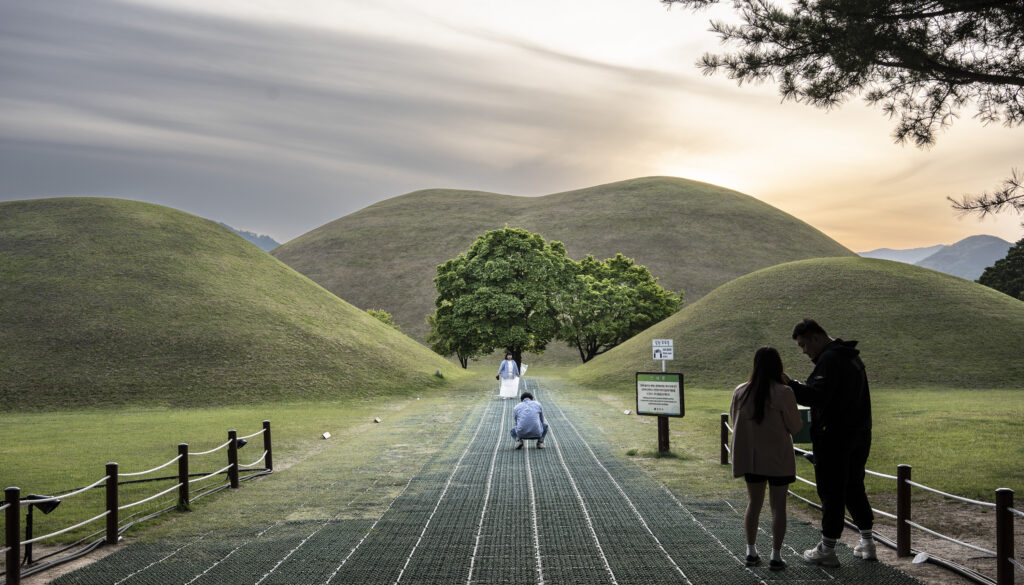
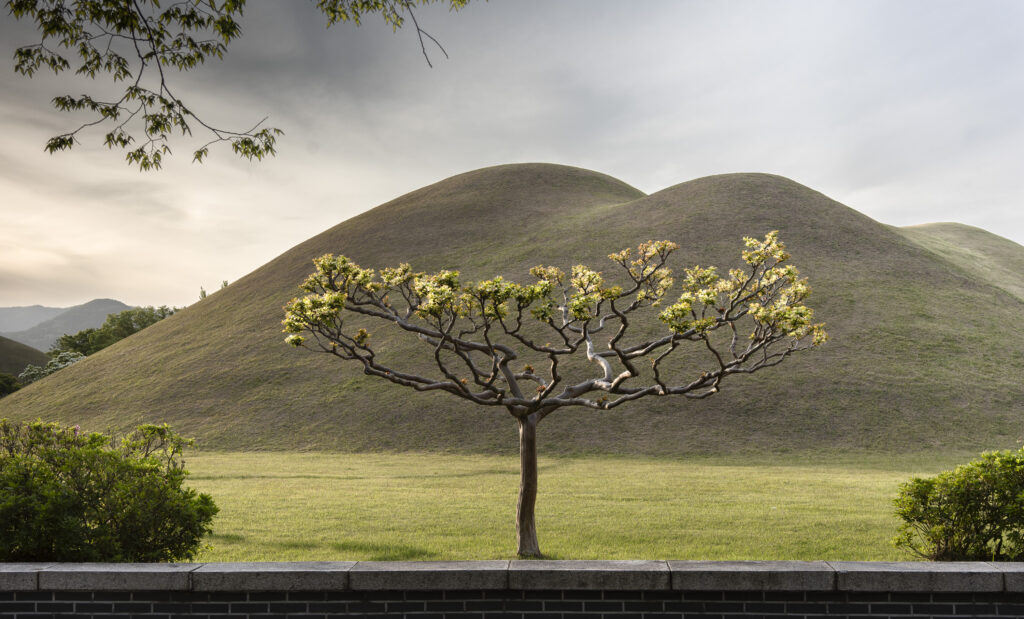
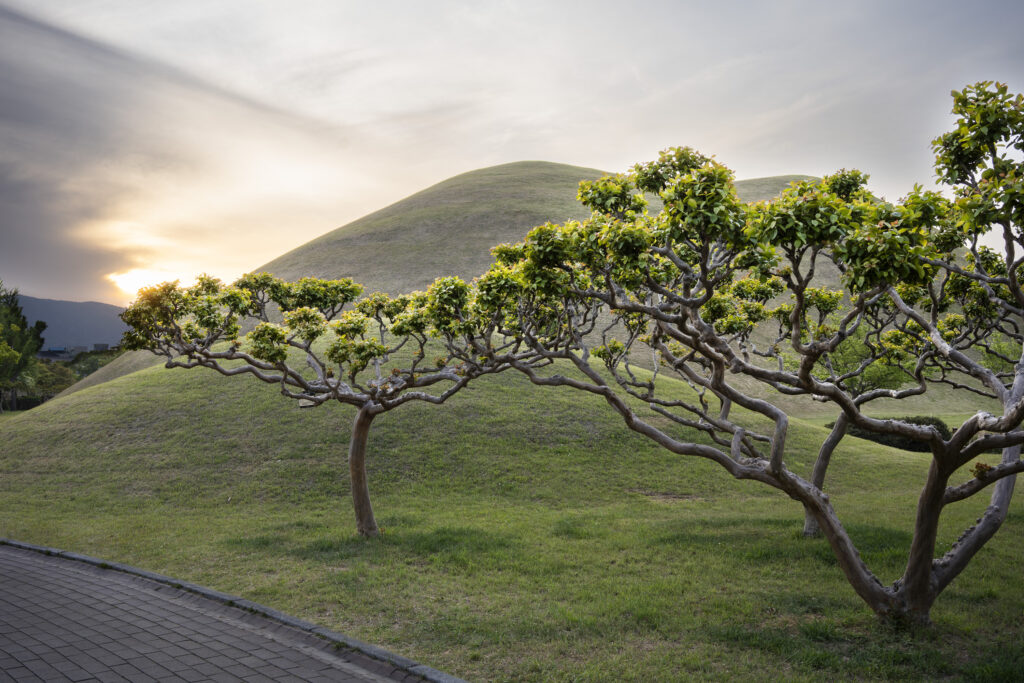
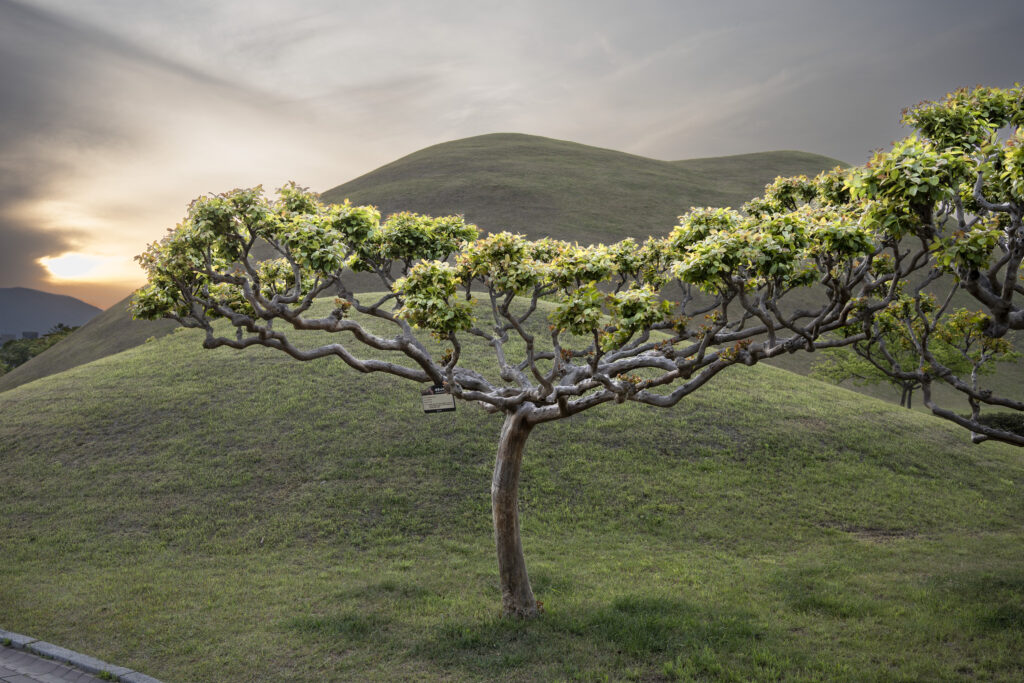
Geyongju, a city near the southeast coast of the Korean peninsula, was once the capital of Silla, a kingdom that existed for about a thousand years, from the 1st century BCE to the 10th century CE. Initially Silla was one of three kingdoms on the peninsula – but, in alliance with the Chinese Tang dynasty, Silla unified the peninsula in the 7th century CE. The following period, known as Unified Silla, lasted for several more centuries until Silla’s decline, and the dynasty was eventually succeeded by the Goryeo state. Today the remaining historical elements of Gyeongju that have been unearthed in archeological explorations and displayed in selected reconstructions, or in the impressive Gyeongju National Museum, give us some understanding of this former center of regional power and trade. It is said to have been one of the largest cities in the world in its time.
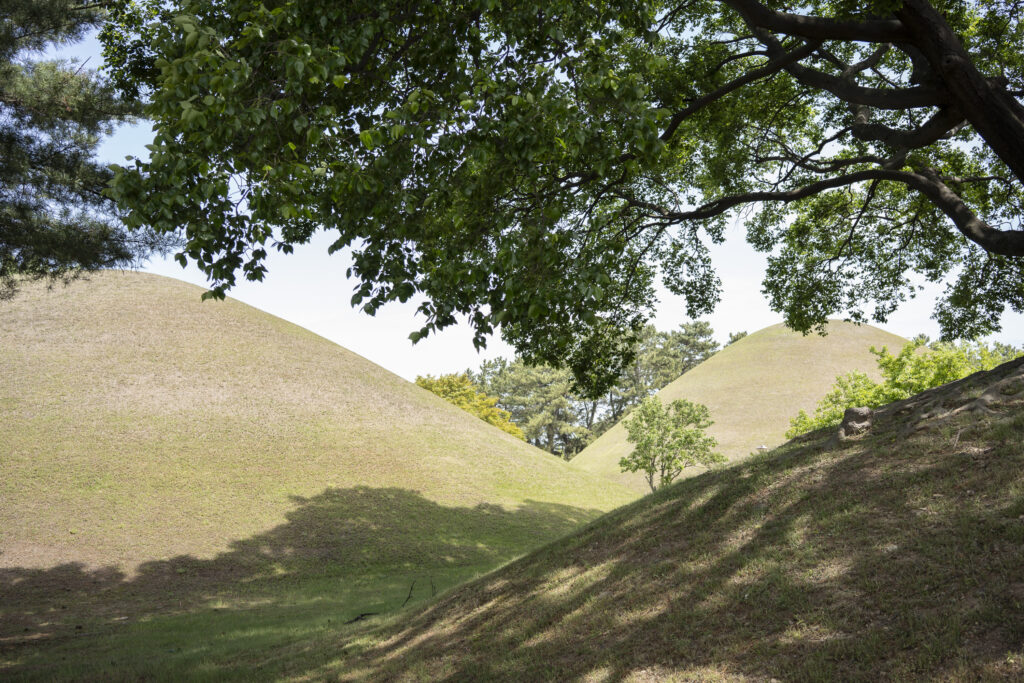
The Daereungwon tomb complex in central Gyeongju is the site of about two dozen Silla royal tomb mounds (also called tumuli) that are the backdrop to the photographs in this post. The thousands of artifacts excavated during the 20th century from nine of the tombs have included exceptional examples of crowns and jewelry, as well as luxury goods from Silk Road trade (Central Asian and Mediterranean glassware, fine fabrics, and precious metals) that indicate the importance of the Silla dynasty in the world in those times.
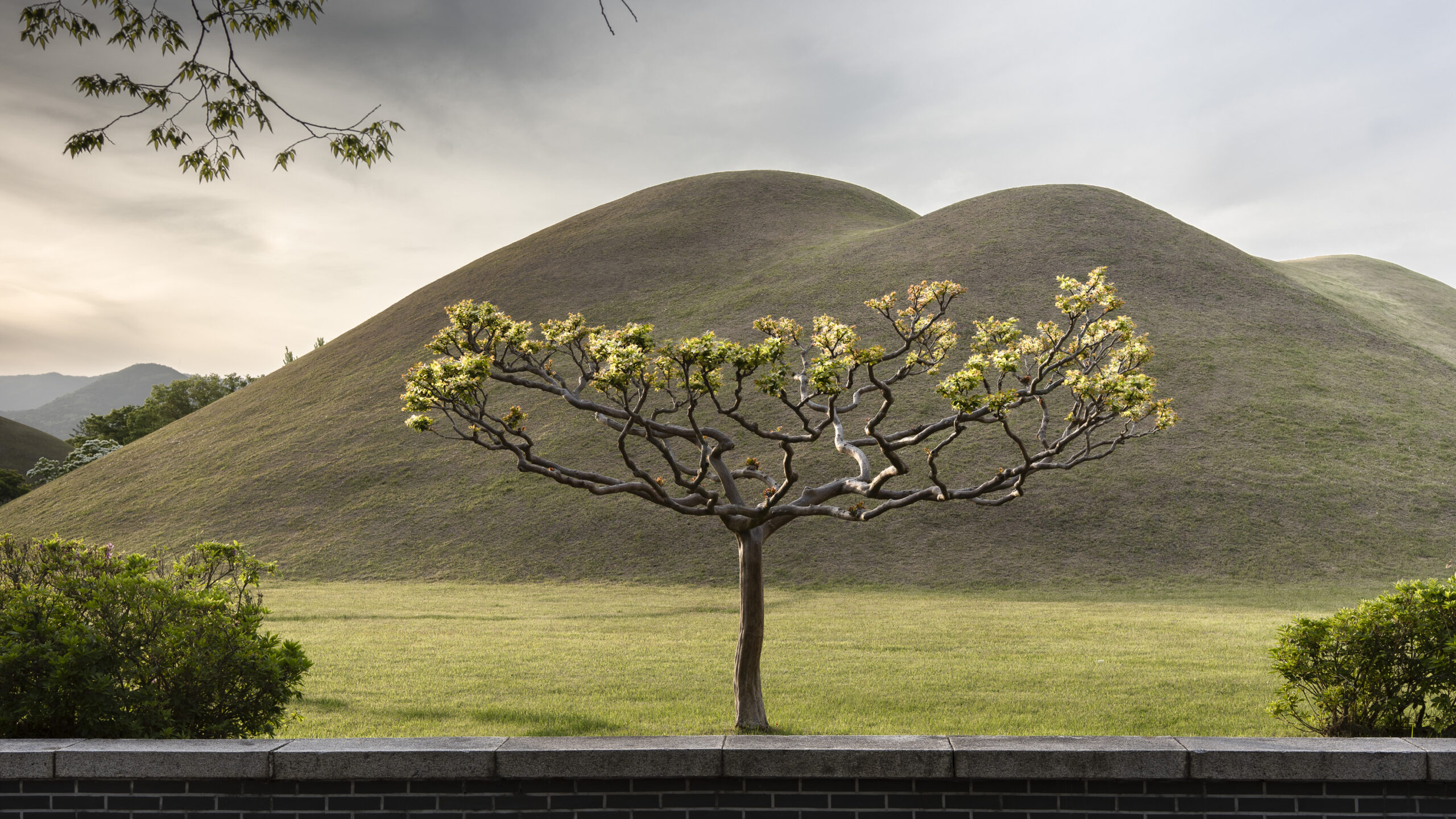
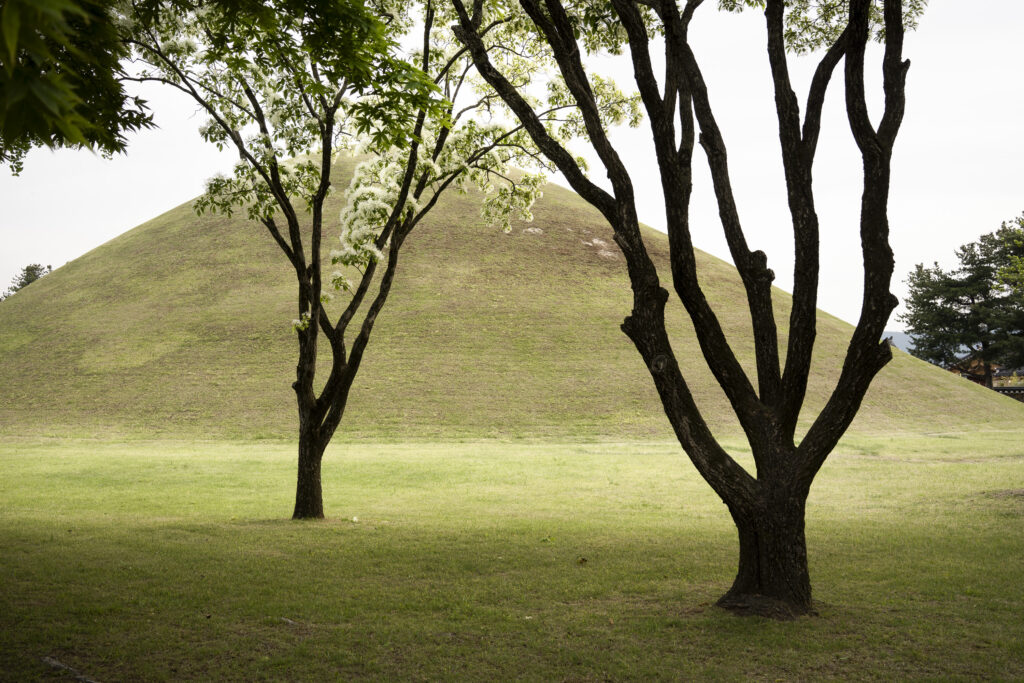
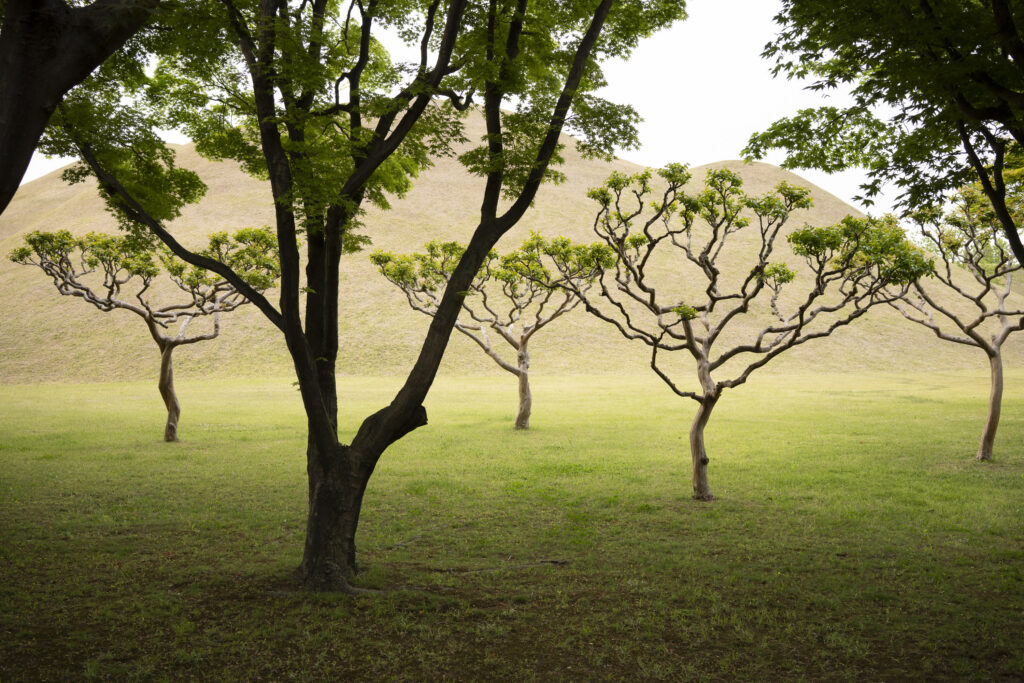
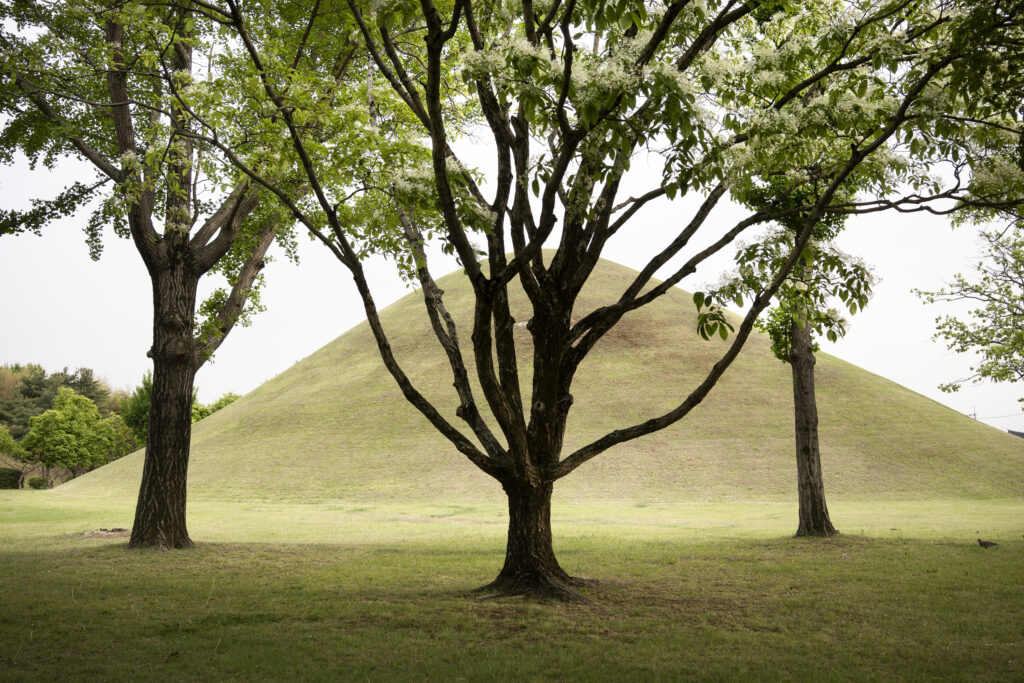
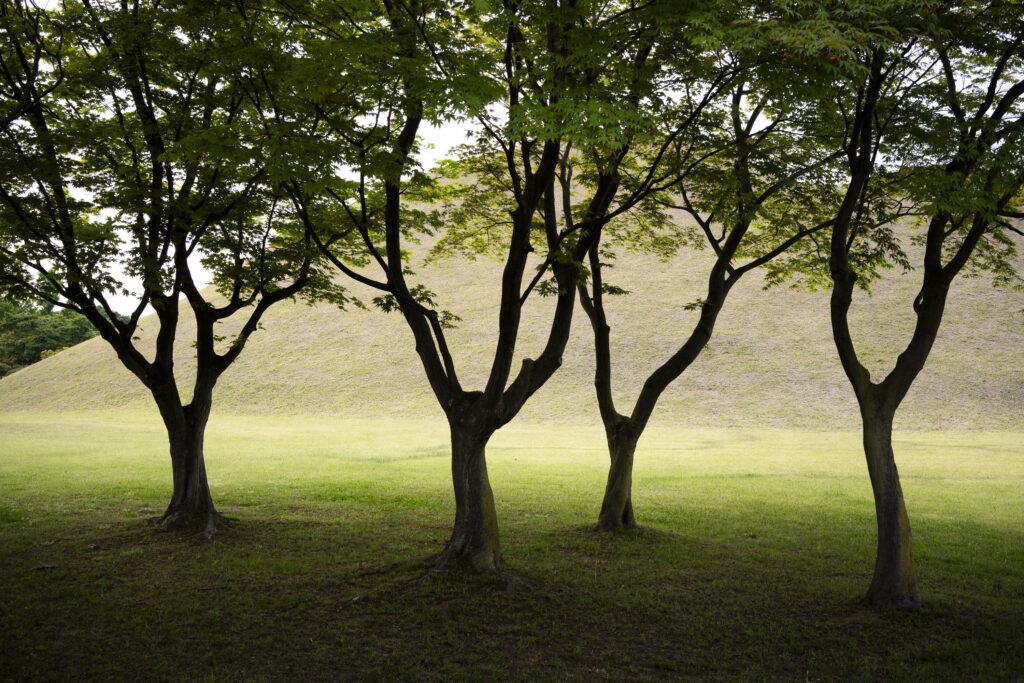
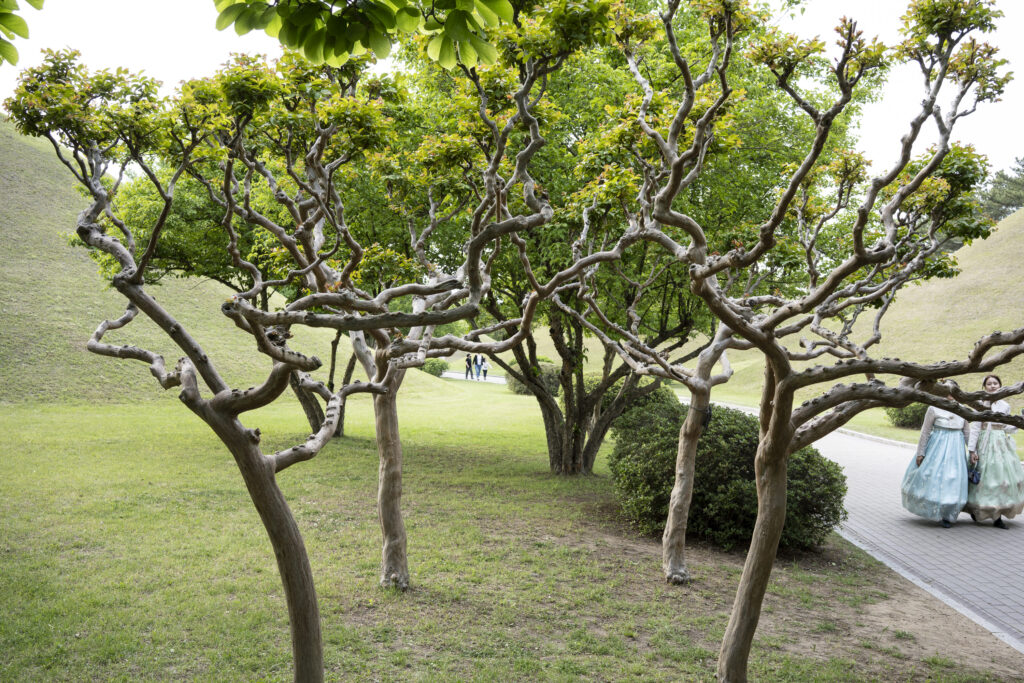
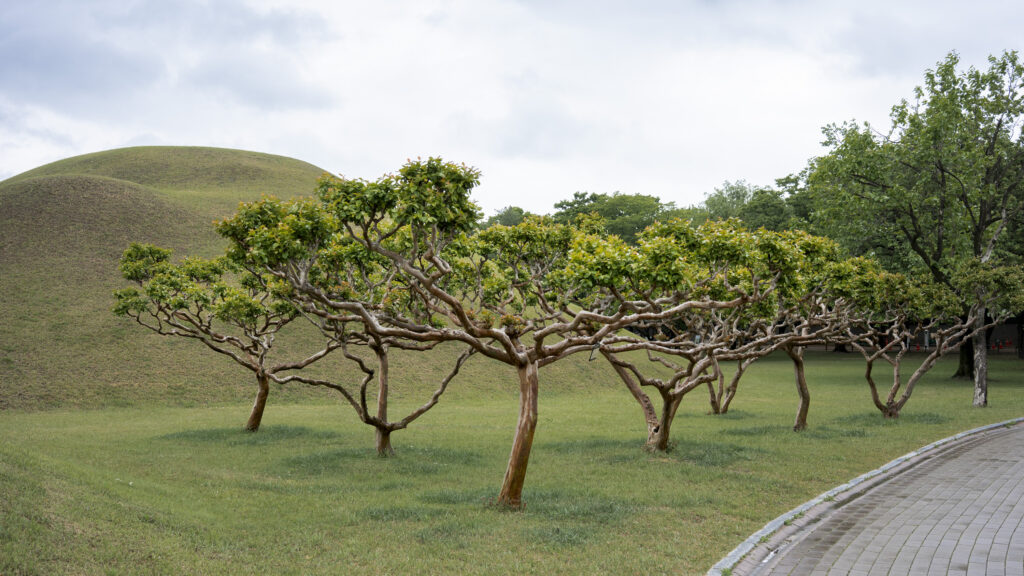
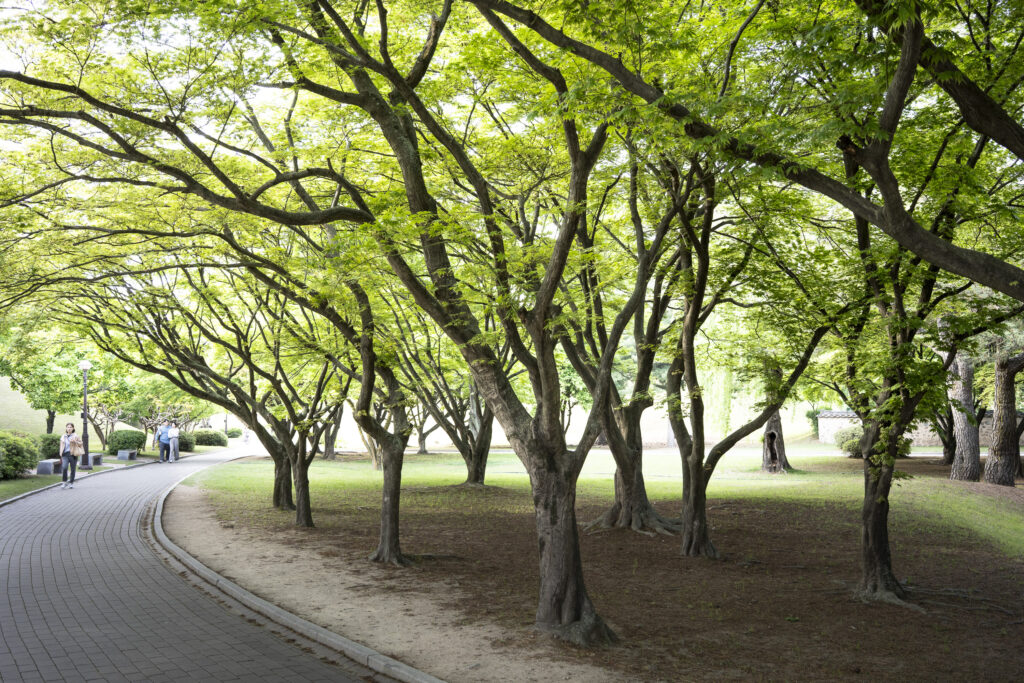
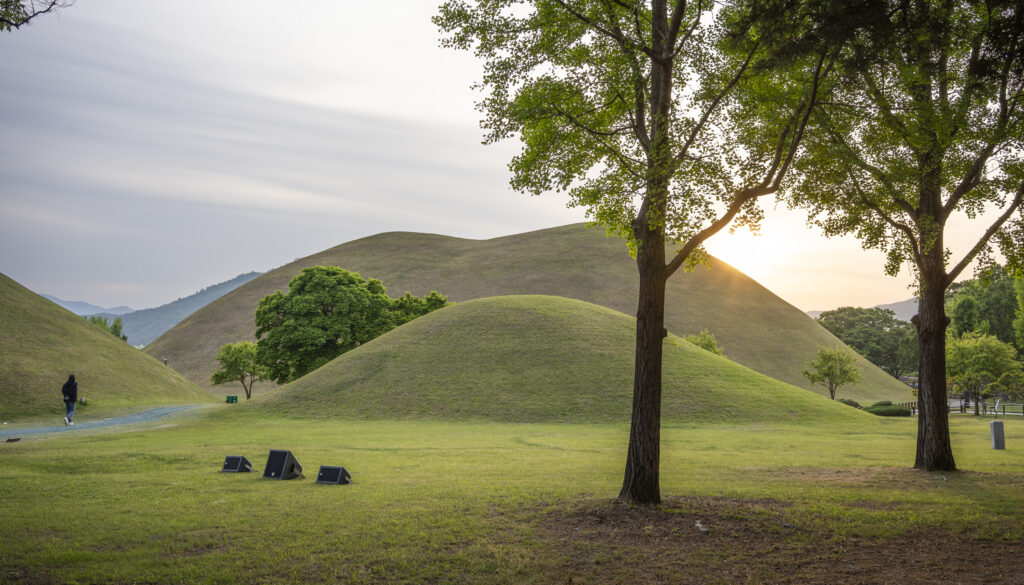
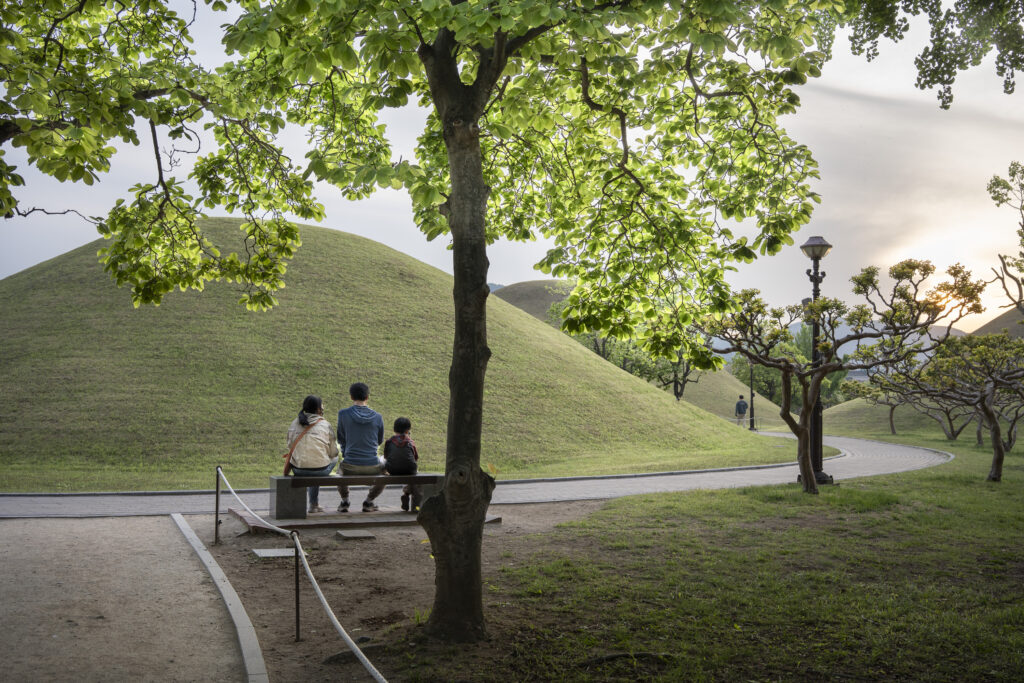
In this post the focus is on the mounds themselves and the adjacent treescapes. The mounds serve as a calm backdrop to the interesting tree arrangements that have been developed by planners and keepers over a long period of time. The many crepe myrtles, Japanese maples, Korean pines, and other species have been shaped into forms that are often seen against the bare mounds from views that invite careful inspection and contemplation. The landscape within the park appears to have been refined into a conversation with the mounds.
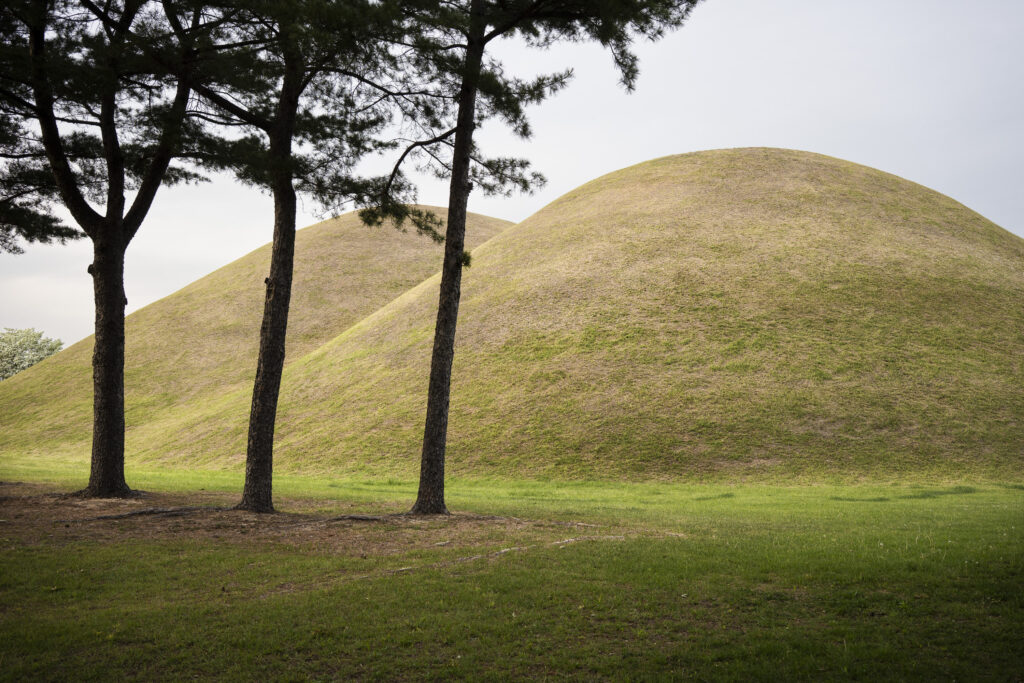
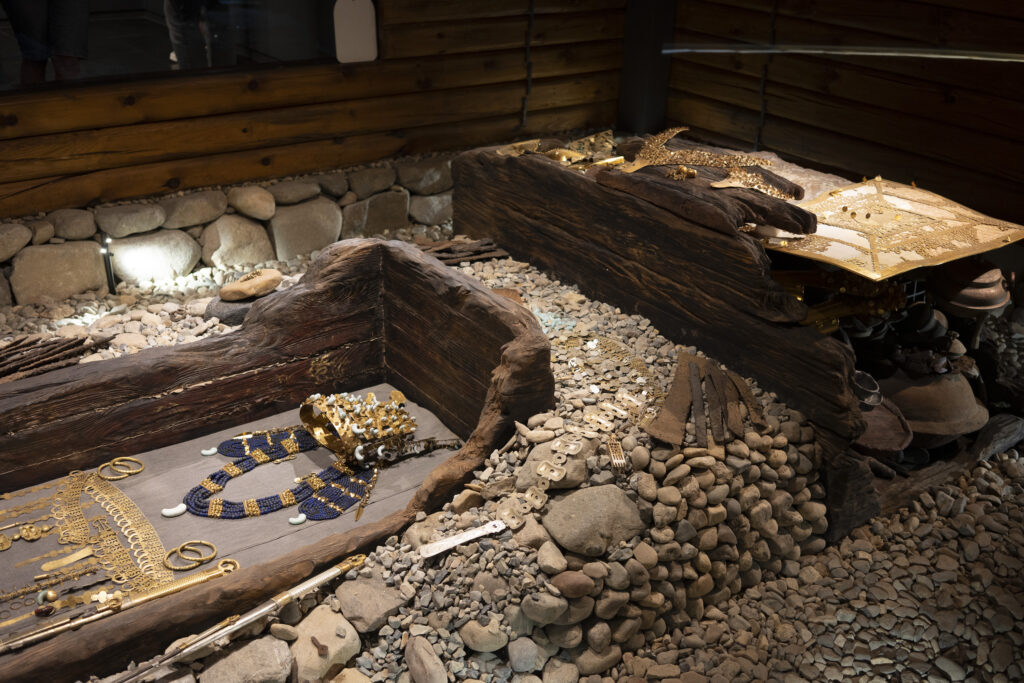
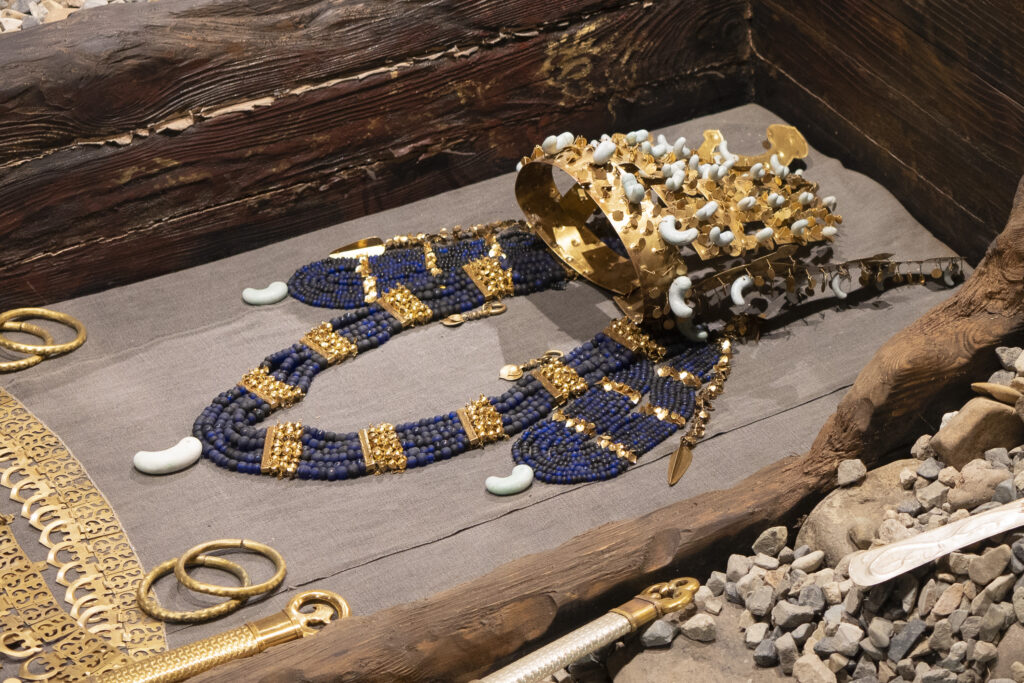
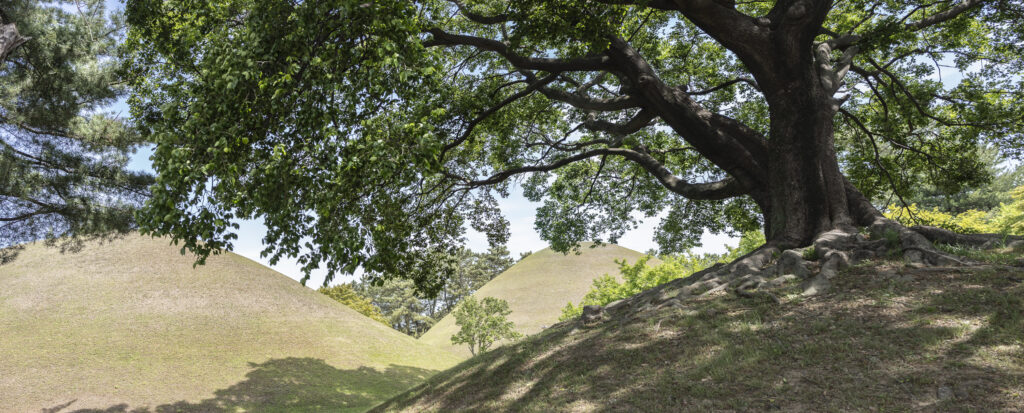
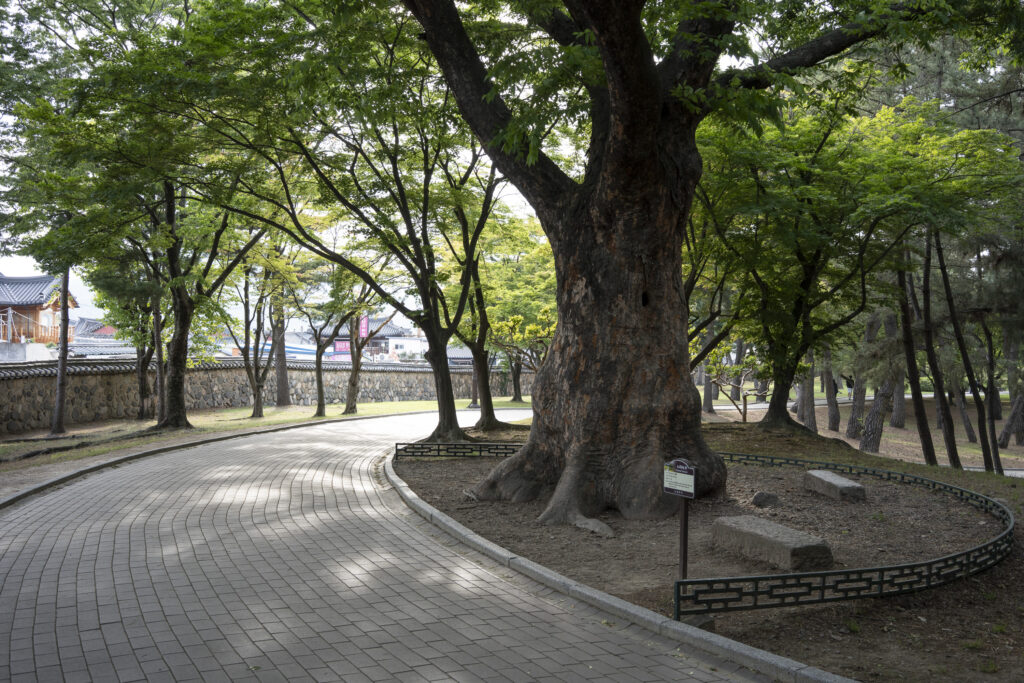
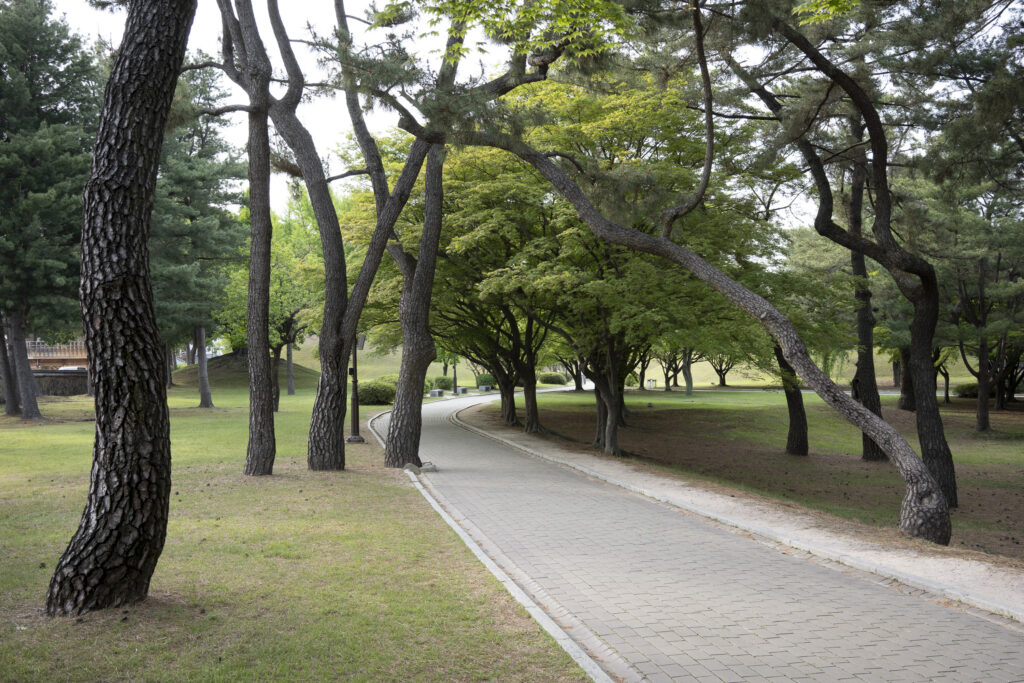
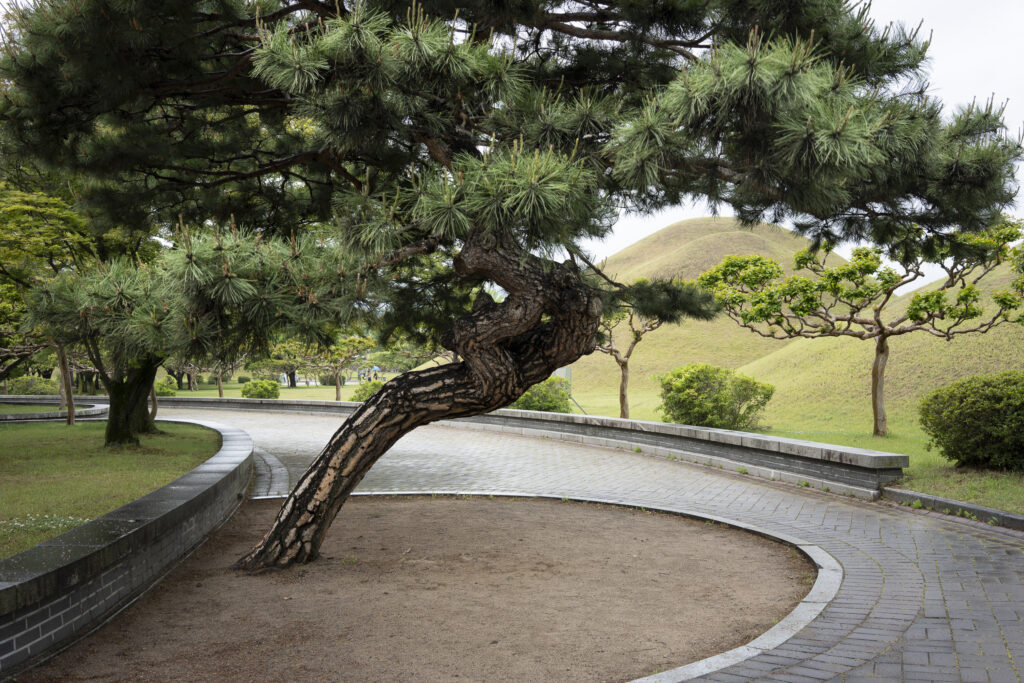
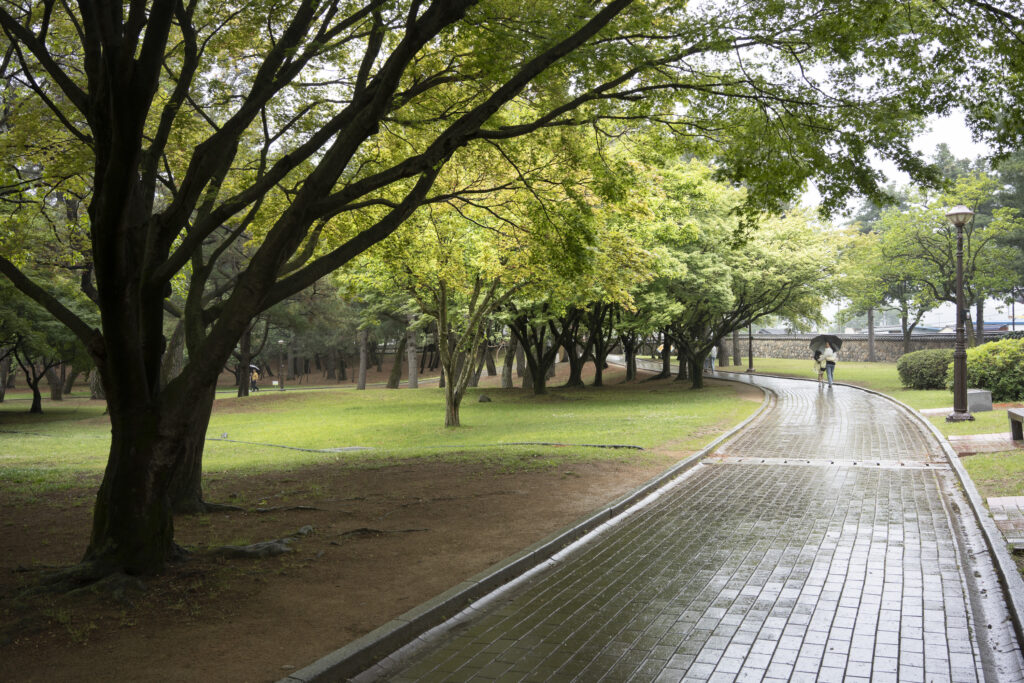
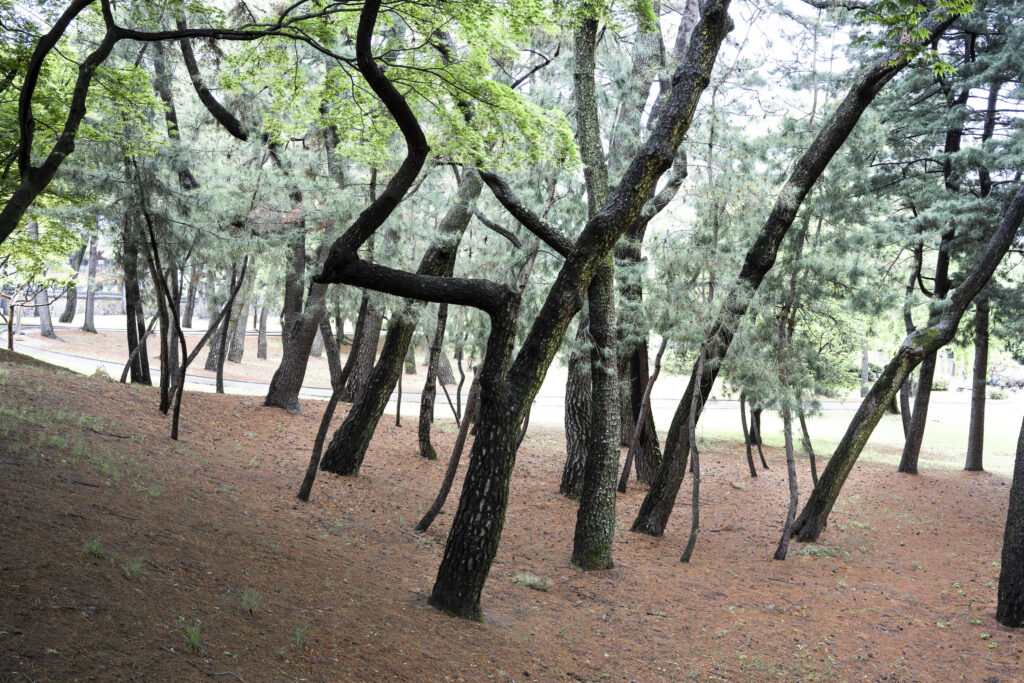
A trio of tall pines stands beside twin burial mounds. Trees in the tomb complex that stand somewhat isolated like this appear to be the result of careful consideration for creating visual and spatial relationships between the tree forms and the mounds.Visitors can walk through a tunnel into the burial chamber deep within the Cheonmachong tomb to view replicas of some of the contents which were removed during its excavation in 1973. Of the 23 large mounds in the tomb complex, only nine have been excavated – and Cheonmachong is the only tomb on view.A closer look at the crown, the elaborate necklace, and adjacent gold objects gives a hint of the skillful craftsmanship. The cashew-shaped jade pieces (called gogok) hanging from elements of the crown and necklace are thought to have symbolized fertility and abundance.A large shade tree has been allowed to mature on a small mound. In its younger life it must have been considered special – hopefully whoever is buried there hasn’t minded. The tree’s branches follow the outlines of the mounds beyond, and reach out to touch a pine branch on the left.In a wider view of the scene, the tree’s thick trunks twist and lean at a low angle over the gap between the mounds, and support an impressively broad canopy. This is one of a series of photographs I took from within the shade of a small grove. Looking out at a pair of isolated trees, their forms are silhouetted against the adjacent mound. The tree on the right has been trimmed to achieve a particular aesthetic – a more two-dimensional form with a graphic quality.Japanese maples frame a group of small nicely shaped crepe myrtles, with single trunks and upstretched arms. There is enough space around each of the crepe myrtles to appreciate their carefully managed forms. Three trees have been placed so their arrangement is symmetrical when aligned with the mound beyond. Four Japanese maples spaced and trimmed so their forms create a repetition of outstretched limbs with a sense of human form.A group of crepe myrtles adjacent to a path with two young women in traditional Korean hanbok dress.The gentle curves of the path and a low railing enclose an enormous old tree trunk at the perimeter of the tomb complex.Korean pines with tall bare trunks. In a grove the textured bark of these trunks and their forms make for interesting compositions.A specimen pine reaches out over the path. The path’s pavers have been set back from the leaning trunk to protect the tree from people traffic, and to allow for space for the roots below the bare ground. A gentle rain has deepened the green colors along this path. A grove of small pines, one with a distinctive elbow-like branch. The soft color of the blue-green needles contrasts with the bright greens from new Japanese maple leaves in the upper left.An exuberant troupe of crepe myrtles – somewhat like a group of expressive dancers. These trees appear to have been trimmed and shaped to evoke elements of the human form. A small grove of Japanese maples with a beautiful light green canopy of new leaves.A visitor on a quiet walk through the burial mounds as the sun sets. The angled boxes on the ground are part of an art installation.A young family sits by a small mound with a gentle shape and slope. The leaves above catch light from the setting sun. These kinds of spaces invite contemplation.The framing of the trees by flanking mounds, along with the backdrop of the larger twin mound, make this a popular spot for photos – so much so that the path is reinforced with a grid.Here’s the scene without the people.A crepe myrtle’s outstretched arms catches light from the setting sun. Trimming and shaping such trees is an art – this one is a good example of that.A pair of crepe myrtles as the sun drops below the surrounding mountains.Light from the setting sun lights up this crepe myrtle’s new leaves as if they were blossoms.