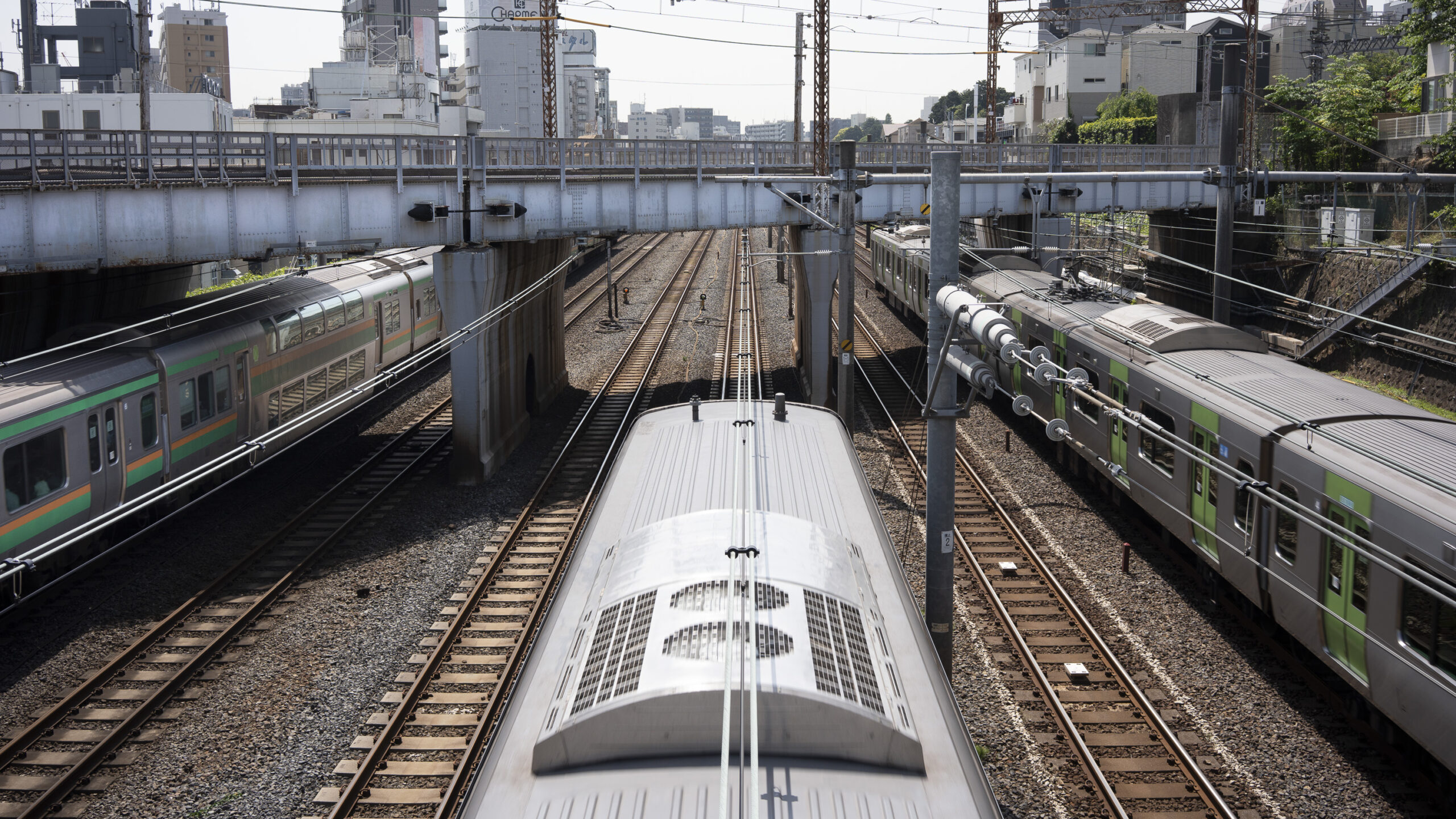
In this post I’m sharing train-related images: Images that capture landscapes speeding by from within a bullet train from Kyoto to Tokyo. Then, reversing the viewpoint, a set of images looking at trains and tracks and associated scenes within Tokyo’s urban landscapes. Riding on a train can be like riding in a mental cocoon, disconnected from the distractions in our lives, with constantly changing views beyond our control. Try to capture an interesting image at 200 miles per hour – don’t count on getting too many. Conversely, do a bit of exploring in a train-infused city like Tokyo. There are bridges that look down on broad swaths of train tracks, with structures holding up electric cables and signals, and lots of trains running through it all – now you’ve got a better chance at getting some nice shots.
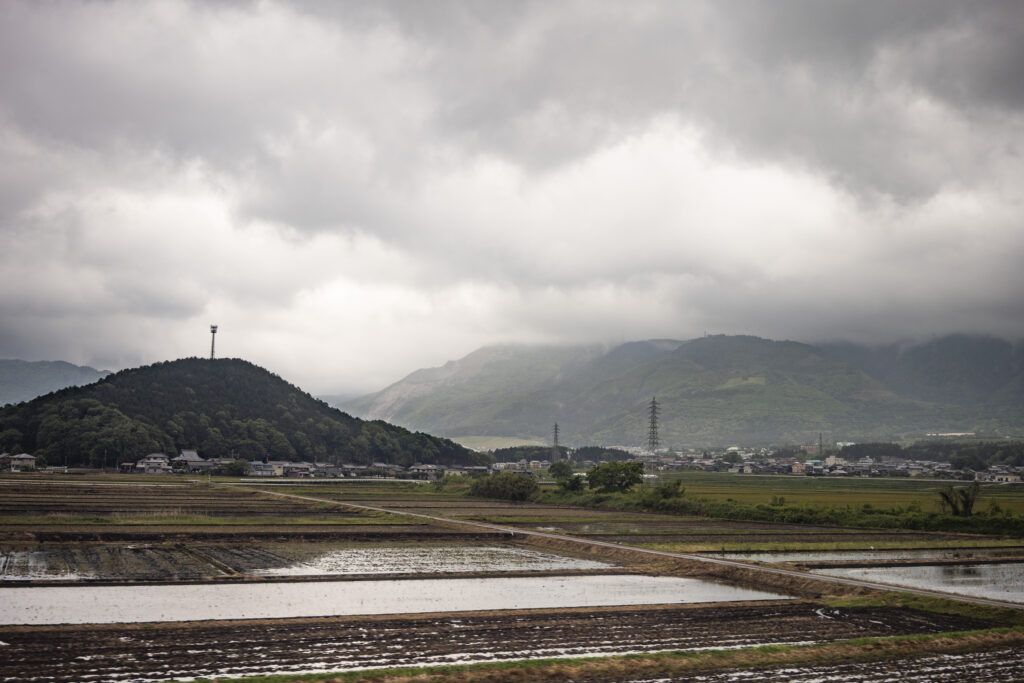
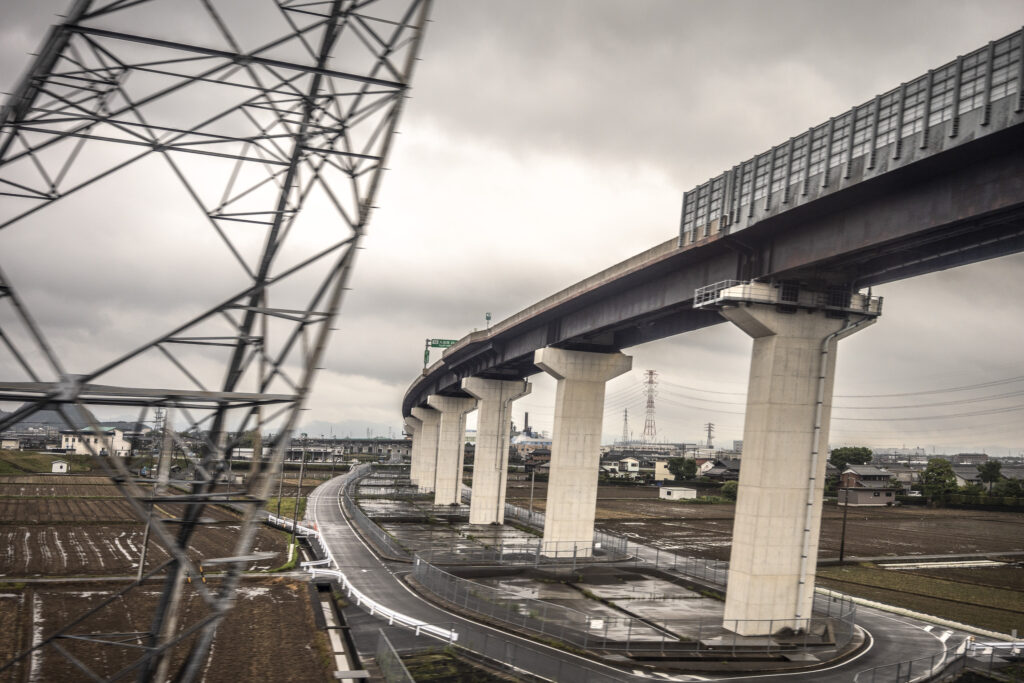
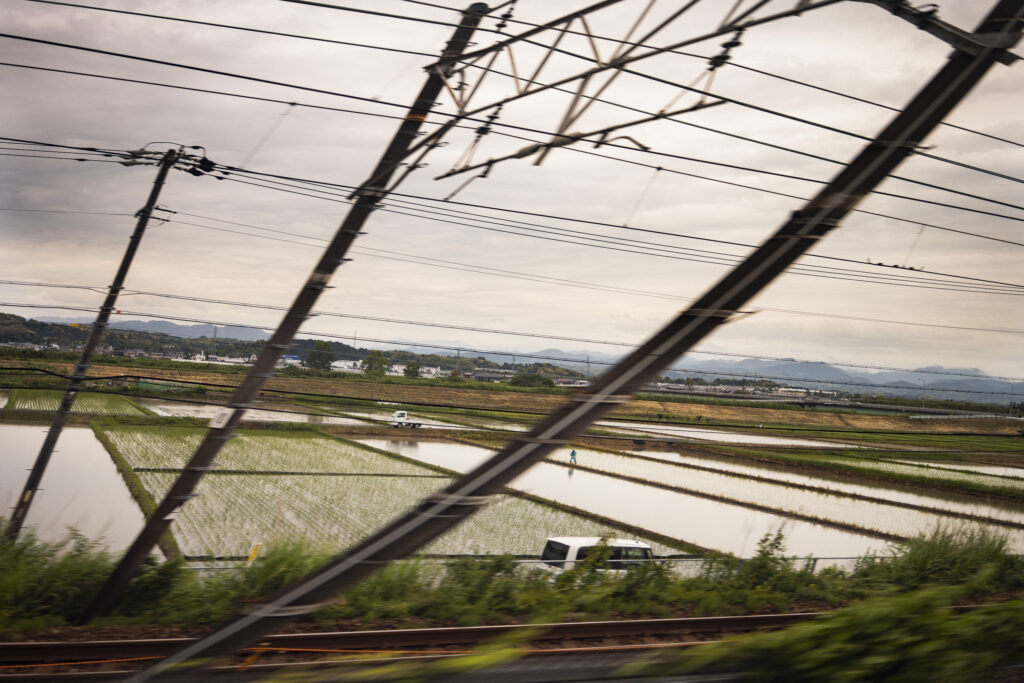
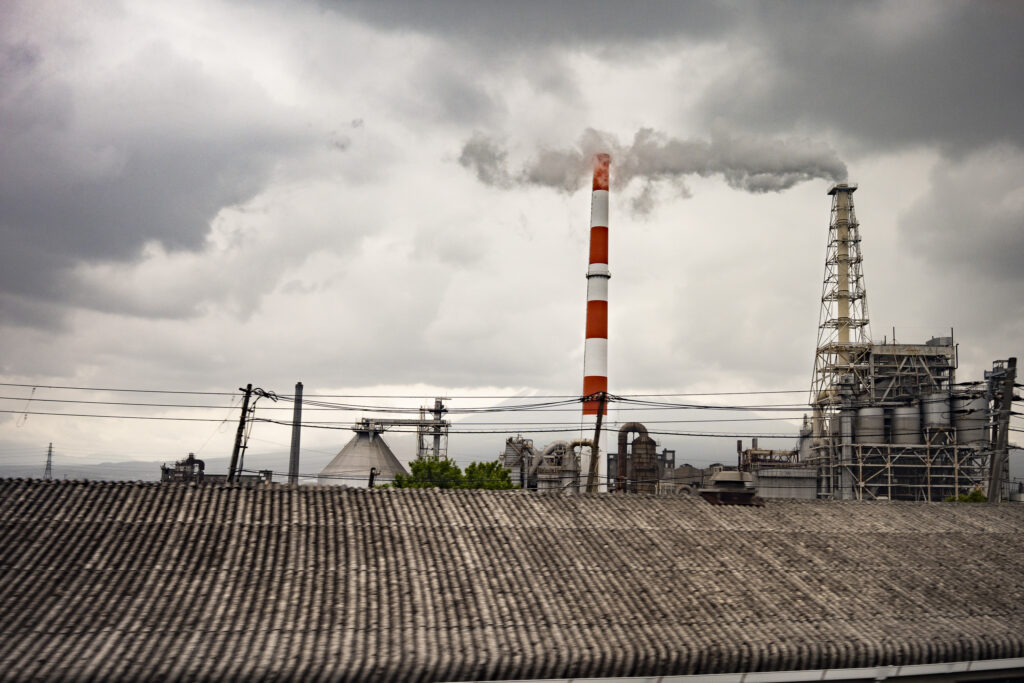
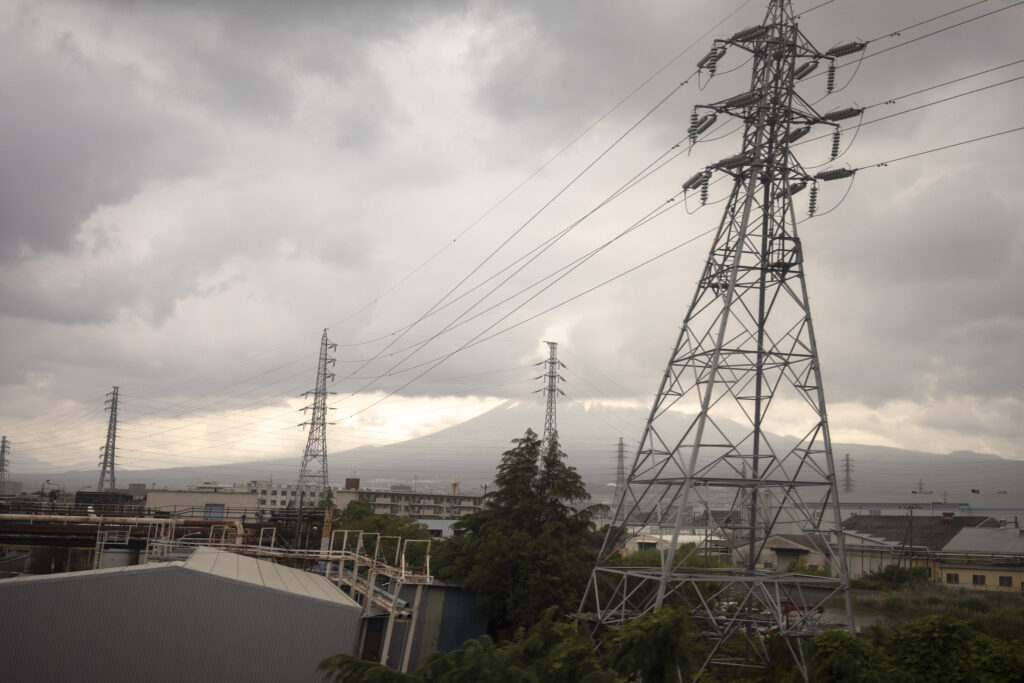
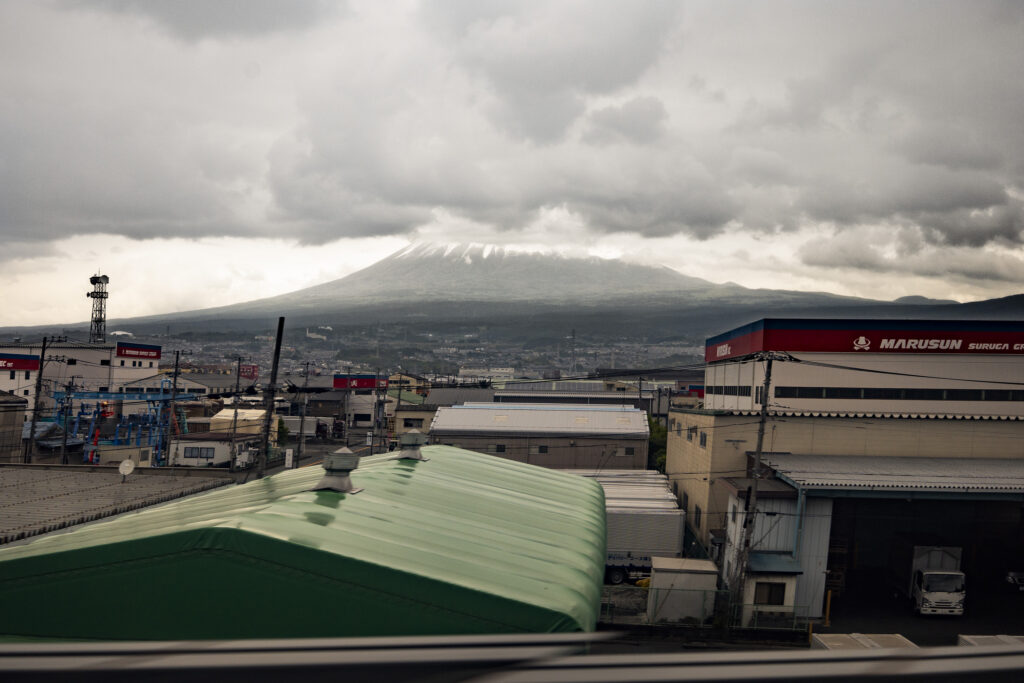
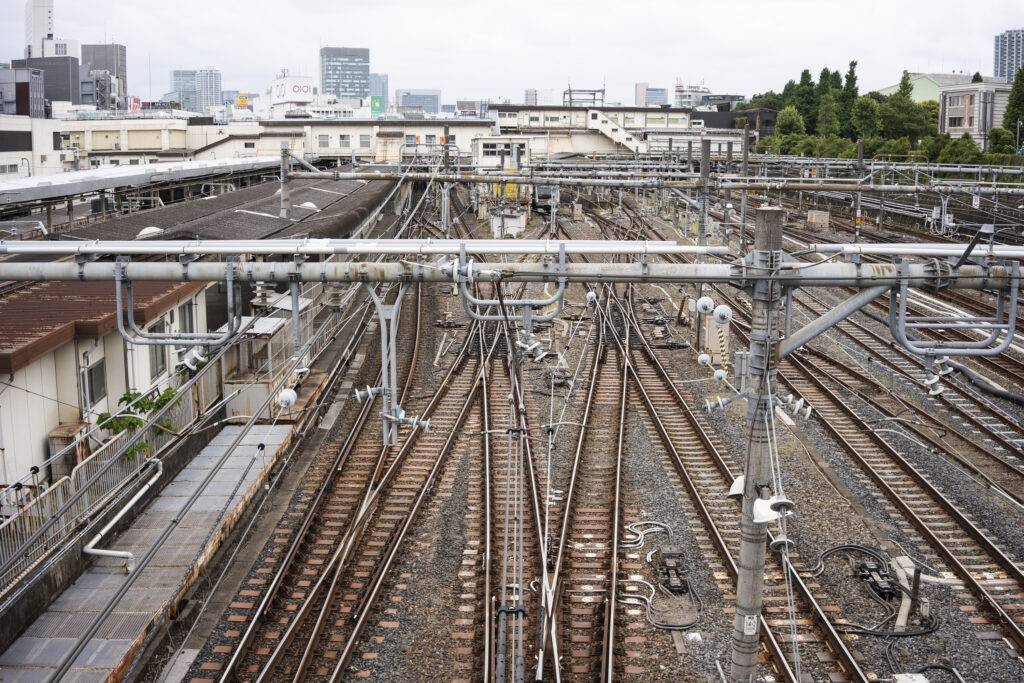
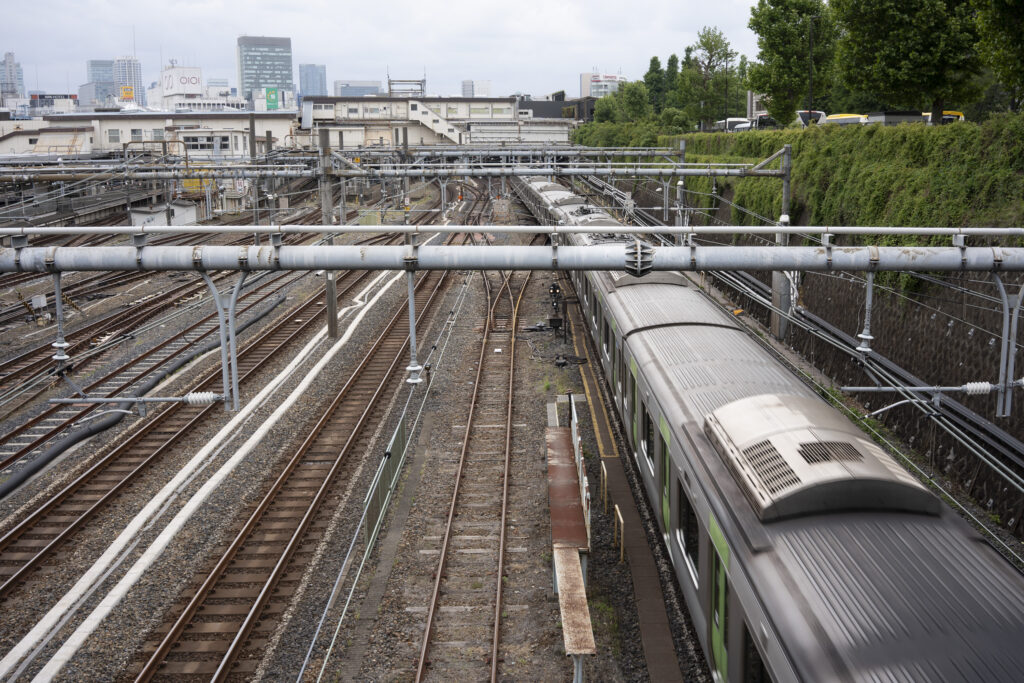
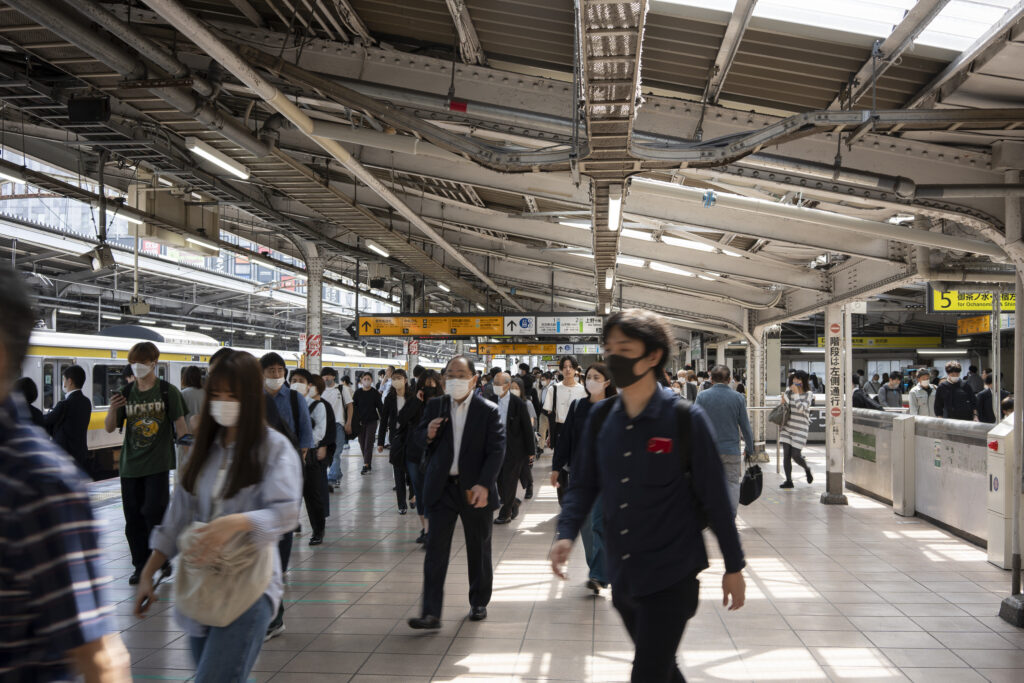
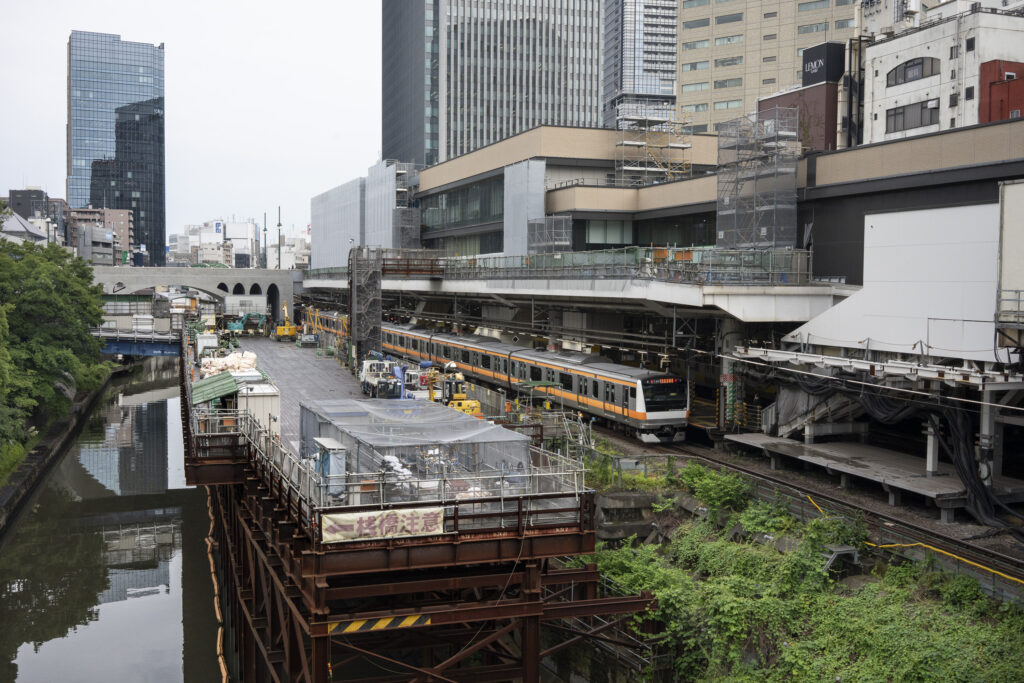
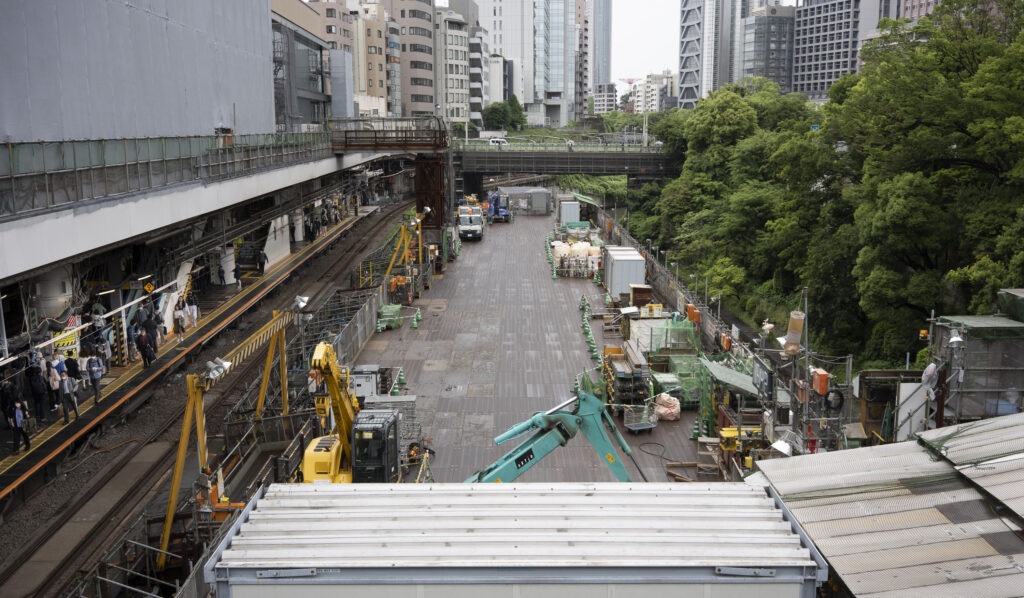
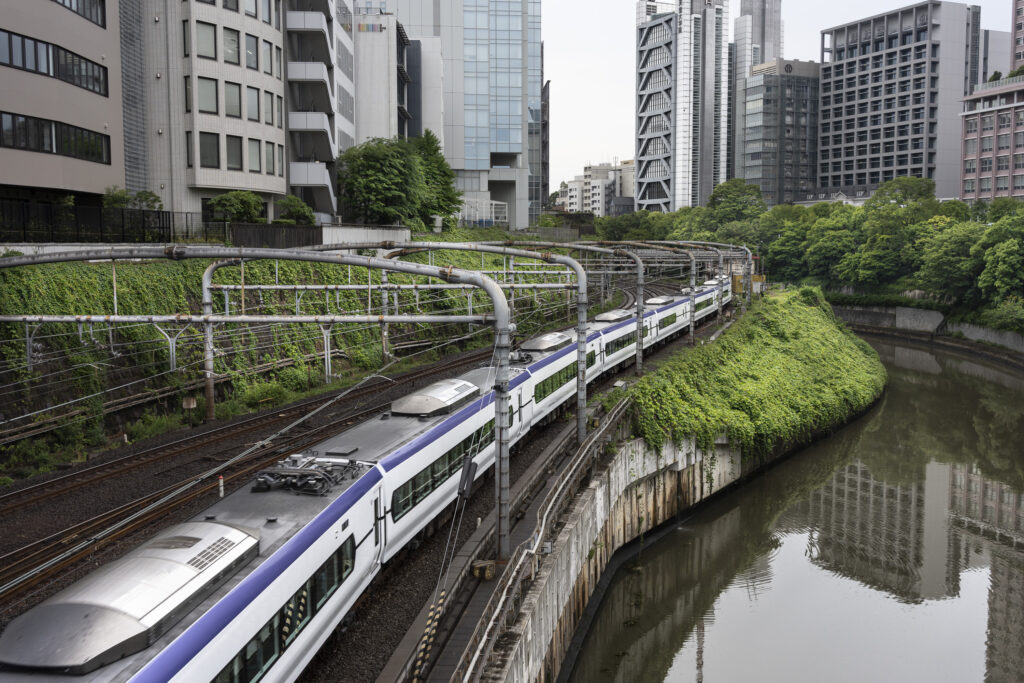
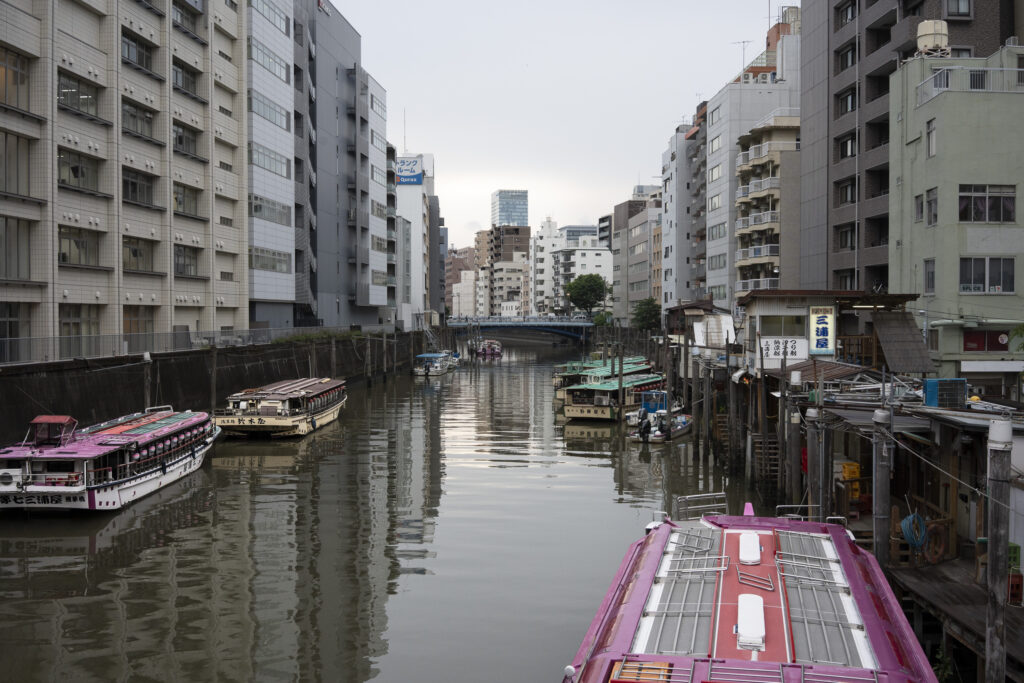
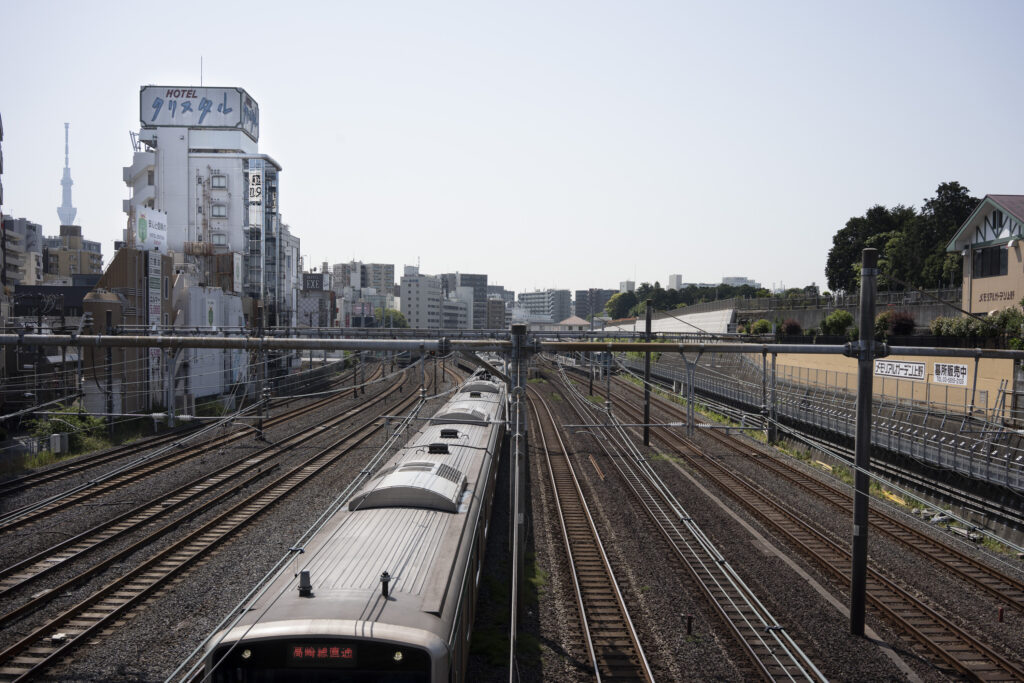
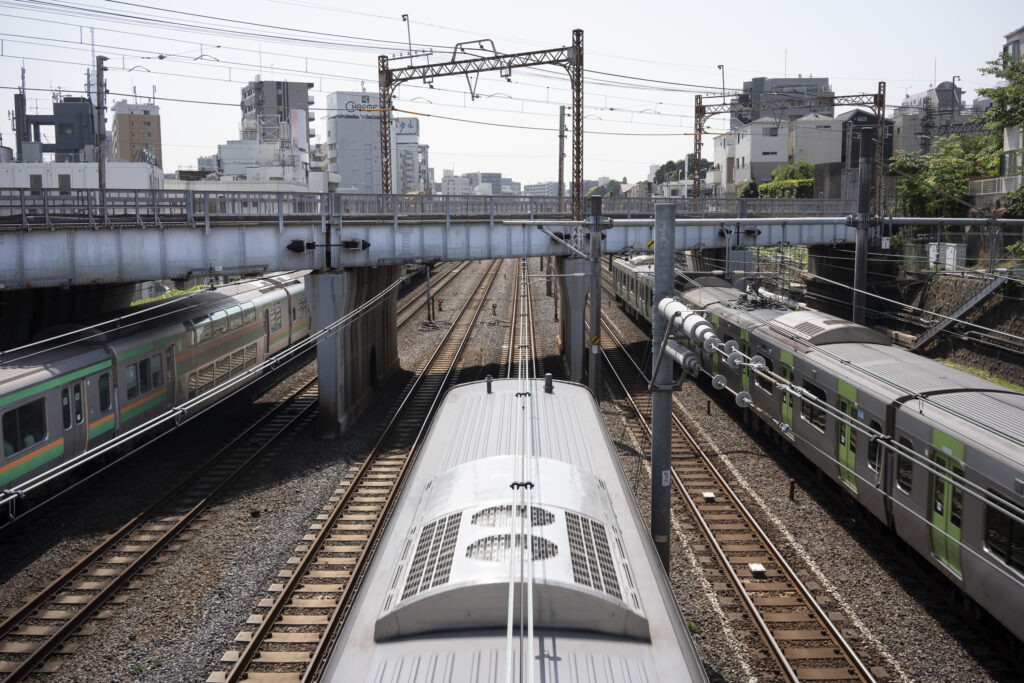
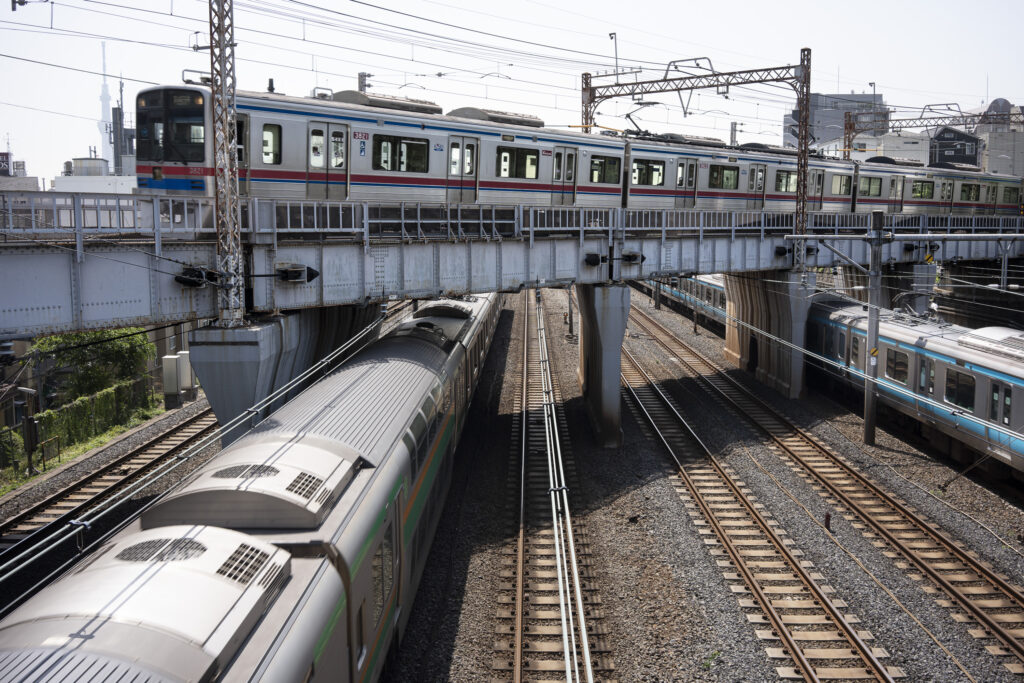
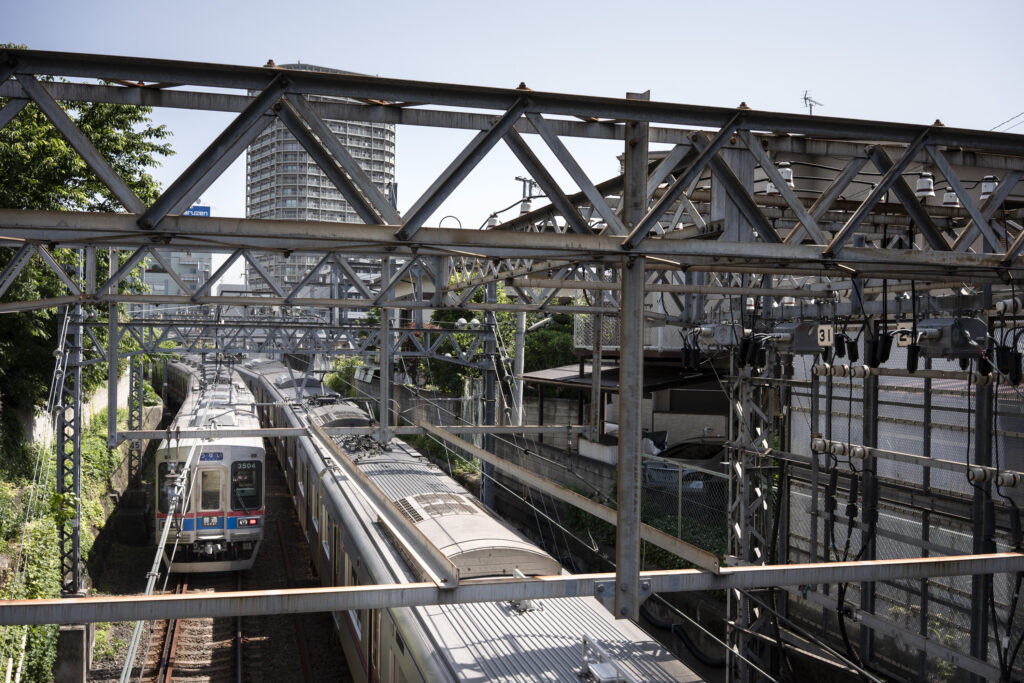
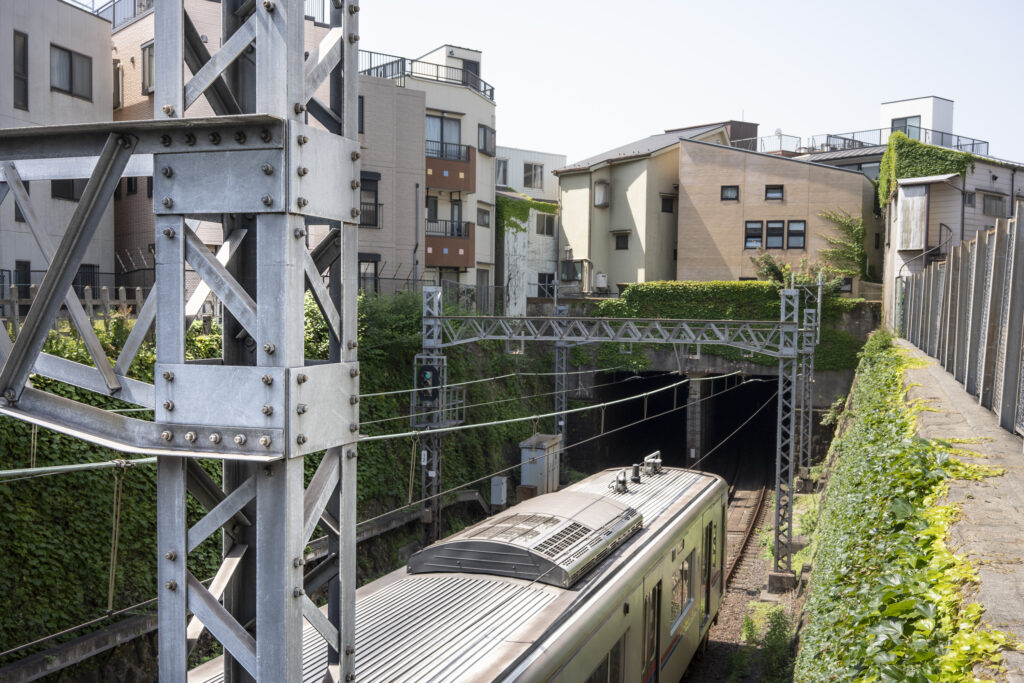
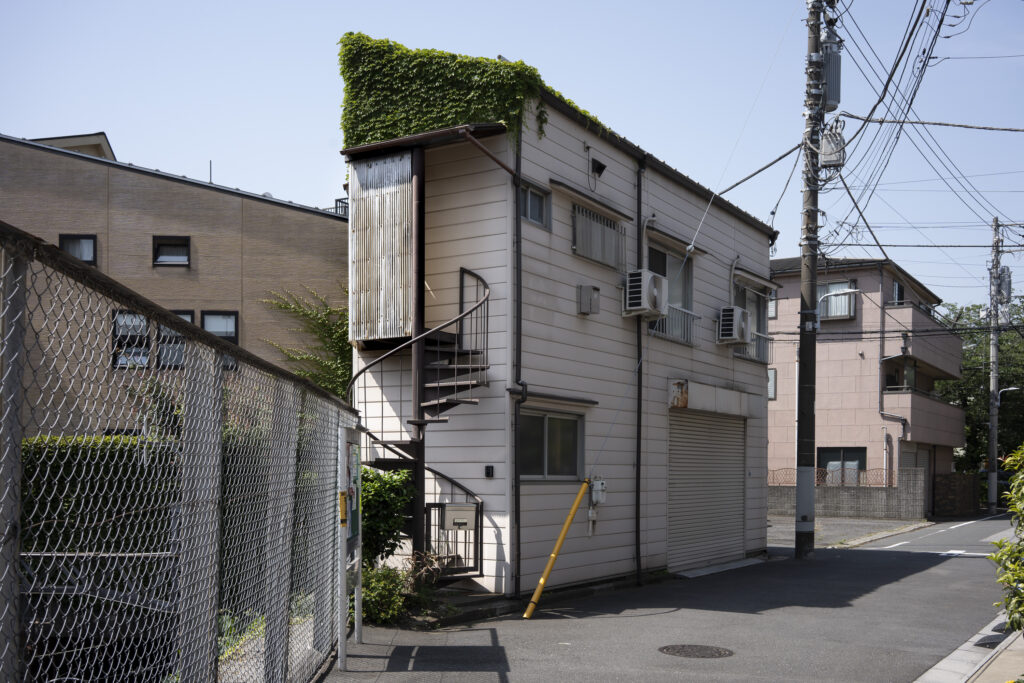
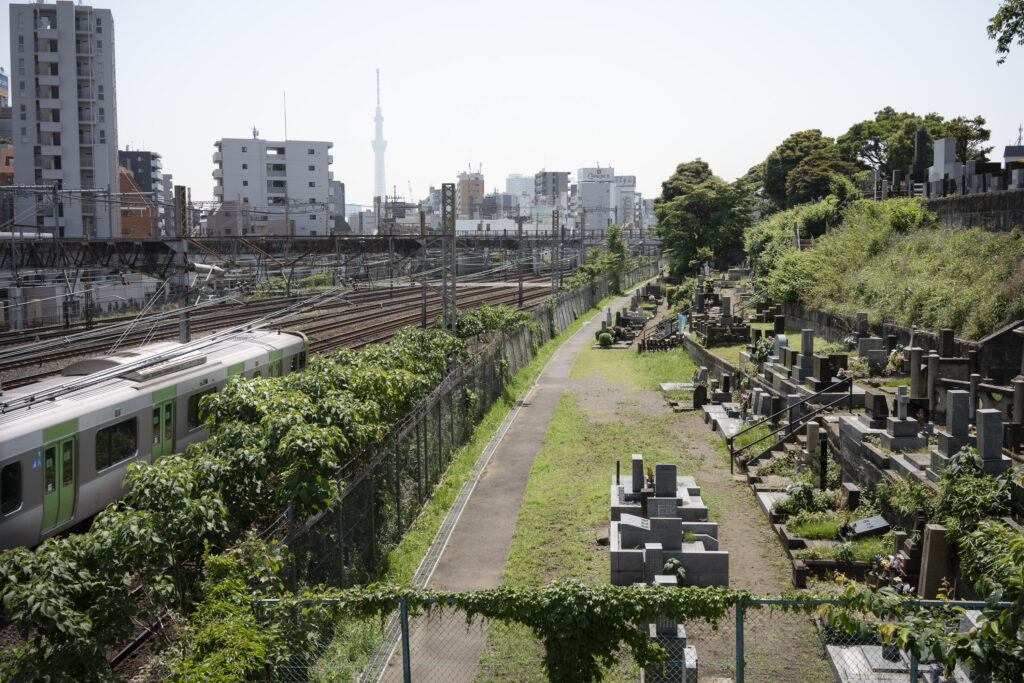
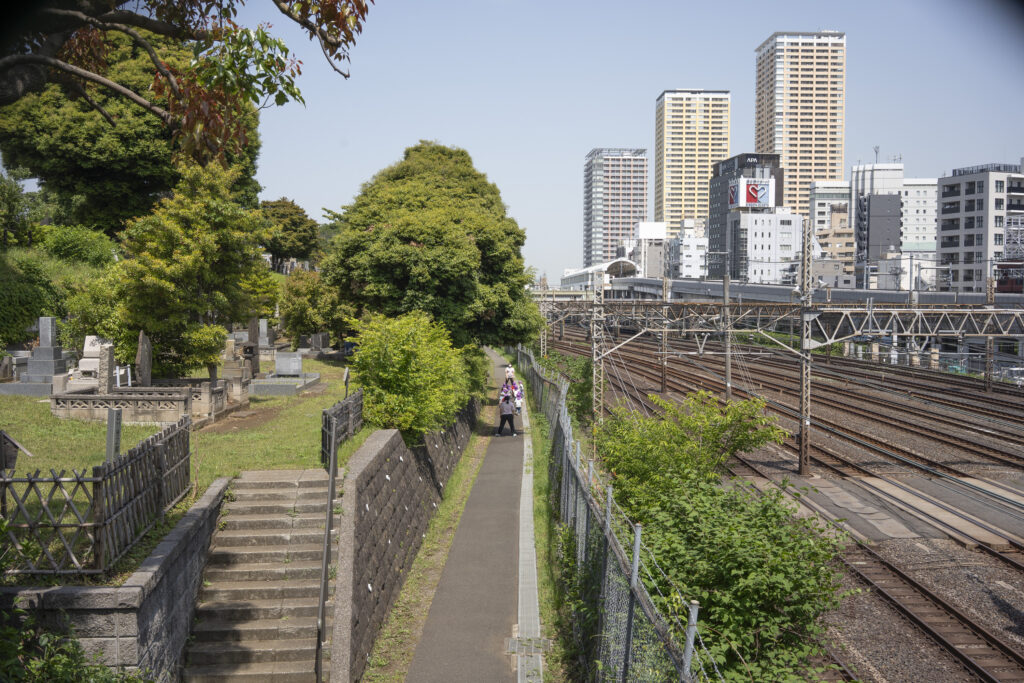
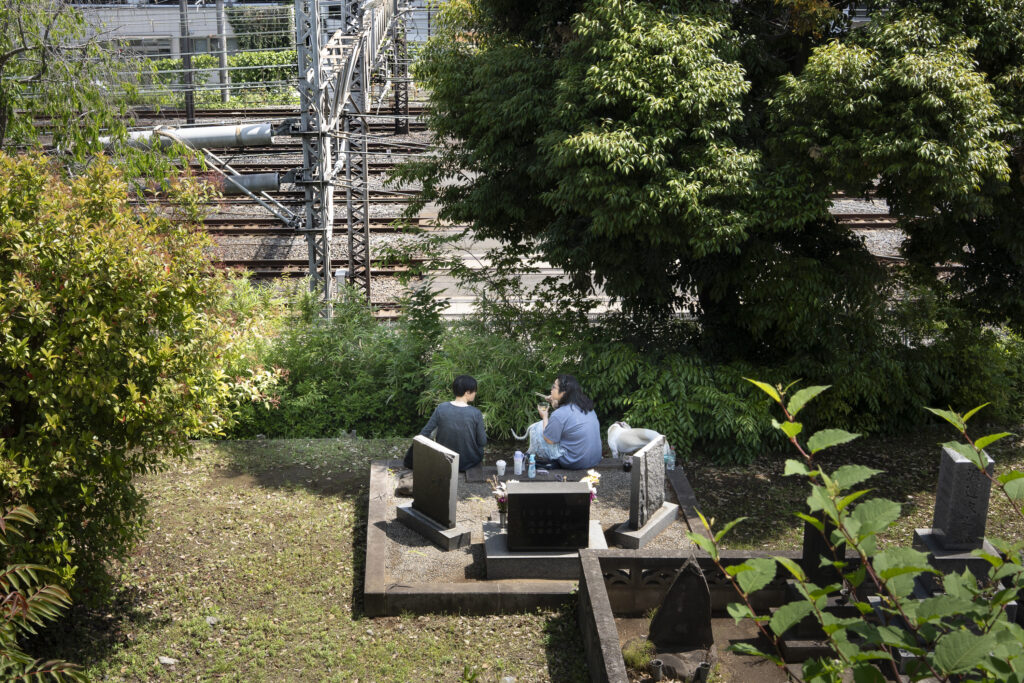
It’s about a three-hour trip from Kyoto to Tokyo on a Shinkansen, or bullet train. The mood of the terrain the train passed through that day was set by lots of low clouds hovering over mountain ranges adjacent to flat agricultural tracts.One thing you notice watching the terrain fly by is how interwoven the agricultural lands are with infrastructure and development. In this photo the angles of the tower and the bridge supports are created by the camera’s shutter and the speed of the train.Here, the angles created by the shutter and the train speed are extreme. Even at a shutter speed of a thousandth of a second, at bullet train speeds of 200mph the support posts for the rail electric lines are reaching for horizontal. The closer an element is the more severe the effect. A tiny worker in a flooded rice paddy is framed by the intersecting angles of the structures and the paddy dikes.About two thirds of the way to Tokyo the base of Mount Fuji starts to come into view – here the mountain is behind the striped red and white smokestack. The peak is shrouded by the day’s ever-present clouds. The textured rows in the foreground look a bit like a plowed field, but they’re actually the roof of an industrial building.Mount Fuji gets a little more clear from this angle.This was the best view I got of Mount Fuji. Even with its peak in the clouds it’s impressive – isolated and prominent. The top is about 3,800 meters (12,000 feet) high. It’s been over 300 years since it last erupted. It’s considered active but dormant – and somewhat overdue for its next eruption. Tokyo is about 60 miles away, and would get a serious covering of ash in an eruption at the scale of the last one.Instead of looking from the inside of a train outward, in Tokyo you can reverse things and take a turn observing trains and the landscapes they create and travel through. People interested in looking at trains are lucky here because you can get views down onto some expansive train corridors from bridges. At this location, just north of the busy Ueno station, there are 7 or 8 sets of tracks for Tokyo Metro, JR (Japan Railways) lines, Shinkansen lines, and other private lines. The view has both visual order and chaos.A Yamanote Line train a bit north of Ueno station hugs a tall retaining wall on the right.The station platforms are busy. As is often the case for train platforms all over, the platform canopy structures are interesting configurations of steel elements, rivets, tubes, and wiring. Platform canopies are not encased in drywall, as is the case with most of the buildings we live and work in.A view to the Ochanomizu station, adjacent to the Kanda River and what looks like a platform built for construction equipment. One online commentor offers a poetic description of the station: “The scent of guitars, coffee, and church bells fills the air. Bookstores lean toward the river as if to listen. Musicians and students cross bridges where wind hums softly. The yellow train glides through — the city’s melody given shape.” You wouldn’t have thought that up from this view, but good to know there’s that kind of life inside the station.A view of the Ochanomizu station platform in a slot on the left, from a bridge above the construction platform. The station is buried in the buildings above and around. I took this from the Hijiri bridge – apparently a popular spot for train watchers according to another online comment: “It’s a popular spot because you can see three trains-the JR Chuo Line, the Sobu Line, and the red Tokyo Metro Marunouchi Line-crossing paths simultaneously. Many people visit to capture this moment of the trains intersecting in photos and videos.”A train snakes out of the Ochanomizu station following the curves of the Kanda River and its green banks and retaining walls.Not trains, but a bit of a similar view, looking down on tourist boats with colorful roofs adjacent to a decidedly drab palette of grey buildings.In the Yanaka district, not far from the Nippori station. Here lots of lines pass nearby the expansive Yanaka cemetery, above an embankment on the right, and train watchers are treated to a pedestrian (and bicyclist) bridge that spans the tracks. Tokyo Tower is visible at the left.Multiple trains passing under the bridge – interesting to catch them together.The elevated track is the Keisei Main line curving up onto a different path toward the urban core. The line connects Tokyo and Narita. Trains on the Keisei tracks fitting through a small neighborhood in a narrow approach to a tunnel entrance.A hodge podge of residential buildings is clustered above the Keisei line tunnel entrance. Great place to live if you like to keep an eye on trains.Directly above the train tunnel entrance stands an architectural oddity. Its shape and configuration were determined by the space left after the path of the train was carved through the small neighborhood. The oddness of its character is enhanced by the vines flowing over the end of the roof, the spiral stair, and the corrugated panel sheltering the second-floor entrance. I would love to see what the inside of the place looks like.The edge of the sprawling Yanaka cemetery steps down to a path along the system of train lines. The train tracks may not be the most aesthetic neighbor for the cemetery, but they seem to coexist well.A group of little kids and their teachers are out for some fresh air on the path between the Yanaka cemetery and the trains. A couple and their dogs sit on the edge of a little semicircle of gravestones at the fringe of the cemetery. Lunch above the train lines.
A rare glimpse by a tourist into mass transit ways in a metropolis. Fascinating.
A suggestion for your next posting: Cemeteries. Intrigued by glimpses of the Japanese cemetery’s gravestones, etc.
Thanks, Cor – yes, the Yanaka cemetery was interesting – a fair number of folks doing their own little plant tending projects.
I would gladly live in that odd little building. Looks like it has a storefront and a few nice parking spots to boot.
beautiful images.
That’s another intriguing mystery – what’s behind that roll-up door?!